
Nitrogen Tanks for HVAC: 5 Options Compared

For most HVAC work, 60 cu ft Steel Nitrogen Cylinder is the practical choice because its 60 cu ft capacity is explicitly suited to purging, brazing and leak detection. Choose a smaller cylinder when portability matters more, and use a compatible regulator to control delivery pressure.
Nitrogen cylinders store gas at high pressure; a regulator reduces it to a controlled working pressure for testing or purging.
We earn a commission if you buy through links on this page. As an Amazon Associate I earn from qualifying purchases. Products are compared on manufacturer specifications, not hands-on testing.
- Best overall: 60 cu ft Steel Nitrogen Cylinder – Its 60 cu ft capacity and stated HVAC uses suit purging, brazing and leak detection.
- Best for 40 cu ft: 40 cu ft Steel Nitrogen Cylinder – A steel 40 cu ft cylinder with a CGA580 valve is identified for HVAC applications.
- Best for pressure testing: Siasky Nitrogen Regulator Kit – The regulator kit has an 0–800 PSI delivery range and a 5 ft hose.
| Product | Best for | Capacity | Cylinder material | Connection | Shop |
|---|---|---|---|---|---|
| 60 cu ft Steel Nitrogen Cylinder | HVAC shop use | 60 cu ft | Steel | CGA580 | Check Price on Amazon |
| 40 cu ft Steel Nitrogen Cylinder | Mid-size HVAC jobs | 40 cu ft | Alloy steel | CGA580 | Check Price on Amazon |
| VEVOR 20 cu ft Aluminum Nitrogen Cylinder | Rust-resistant portability | 20 cu ft | Aluminum alloy | CGA580 | Check Price on Amazon |
| 20 cu ft Steel Nitrogen Cylinder | Compact steel tank | 20 cu ft | Steel | CGA580 | Check Price on Amazon |
| Siasky Nitrogen Regulator Kit | Pressure control | — | — | CGA580 inlet; 1/4-in flare outlet | Check Price on Amazon |
Nitrogen Tanks for HVAC
Compare cylinder capacity and construction, then pair the tank with a regulator suited to your HVAC task.
60 cu ft Steel Nitrogen Cylinder

The 60 cu ft capacity and explicit HVAC use make this steel cylinder the clearest fit for technicians doing nitrogen purging, brazing or leak detection. It has a CGA580 valve, 2015 PSI service pressure and measures 28.5 inches tall by 7 inches wide; its weight is 29 pounds. The valve is described as compatible with nitrogen, argon, helium, neon and CO2/nitrogen mix. Its limitation is its size and weight: technicians prioritizing a smaller carry cylinder may prefer a 20 cu ft option, though that means more frequent refills for comparable work.
Bottom line: Choose this for HVAC shop jobs where 60 cu ft capacity outweighs carrying ease.
40 cu ft Steel Nitrogen Cylinder
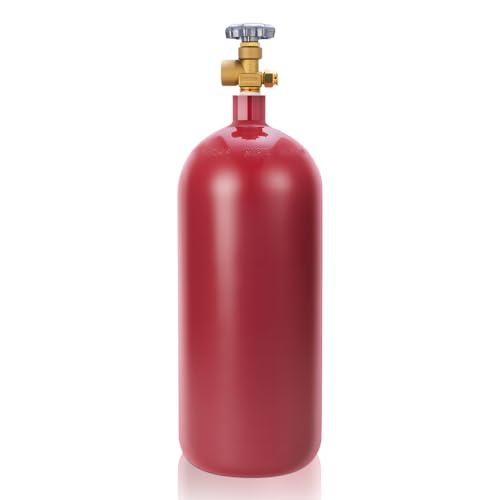
The 40 cu ft capacity offers a middle option between compact cylinders and the larger 60 cu ft tank, and this cylinder is identified for HVAC applications. Its alloy-steel body has a CGA580 valve, 2015 PSI service pressure and 3359 PSI test pressure; it ships empty. The standard CGA580 connection suits a nitrogen regulator with the matching inlet.
Bottom line: Choose this when 40 cu ft is the capacity you need and you want a steel cylinder.
VEVOR 20 cu ft Aluminum Nitrogen Cylinder

The aluminum construction distinguishes this 20 cu ft cylinder from the steel HVAC-oriented choices: its maker gives a cylinder weight of 10.4 pounds and says the body will not rust. It has a CGA580 valve and measures 20.67 inches tall by 5.24 inches wide. The cylinder ships empty, and the applications emphasize manufacturing, welding and beverage production rather than HVAC. It can suit a buyer who needs a compact nitrogen cylinder and has verified application fit, but HVAC users should confirm it meets their equipment and job requirements before choosing it.
Bottom line: Choose this for a lighter aluminum cylinder after confirming HVAC application fit.
20 cu ft Steel Nitrogen Cylinder

The 20 cu ft steel cylinder is the compact choice among the tanks, with an 18-inch height and 5.25-inch diameter. Its CGA580 valve and 2015 PSI service pressure suit compatible inert-gas regulators, but its uses center on beverage systems rather than HVAC. That makes it a potential option when a small steel cylinder is the priority, not the strongest match for frequent HVAC purging or testing. Its 20 cu ft capacity may also mean more refill trips than the 40 or 60 cu ft cylinders for comparable work.
Bottom line: Choose this when compact steel construction matters more than larger capacity.
Siasky Nitrogen Regulator Kit
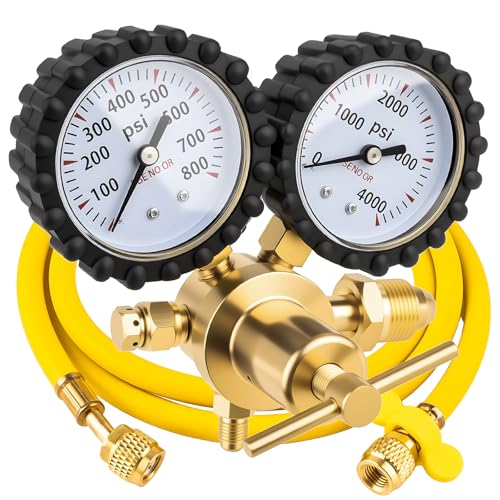
This is a regulator and hose kit, not a nitrogen cylinder, so it complements a tank rather than replacing one. The CGA580 inlet connects to a compatible cylinder valve, while the 1/4-inch male flare outlet and 5-foot hose connect to a suitable HVAC setup. Its delivery-pressure range is 0–800 PSI, with a 0–800 PSI low-pressure gauge and a 0–4000 PSI high-pressure gauge. The kit is useful when pressure control is the missing part of a setup; buyers still need a compatible nitrogen tank and should ensure the target pressure is within equipment limits.
Bottom line: Choose this to regulate nitrogen from a compatible CGA580 cylinder.
Choosing a Nitrogen Tank for HVAC
Choose tank capacity by the amount of work between refills and how often the cylinder must be moved. The options here span 20, 40 and 60 cu ft, with the 20 cu ft cylinders prioritizing smaller size and the 60 cu ft steel cylinder explicitly aimed at HVAC purging, brazing and leak detection. Cylinder capacity is gas volume, not the cylinder’s physical volume. A CGA580 valve is the common inert-gas connection used by these options, but verify that the regulator inlet matches it. For a portable service setup, favor the smaller capacity if carrying weight matters; for repeated shop tasks, consider more capacity to reduce refill interruptions. Match the tank to the regulator and the task, rather than choosing by capacity alone.
Regulator Pressure and HVAC Use
A regulator is essential because a cylinder stores gas at high pressure while HVAC components require controlled delivery pressure. The included regulator kit has an 0–800 PSI delivery range, but that maximum is not a target pressure for every HVAC task. For refrigerant circuit pressure testing, use the equipment maker’s specified test pressure; there is no single safe pressure for every system. For brazing purge, technicians typically use a low flow of nitrogen to displace oxygen, not high pressure. A useful decision rule is to avoid any regulator whose outlet range cannot be adjusted below the target pressure for your task. Do not use an oxygen regulator or oxygen cylinder for nitrogen; match the gas service and fittings.
Steel and Aluminum Nitrogen Cylinders
Steel and aluminum cylinders trade durability and weight differently. Steel tanks offer a familiar rugged construction, while aluminum resists rust and can reduce carrying weight: the 20 cu ft aluminum option weighs 10.4 pounds, compared with 29 pounds for the 60 cu ft steel cylinder. Larger capacity usually means a larger and heavier cylinder, but actual dimensions differ by model. All cylinders should be secured upright during storage and transport to prevent tipping and valve damage; keep protective caps in place when fitted and not connected. Never expose a cylinder to heat or attempt to repair its valve. Before filling, confirm the cylinder is accepted by the gas supplier and is within its inspection and qualification period.
Match the Cylinder, Valve and Task
Use a compatible CGA580 regulator for a CGA580 cylinder, and check the outlet fitting against the hose or HVAC service connection. The regulator kit here ends in a 1/4-inch male flare, so the receiving connection must match or use an appropriately rated adapter. A cylinder that is empty still needs a supplier willing to fill that cylinder type; several options ship empty. The table helps separate the two purchase needs: tank capacity and pressure control are different items. For work requiring repeated purging, select capacity based on job frequency and transport; for pressure testing, prioritize a regulator whose controllable range includes the specified system test pressure. Never exceed the lowest pressure rating among the regulator, hose, fittings and equipment.
| Need | What to choose | Check before work |
|---|---|---|
| More gas between refills | 40 or 60 cu ft cylinder | Transport and storage capacity |
| Lower carrying weight | 20 cu ft aluminum cylinder | Supplier acceptance and HVAC fit |
| Controlled gas delivery | CGA580 regulator with matching outlet | Target pressure and component ratings |
Frequently Asked Questions
Can any nitrogen tank be used for HVAC work?
Use a nitrogen cylinder and regulator rated for the task, with compatible connections. A CGA580 valve appears on these options, but verify equipment pressure limits and the cylinder supplier’s filling requirements.
What size nitrogen tank is practical for HVAC?
A 20 cu ft tank favors portability, while 40 or 60 cu ft provides more gas between refills. Choose based on job frequency and transport; the 60 cu ft cylinder is the one explicitly specified for HVAC purging and brazing.
What pressure should nitrogen be set to for HVAC testing?
Set test pressure to the equipment manufacturer’s limit, not the regulator’s maximum. Systems differ, and exceeding the lowest-rated component can damage equipment or create a serious hazard.
Do nitrogen cylinders ship full or empty?
Some cylinders explicitly ship empty, including the 20 cu ft aluminum option and the 40 cu ft steel option. Confirm filling availability with a gas supplier before relying on a cylinder for a job.
How should a nitrogen cylinder be stored safely?
Secure cylinders upright in a ventilated area away from heat and physical damage. Keep the valve closed and protective cap fitted when the cylinder is disconnected.