
No BS Toothpaste Tablets: Four Options Compared

NOBS (No Bad Stuff) toothpaste tablets are the direct match for no BS toothpaste tablets, with a 186-count jar and nano hydroxyapatite. Choose another option if you want a hydroxyapatite concentration or a smaller count; the closest alternatives differ in mineral type, flavor, or tablet count.
Toothpaste tablets are chewed and brushed with a wet toothbrush, rather than squeezed from a tube. Fluoride-free tablets do not provide fluoride, which is the active ingredient in standard fluoride toothpaste for cavity prevention.
We earn a commission if you buy through links on this page. As an Amazon Associate I earn from qualifying purchases. Products are compared on manufacturer specifications, not hands-on testing.
- Best overall: NOBS Toothpaste Tablets, 186 Count – The direct NOBS match has nano hydroxyapatite and the largest count here, at 186 tablets.
- Best for micro-hydroxyapatite: Huppy Hydroxyapatite Tablets, 62 Count – This option specifies 10% micro-hydroxyapatite and comes in a 62-count pack.
- Best for 10% nano-hydroxyapatite: Mouthology 10% Nano Tablets, 60 Count – The adult-oriented tablet states 10% nano hydroxyapatite and comes in a 60-count pack.
| Product | Best for | Count | Hydroxyapatite | Flavor | Shop |
|---|---|---|---|---|---|
| NOBS Toothpaste Tablets, 186 Count | NOBS match | 186 tablets | Nano; concentration not given | Mint | Check Price on Amazon |
| Nano Hydroxyapatite Peppermint Tablets, 150 Count | Large peppermint jar | 150 tablets | Nano; concentration not given | Peppermint | Check Price on Amazon |
| Huppy Hydroxyapatite Tablets, 62 Count | Micro-hydroxyapatite | 62 tablets | 10% micro | Peppermint | Check Price on Amazon |
| Mouthology 10% Nano Tablets, 60 Count | Adult 10% nano | 60 tablets | 10% nano | Mint | Check Price on Amazon |
No BS Toothpaste Tablets Compared
These fluoride-free tablet options differ in count, hydroxyapatite type, and flavor.
NOBS Toothpaste Tablets, 186 Count
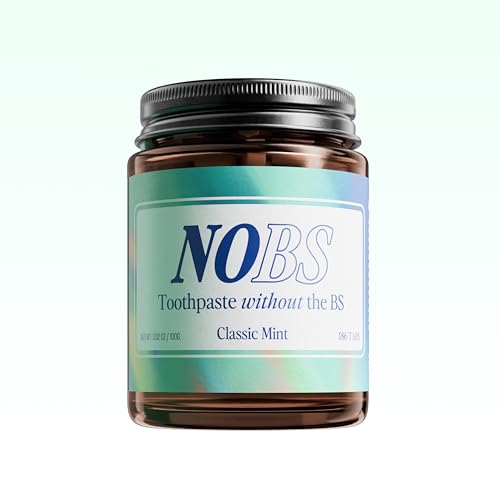
The NOBS option is the direct match for shoppers searching for no BS toothpaste tablets: the jar contains 186 tablets and the maker says the fluoride-free formula uses nano hydroxyapatite. The maker also describes the packaging as a plastic-free glass jar and the flavor as mint. This larger count suits someone who wants the NOBS name and a supply beyond the 60- to 62-tablet packs here.
Bottom line: Pick this if you want NOBS specifically and value a 186-tablet count.
Nano Hydroxyapatite Peppermint Tablets, 150 Count

The 150-count peppermint jar is the closest alternative in tablet quantity to NOBS, while using a differently named peppermint flavor. The maker says the fluoride-free tablets contain nano hydroxyapatite and xylitol, and describes the jar as plastic-free glass packaging. This option suits a buyer who wants a larger-count tablet jar but does not require the NOBS name.
Bottom line: Choose this for a large peppermint tablet jar without the NOBS name.
Huppy Hydroxyapatite Tablets, 62 Count

Huppy stands apart by specifying 10% micro-hydroxyapatite rather than nano hydroxyapatite, in a 62-count peppermint pack. The maker says the tablets are fluoride-free and free of SLS, parabens, artificial sweeteners, and microplastics. That stated mineral type and percentage make this a useful pick for buyers who specifically want micro-hydroxyapatite. Its count is much smaller than the 150- and 186-tablet jars, so it is less suited to shoppers prioritizing a large pack. The maker’s claim that the formula is suitable for the whole family does not replace age-specific brushing guidance.
Bottom line: Pick this if you specifically want a 10% micro-hydroxyapatite formula.
Mouthology 10% Nano Tablets, 60 Count

Mouthology is the only option here that specifies 10% nano hydroxyapatite, rather than giving no concentration or specifying micro-hydroxyapatite. The maker describes the rod-shaped tablets as fluoride-free, mint flavored, and intended for adults. Its 60-count pack is the smallest among these tablet products, which may suit someone who prefers a compact quantity over the larger jars. It is not the best fit for shoppers who want a higher count or the named NOBS product; choose based on the formula and pack size.
Bottom line: Choose this if you want a 10% nano formula in a 60-count pack.
How to Choose Fluoride-Free Toothpaste Tablets
Choose by mineral type, count, and whether you need fluoride, not by a whitening or remineralizing phrase alone. Toothpaste tablets are compressed oral-care products: chew one, brush with a wet toothbrush, then spit; do not swallow toothpaste. These options are fluoride-free, so they do not supply fluoride’s established cavity-prevention benefit. The American Dental Association recommends brushing twice daily with fluoride toothpaste for most people. If you have a high cavity risk, ask a dentist before replacing fluoride toothpaste with a fluoride-free product. A practical decision rule: if your priority is a specified 10% concentration, select a formula that states its type and percentage; otherwise compare flavor and count, since concentration cannot be inferred from the word “hydroxyapatite.”
Toothpaste Tablet Count and Daily Use
For most adults, brushing twice a day means roughly two tablets per day if the product directions call for one tablet per brushing; a 60-count pack would then last about 30 days. That arithmetic changes if directions recommend a different amount or more than one person shares the pack, so confirm the dose before calculating supply. Brush for two minutes, covering the outer, inner, and chewing surfaces, and spit afterward. Keep toothpaste tablets dry and close the jar between uses; moisture can soften compressed tablets and make handling less convenient. Store oral-care products out of reach of young children, who may mistake small tablets for candy.
Hydroxyapatite Types Compared
Hydroxyapatite is a calcium-phosphate mineral found in tooth enamel, and oral-care formulas may use nano- or micro-sized particles. These product names distinguish types, but only two options state a concentration: 10% micro-hydroxyapatite and 10% nano hydroxyapatite. A label with no percentage cannot be ranked by concentration against those formulas. Use the table to match the formula to your preference rather than assuming the particle size alone proves a product works better.
| Formula cue | What it tells you | Decision use |
|---|---|---|
| Nano hydroxyapatite | Particle type; percentage may vary or be absent | Compare the percentage when available |
| Micro-hydroxyapatite | A different particle-size category | Choose if you specifically want a micro formula |
| Fluoride-free | No fluoride in the formula | Discuss cavity prevention with a dentist if risk is elevated |
Using Toothpaste Tablets Safely for Children
Children need age-appropriate toothpaste amounts and adult supervision, even when using tablets. For children younger than 3, standard dental guidance is a smear about the size of a grain of rice; for ages 3 through 6, use a pea-sized amount and supervise brushing and spitting. Tablet format may be hard for a young child who cannot reliably chew and spit, so do not hand a tablet to a child unsupervised. These options are fluoride-free, and the fact that one product is marketed for kids does not establish that it replaces a dentist’s advice about fluoride, cavities, or a child’s individual needs. Ask the child’s dentist about the appropriate format and fluoride routine.
Frequently Asked Questions
How many toothpaste tablets should I use per brushing?
Many tablet routines use one tablet per brushing, but the product directions determine the correct amount. At two brushings each day, one tablet each time uses about 60 tablets in 30 days.
Do fluoride-free toothpaste tablets prevent cavities?
People with frequent cavities, dry mouth, or other elevated risk should ask a dentist before switching away from fluoride.
Can I use toothpaste tablets with an electric toothbrush?
Yes, tablet format can be used with a manual or electric toothbrush. Chew the tablet first, wet the brush, and brush for two minutes; keep the device and brush head clean and dry afterward.
Can young children swallow toothpaste tablets?
Toothpaste should be spit out rather than swallowed, and small tablets can pose a choking risk for young children. Standard guidance uses a rice-grain smear before age 3 and a pea-sized amount from ages 3 through 6, with adult supervision.
How should I store toothpaste tablets?
Keep tablets dry in a closed container, since humidity can soften compressed tablets. Store the container out of children’s reach because tablets may resemble candy.