
Non-Skid Material for Ramps: 4 Tape Rolls Compared

For most ramps, Leyibo Anti Slip Tape, 12 in x 16 ft is a practical pick because its 12-inch-wide, 16-foot roll is made for ramps and stairs and can be cut to fit. Choose a wider roll if you need to cover more of the ramp in each strip; these options are adhesive abrasive tapes, not solid ramp mats.
We earn a commission if you buy through links on this page. As an Amazon Associate I earn from qualifying purchases. Products are compared on manufacturer specifications, not hands-on testing.
- Best overall: Leyibo Anti Slip Tape, 12 in x 16 ft – Its 12-inch width, cut-to-fit format and ramp-specific use make it a straightforward choice for typical strips.
- Best for wide coverage: SinoPack Anti Slip Tape, 24 in x 30 ft – The 24-inch roll covers twice the width of the 12-inch options per strip.
- Best for longer coverage: COSIMIXO Anti Slip Tape, 12 in x 35 ft – Its 35-foot roll is the longest option among these products.
| Product | Best for | Roll width | Roll length | Traction surface | Shop |
|---|---|---|---|---|---|
| Leyibo Anti Slip Tape, 12 in x 16 ft | Ramp strips | 12 in | 16 ft | 80-grit aluminum oxide | Check Price on Amazon |
| SinoPack Anti Slip Tape, 24 in x 30 ft | Wide ramp coverage | 24 in | 30 ft | High-traction abrasive | Check Price on Amazon |
| COSIMIXO Anti Slip Tape, 12 in x 35 ft | Long ramp runs | 12 in | 35 ft | 80-grit aluminum oxide | Check Price on Amazon |
| SinoPack Anti Slip Tape, 12 in x 30 ft | Outdoor ramp strips | 12 in | 30 ft | 80-grit aluminum oxide | Check Price on Amazon |
Non-Skid Material for Ramps
Compare the roll dimensions and traction details to match adhesive tape to your ramp surface and coverage needs.
Leyibo Anti Slip Tape, 12 in x 16 ft

Leyibo Anti Slip Tape, 12 in x 16 ft is a ramp-and-stair-focused 12-inch roll with a 16-foot length, a useful size when you want to cut separate strips rather than cover a broad ramp in one pass. Its surface uses 80-grit aluminum oxide. The maker says the adhesive is water-resistant and designed for weather exposure and heavy foot traffic. This option suits smooth ramp surfaces where a narrower strip is enough. The roll is shorter than the 30- and 35-foot choices, so a long ramp or several application zones may require more material.
Bottom line: Choose this for a 12-inch strip on a ramp when a 16-foot roll is sufficient.
SinoPack Anti Slip Tape, 24 in x 30 ft

SinoPack Anti Slip Tape, 24 in x 30 ft stands apart with a 24-inch width, twice the coverage width of the 12-inch options. Its 30-foot roll can cover a wider path in fewer lengthwise strips, which suits broad ramps where minimizing seams matters. The maker says it is intended for indoor and outdoor use and can be applied to wood, concrete, and metal. That broad surface compatibility makes this option versatile, but the width may be awkward on narrow ramps or around tight edges. Measure the usable walking surface before choosing a wide roll.
Bottom line: Choose this when a broad, continuous strip is more useful than a narrower roll.
COSIMIXO Anti Slip Tape, 12 in x 35 ft

COSIMIXO Anti Slip Tape, 12 in x 35 ft has the longest roll at 35 feet while keeping the 12-inch width used by two of the other options. The maker says the 80-grit aluminum-oxide tape is waterproof and oil-resistant, with indoor and outdoor uses that include ramps. Its extra length can help when a ramp needs several parallel strips or multiple sections. This product suits buyers prioritizing length over width.
Bottom line: Choose this for longer 12-inch-wide runs or several ramp sections.
SinoPack Anti Slip Tape, 12 in x 30 ft
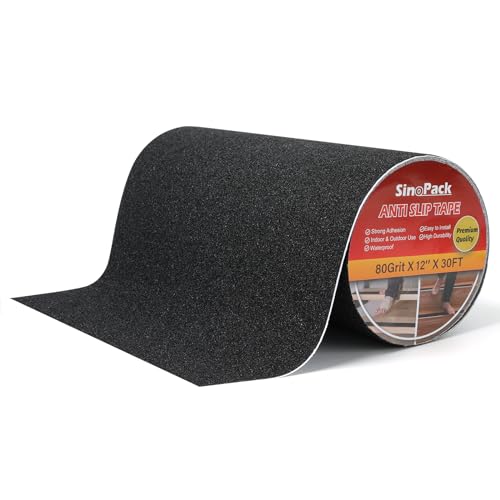
SinoPack Anti Slip Tape, 12 in x 30 ft pairs a 12-inch width with a 30-foot roll, making it a middle ground between the shorter 16-foot roll and the 35-foot option. Its 80-grit aluminum-oxide surface is intended to add traction, and the maker says the adhesive is designed for waterproof outdoor use. The product suits ramp strips where a 12-inch width is appropriate and 30 feet covers the planned run. Its roll is not as wide as the 24-inch alternative, so wider paths need additional strips and careful alignment.
Bottom line: Choose this when you want a 12-inch outdoor-oriented roll with 30 feet of length.
How to choose ramp grip tape
Choose ramp tape by matching its width to the walking path and its length to the planned run. A 12-inch roll makes narrower strips; the 24-inch roll covers twice as much width per strip. The available lengths range from 16 to 35 feet, so estimate the total strip length before selecting a roll. Measure the ramp’s usable width, then decide whether it needs one centered strip or multiple parallel strips with space between them. The options use abrasive adhesive tape rather than a mat. Adhesive tape depends on a clean, dry, firm surface, so it is a poor match for loose, peeling, or heavily textured material. For a ramp narrower than 24 inches, the wider roll may leave excess material to trim.
Ramp surface preparation and placement
Adhesive grip tape works best when the surface is clean, dry, and firmly bonded; dirt, moisture, oil, or flaking paint can interfere with adhesion. Before applying tape, remove loose debris and let the surface dry completely. Lay out the strips before peeling the backing so the edges stay aligned and the walking route is covered consistently. Ramp tape is not a substitute for fixing a soft, cracked, or unstable ramp surface. Avoid placing tape over joints or damaged areas that can lift beneath foot traffic. The product options include weather-oriented adhesive claims, but surface condition and installation still affect the bond; verify suitability for your ramp material and conditions before applying.
Choosing tape width and coverage
Roll width determines how much of the ramp one strip can cover, while roll length determines how far that strip can run. A 12-inch roll offers more control on narrow paths and easier trimming around edges; a 24-inch roll can reduce the number of parallel strips on a broad ramp. The chart compares the dimensions so you can estimate coverage. Measure in inches and feet, and allow enough tape for every strip rather than measuring only the ramp’s length.
| Ramp need | Roll size to consider | Tradeoff |
|---|---|---|
| Narrow strips | 12 in wide | May need multiple parallel strips |
| Broader strip | 24 in wide | May need trimming on a narrow ramp |
| Long run | 35 ft long | Still only 12 in wide |
Using abrasive tape safely on ramps
Abrasive tape adds a rough walking surface, but it does not correct a ramp that is unstable, too steep, or poorly maintained. Keep the tape firmly adhered and inspect its edges regularly, especially where foot traffic or weather can catch an edge. A loose edge can become a trip point, so stop using that section until it is secured or replaced. The 80-grit options are abrasive, so consider whether bare feet, delicate footwear, or wheeled equipment will cross the taped area; a rough surface can be unsuitable for those uses. Use tape only where its texture fits the traffic and ramp material, and do not cover drainage paths or hide damage.
Frequently Asked Questions
How much ramp width does a 12-inch tape cover?
A 12-inch roll covers a 12-inch-wide strip before trimming. A wider ramp may need multiple strips, so measure the walking width and calculate each strip’s length separately.
Can adhesive anti-slip tape go on a concrete ramp?
The 24-inch SinoPack option lists concrete among compatible surfaces. In general, adhesive tape needs a firm, clean, dry surface; loose or crumbly concrete can compromise the bond.
Should ramp tape run across or along the ramp?
Place strips to create consistent traction across the walking route, with no loose edges or gaps that interrupt foot placement. Lay out the pattern before peeling the backing, and avoid covering damaged joints.
How often should ramp grip tape be inspected?
Check tape edges before regular use and after harsh weather or heavy traffic. Replace or secure any lifted section promptly because a loose edge can catch footwear or wheels.
Is 80-grit tape suitable for every ramp user?
No; an abrasive surface can be rough on bare feet and may impede some small wheels. Consider who and what will travel over the ramp before choosing a rough tape surface.