
Non Toxic Leave In Conditioner With Rose or Butter

For a rose-focused leave-in, tgin Rose Water Leave-In is the closest match because it pairs rose water with a curl-focused smoothing formula.
We earn a commission if you buy through links on this page. As an Amazon Associate I earn from qualifying purchases. Products are compared on manufacturer specifications, not hands-on testing.
- Best overall: tgin Rose Water Leave-In – Rose water and a curl-focused smoothing formula make this the clearest rose match.
- Best for butter cream: AmariAdonis Rose Hair Butter Cream – The whipped rose hair butter is explicitly positioned as a leave-in treatment.
- Best for fine hair: Luseta Rose Oil Leave-In – Its rose-oil formula is described as lightweight and intended to add volume without weighing hair down.
| Product | Best for | Size | Formula focus | Hair fit | Shop |
|---|---|---|---|---|---|
| tgin Rose Water Leave-In | Curly hair | 13 oz | Rose water; cream | Waves, curls, coils | Check Price on Amazon |
| Camille Rose Curl Love Moisture Milk | Vanilla-scented curls | 16 oz total | Rice milk, castor oil, green tea | Waves, curls, coils | Check Price on Amazon |
| Rose Hair Conditioner with Rose Hips | Dry, frizzy hair | 6.76 fl oz | Rose hips, vitamin E, jojoba oil | Dry, frizzy hair | Check Price on Amazon |
| AmariAdonis Rose Hair Butter Cream | Butter cream | 4 oz | Whipped rose butter cream | All hair types | Check Price on Amazon |
| Luseta Rose Oil Leave-In | Fine, dry hair | 8.5 fl oz | Rose oil; lightweight | Fine, dry hair | Check Price on Amazon |
Rose or Butter Leave-In Conditioners
Compare the rose and butter cues, formula styles, and stated hair uses before choosing.
tgin Rose Water Leave-In
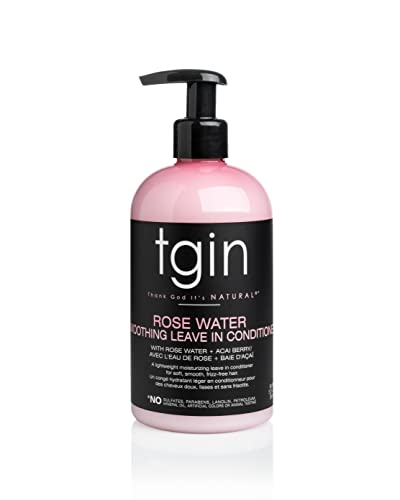
Rose water and a curl-smoothing cream distinguish this option from the rose-oil and butter-based formulas. The maker says it is designed to moisturize curls through the day, help detangle, and control frizz without weighing hair down. At 13 ounces, it is the largest single-container option here. It suits people seeking a rose-linked leave-in for curly hair, especially when detangling and curl definition are priorities. The formula is described as strengthened with additional ingredients, but the ingredient information does not establish whether it meets an individual “non-toxic” or fragrance-sensitivity standard.
Bottom line: Choose this if rose water and curl detangling are your priorities.
Camille Rose Curl Love Moisture Milk

Unlike the rose-forward choices, this two-pack is identified by its light vanilla scent; “Rose” appears in the product color field, not as the fragrance. Each bottle is 8 ounces, for 16 ounces total. The maker says its plant oils and botanicals help nourish hair, while the milk can be used on damp or dry hair as a refresher. It is suited to people who want a curl-focused leave-in and prefer vanilla over floral fragrance. Because its scent is stated, buyers avoiding fragrance should check the full ingredient label before choosing.
Bottom line: Pick this if a curl refresher and vanilla scent matter more than a rose scent.
Rose Hair Conditioner with Rose Hips

Rose hips extract, vitamin E, and jojoba oil set this formula apart from products centered on rose water, rose oil, or whipped butter. The maker describes it as a lightweight leave-in for dry, frizzy, or dull hair and says it is free from mineral oil and silicone. Its 6.76-fluid-ounce size is smaller than the 8.5-ounce rose-oil option. This is a fit for shoppers seeking a rose-ingredient blend aimed at smoothing dry hair. The “clean formula” wording does not by itself verify a non-toxic standard or establish suitability for a particular sensitivity.
Bottom line: Choose this if rose hips and a mineral-oil- and silicone-free formula are your priorities.
AmariAdonis Rose Hair Butter Cream

A whipped butter cream makes this the clearest choice for shoppers specifically seeking a butter-style leave-in rather than a milk or oil formula. The maker says the rose-extract treatment is designed to moisturize and condition without rinsing, and describes it as suitable for straight, wavy, curly, and textured hair. The container is 4 ounces, smaller than the other options here. Its richer cream format may be less appealing to someone who wants a spray or a lightweight product for fine hair; the claims do not establish a particular ingredient-safety certification.
Bottom line: Pick this if you want a leave-in treatment in a whipped rose butter cream.
Luseta Rose Oil Leave-In

Rose oil and a lightweight, volume-oriented formula distinguish this leave-in from the creamier curl and butter options. The maker says it is intended to soften dry hair, smooth frizz, and add shine and volume without weighing down fine hair. It is an 8.5-fluid-ounce product and is described as sulfate-free, paraben-free, and color-safe. The use is a small amount on wet or dry hair, followed by combing or tousling. Buyers seeking a fragrance-free product or a verified non-toxic certification should confirm those specific requirements on the ingredient label.
Bottom line: Choose this if you have fine, dry hair and want a rose-oil leave-in.
How to choose a rose or butter leave-in conditioner
Choose by formula weight and hair texture first, then use rose or butter as a secondary preference. Leave-in conditioners come as sprays, milks, creams, and butters; sprays and milks generally spread more lightly, while richer creams can leave more conditioning material on the strands. Start with a small amount, about a dime-sized portion for shoulder-length hair, and add more only if the ends still feel rough. Fine hair often needs less product than dense, coarse curls. A butter cream is a reasonable starting point for thick or very dry hair, while a lightweight formula is easier to distribute through fine strands. Product claims do not establish an individual tolerance, so check ingredients if fragrance or specific botanicals are a concern.
What “non-toxic” means on conditioner labels
“Non-toxic” is not a single standardized certification for cosmetics in the United States, so the phrase alone does not tell you which ingredients are present or how a product will suit your skin. FDA does not generally approve cosmetic products or ingredients before sale, apart from color additives; companies are responsible for product safety. Read the complete ingredient declaration rather than relying on broad terms such as “clean” or “natural.” If you have a known fragrance or botanical sensitivity, look for the specific ingredient names you need to avoid and consider asking a medical professional about them. A patch test on a small skin area can help reveal irritation, but it cannot guarantee that a product will never cause a reaction.
How much leave-in conditioner to apply
Use less leave-in on fine hair and more only where thicker or drier lengths need it. A practical starting point is a dime-sized amount for shoulder-length hair, applied to damp mid-lengths and ends; short hair usually needs less, while long or dense hair may need more in sections. Keep the first application away from the scalp if roots tend to look oily, then adjust after the hair dries. Distribute creams and milks with fingers or a wide-tooth comb to reduce uneven patches. Too much product can make hair feel coated or limp, so reduce the amount before adding another styling product. Follow the package directions if the formula gives a different use method.
Rose water, rose oil, and rose butter compared
Rose water, rose oil, rose hips, and rose extract are different ingredient cues, not interchangeable promises about fragrance or effect. Check the ingredient label if the specific rose ingredient matters to you; a product name or color label is not enough to confirm scent. This guide’s options also vary in texture and stated hair focus, which can matter more than the rose wording. Use the table to narrow the format by hair need, then verify the full ingredient list for fragrance or sensitivity requirements.
| Need | Formula cue | What to prioritize |
|---|---|---|
| Fine, dry hair | Rose oil, lightweight | Small starting amount and volume-focused use |
| Curly hair detangling | Rose water cream or moisture milk | Sectioned application to damp lengths |
| Richer leave-in treatment | Whipped rose butter cream | Use sparingly, especially on fine hair |
| Botanical blend | Rose hips, vitamin E, jojoba oil | Check the ingredient label for sensitivities |
Frequently Asked Questions
Does non-toxic mean fragrance-free for conditioner?
No; “non-toxic” does not mean fragrance-free or identify a specific ingredient standard. Check the ingredient declaration for fragrance and any ingredients you personally avoid.
Should leave-in conditioner go on wet or dry hair?
Many leave-ins are applied to damp hair, while some formulas can also refresh dry hair. Begin with a small amount on mid-lengths and ends, then adjust if your hair feels coated.
Can leave-in conditioner make fine hair look greasy?
Yes, excess product can leave fine hair looking limp or oily. Start with less than a dime-sized amount on shoulder-length hair and keep it off the roots if they get oily.
Is rose water the same as rose oil in hair care?
No; rose water and rose oil are different ingredient types, and rose hips or rose extract are different cues again. Check the ingredient label when a particular rose ingredient or scent is important.
How do I check a conditioner for an ingredient sensitivity?
Read the complete ingredient list and look for the specific fragrance, botanical, or other ingredient you need to avoid. A small-area patch test may show irritation, but it cannot guarantee a reaction will not occur later.