
On-Board Diagnostic OBD Port Locks: 5 Options

For a keyed OBD port lock, OBD2 Lock with Key is the option to consider because its key-turn cylinder avoids screw-based access. Choose a different option if you need a lock made for a particular vehicle group or prefer security screws; compatibility and clearance at the port are decisive.
We earn a commission if you buy through links on this page. As an Amazon Associate I earn from qualifying purchases. Products are compared on manufacturer specifications, not hands-on testing.
- Best overall: OBD2 Lock with Key – Uses a key-turn cylinder rather than security screws.
- Best for GM vehicles: VTT OBD Lock, GM Version – The name identifies it as a GM-specific version.
- Best for non-GM vehicles: LIXOOMER OBD2 Port Lock – Designed for select non-GM vehicles and includes an installation tool.
- Best for keyed access: bbfly-K02 OBD Port Lock – Uses an integrated key cylinder and aluminum alloy shell with reinforced ABS.
| Product | Best for | Stated fit | Access method | Body material | Shop |
|---|---|---|---|---|---|
| OBD2 Lock with Key | Keyed access | — | Key-turn cylinder | — | Check Price on Amazon |
| VTT OBD Lock, GM Version | GM vehicles | GM vehicles | Lock and key | 6061-T6 billet aluminum | Check Price on Amazon |
| LIXOOMER OBD2 Port Lock | Non-GM vehicles | Select non-GM vehicles | Security screws | Alloy | Check Price on Amazon |
| wmLzhen OBD2 Port Lock | Broad stated fit | Most OBD2 ports | — | Aluminum alloy | Check Price on Amazon |
| bbfly-K02 OBD Port Lock | Keyed cylinder | — | Integrated key cylinder | Aluminum alloy, reinforced ABS | Check Price on Amazon |
On-board diagnostic OBD port locks
Compare the fit, access method and materials before choosing a cover for your vehicle’s diagnostic connector.
OBD2 Lock with Key
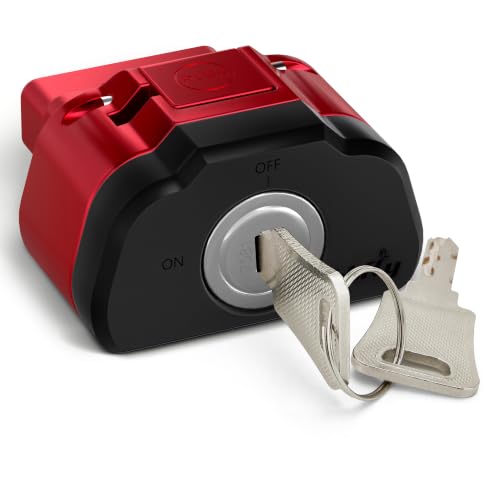
OBD2 Lock with Key uses a key-turn cylinder rather than a screw-based closure, making the access method its main distinction. Its maker says the cylinder has 10,000 blade configurations and that keys are not interchangeable between locks. The product is a candidate for buyers who want to remove a physical cover with a key, including when authorized diagnostic access is needed. The dimensions are 1.8 by 2.4 by 1.4, but no measurement unit is given, so compare the lock’s shape with the space around your port before choosing.
Bottom line: Choose it if a keyed cylinder is your priority.
VTT OBD Lock, GM Version

VTT OBD Lock, GM Version is the vehicle-specific choice in this group: its name identifies the GM version, while its features describe a standard 16-pin OBD-II port. The body is 6061-T6 billet aluminum, and access uses proprietary lock-and-key hardware. The maker says the cover blocks physical access to the port to deter connection of key-programming devices. It suits a buyer whose vehicle matches the GM version. The maker’s text also refers to a separate GM version for universal-fit models, so confirm that the version you have matches your vehicle before ordering.
Bottom line: Pick it when you need the GM-specific version.
LIXOOMER OBD2 Port Lock

LIXOOMER OBD2 Port Lock differs from keyed-cylinder options by using non-standard security screws and an included matching installation tool. Its maker says it is designed for select Ford, Toyota, Honda and other non-GM vehicles, with a solid alloy body and no vehicle modifications. That makes it a possible fit for buyers willing to use a tool to secure and remove the cover. Fit is the limitation: the maker specifically advises checking the port shape and nearby clearance, especially for recessed or tight spaces. Verify the port area before choosing this screw-fastened style.
Bottom line: Choose it if your non-GM port has room for the cover.
wmLzhen OBD2 Port Lock

wmLzhen OBD2 Port Lock is described as fitting most OBD2 ports on cars, SUVs and trucks, and its one-piece body is aluminum alloy. Unlike the options with a named key cylinder or screw system, the features focus on the material, broad fit claim and non-destructive installation. It may suit a buyer looking for a general-purpose port cover that does not require vehicle modification.
Bottom line: Consider it if broad stated vehicle fit matters more than a specified lock mechanism.
bbfly-K02 OBD Port Lock
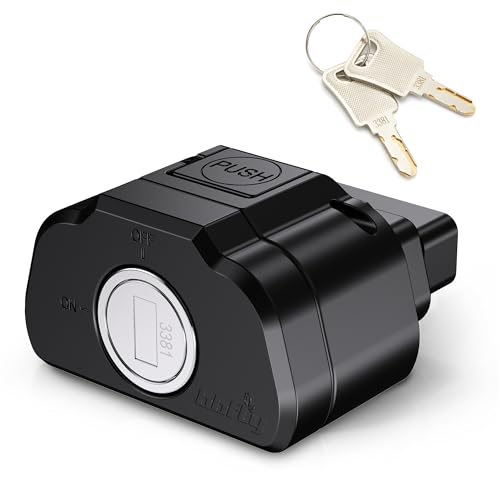
bbfly-K02 OBD Port Lock pairs an integrated key cylinder with an aluminum alloy shell and reinforced ABS, distinguishing it from the security-screw option. Its maker says each cylinder has a unique digital code and that the lock cannot be removed without the coded key without damaging pins and wiring. This suits someone seeking a key-operated cover and a named body construction.
Bottom line: Pick it for a keyed cylinder and mixed-material construction.
How to choose an OBD port lock
Choose first by fit, then by the access mechanism you want to manage. OBD-II uses a standardized 16-pin diagnostic connector, but the free space around the connector can vary with vehicle trim and placement. A keyed cylinder needs its matching key for removal; a security-screw design needs its matching tool. A general fit claim is not a guarantee that a cover clears a recessed port or nearby panel. If the connector sits in a tight recess, measure the available space and compare it with the cover’s dimensions when units are clear. Also consider service: mechanics and scan tools need access to the connector, so keep the key or installation tool available and remove the lock when diagnostics require an open port.
OBD-II fit and diagnostic access
OBD-II diagnostic access uses a 16-pin connector, so a cover must align with that port and leave enough room for its own body and attachment hardware. Vehicle make alone does not settle fit: a recessed connector, tight footwell or nearby trim can interfere with installation. Match any GM-only or non-GM label to your vehicle before selecting a lock, then check the port shape and surrounding clearance. A physical lock covers the connector rather than replacing its diagnostic function; a technician cannot plug in a scanner until the cover is removed. Keep the correct key or tool accessible when arranging service, and do not force a cover onto a connector that does not align cleanly.
Keyed OBD locks versus security screws
Keyed cylinders and security screws trade convenience for different removal routines. A keyed cover is removed with its matching key, while a screw-fastened cover depends on its matching tool; choose based on who needs routine access and how you will store the key or tool. Neither mechanism should be treated as a substitute for vehicle security or proof that a vehicle is immune to theft. The connector cover’s practical role is to restrict immediate physical access to the port. For a quick choice, use this table to match the access routine to your needs.
| Need | Approach | Before choosing |
|---|---|---|
| Key-operated removal | Keyed cylinder | Keep the matching key available |
| Tool-operated removal | Security screws | Keep the matching tool available |
| Vehicle-specific fit | GM or non-GM version | Match the vehicle group |
Using an OBD port lock safely
Remove the cover before connecting a diagnostic scanner or allowing service that requires the OBD-II port. The port is an electrical diagnostic connector, so do not force hardware into it or use a cover that presses on connector pins or wiring. Keep removal hardware where the vehicle owner or service provider can access it, and reinstall the cover only when the connector is clear and undamaged. A lock can slow or restrict access to the port, but it does not prevent every route to vehicle theft or replace ordinary vehicle security practices. Before installation, check that the cover sits squarely and that its fasteners engage without forcing or modifying the vehicle.
Frequently Asked Questions
What does an OBD port lock cover?
An OBD port lock covers the vehicle’s diagnostic connector to restrict physical access. OBD-II uses a standardized 16-pin connector, which a scan tool needs to access for diagnostics.
Will a port lock stop vehicle diagnostics?
A cover blocks access until it is removed. Remove it before plugging in a scan tool or giving a service provider access to the OBD-II connector.
How do keyed OBD locks differ from screw locks?
A keyed lock is removed with its matching key, while a security-screw lock requires its matching tool. Keep the correct removal item available for service access.
How can I check OBD lock clearance?
Check the connector shape and the space around it, especially if the port is recessed or near trim. Compare the available space with the lock’s dimensions when the measurement units are clear.
Can one OBD lock fit every vehicle?
A standard 16-pin OBD-II connector does not guarantee that every cover clears every vehicle’s surrounding trim. Match any GM or non-GM designation and check the port area before installation.