
One-Person Moving Straps: Compare Fit and Design

For most solo moves, Moving Straps, 1-Person Handle Set is the clearest fit because its 4-inch-wide strap adjusts from 39.8 to 72 inches and has handles. Choose a different design if you want a shoulder carrying system or need a setup that can also be used by two people.
We earn a commission if you buy through links on this page. As an Amazon Associate I earn from qualifying purchases. Products are compared on manufacturer specifications, not hands-on testing.
- Best overall: Moving Straps, 1-Person Handle Set – A 4-inch strap with handles adjusts from 39.8 to 72 inches.
- Best for two carrying modes: Padded One- and Two-Person Moving System – Its padded system offers arm-mounted and shoulder-mounted use, plus a two-person setup.
- Best for shoulder carrying: Single-Person Shoulder Carrying Strap – The system includes a carrying strap with a maximum circumference of 115 inches and a 98-inch auxiliary strap.
| Product | Best for | Adjustment or circumference | Strap width | Carrying style | Shop |
|---|---|---|---|---|---|
| Moving Straps, 1-Person Handle Set | Handle carrying | 39.8–72 in | 4 in | Handle strap | Check Price on Amazon |
| Padded One- and Two-Person Moving System | Flexible carrying | 40–71 in solo; 59–119 in two-person | — | Arm- or shoulder-mounted | Check Price on Amazon |
| Single-Person Shoulder Carrying Strap | Shoulder carrying | 115 in max circumference | 2 in | Both shoulders | Check Price on Amazon |
One-Person Moving Straps
Compare adjustment, width and carrying style to find a setup that suits the load and your planned route.
Moving Straps, 1-Person Handle Set

The 4-inch handle strap gives this set a wider belt than the 2-inch webbing in Single-Person Shoulder Carrying Strap, with an adjustment range of 39.8 to 72 inches. The set includes two straps, ABS plastic handles and non-slip gloves. The maker says the maximum load is 600 pounds; treat that as a product claim, not a safe working load for every object or setup. This design suits a solo mover who prefers handles and wants to adjust the belt around different-sized items. The limitation is that the features do not explain how to configure a two-person carry.
Bottom line: Choose this set if you want a wide adjustable strap with handles for solo lifting.
Padded One- and Two-Person Moving System

Unlike the handle-focused setup in Moving Straps, 1-Person Handle Set, this padded system offers arm-mounted or shoulder-mounted use and can also be configured for two people. Its single-person adjustment range is 40 to 71 inches; the two-person range is 59 to 119 inches. The maker presents it for bulky items such as sofas, mattresses and appliances, so it may suit movers who want more than one carrying arrangement. The tradeoff is that the strap width and a load limit are not provided in the specifications, so buyers who need those figures should confirm them before choosing.
Bottom line: Choose this system if you want both solo and two-person carrying configurations.
Single-Person Shoulder Carrying Strap
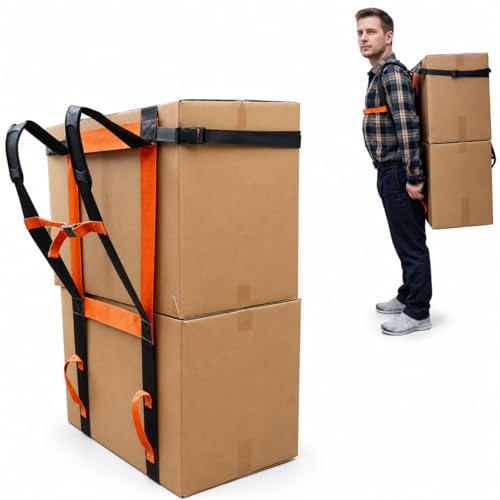
With a 2-inch-wide polypropylene strap and a carrying loop that reaches a maximum circumference of 115 inches, this system is distinct from the handle belt in Moving Straps, 1-Person Handle Set. It also includes a 98-inch auxiliary strap and a quick-release buckle, and the maker says it is intended for boxes, furniture and appliances. The shoulder carrying format suits someone who wants a portable strap system with an auxiliary piece for setup flexibility.
Bottom line: Choose this option if a shoulder carrying format and auxiliary strap suit your setup.
How to choose one-person moving straps
Choose moving straps by matching the carrying style to the load, the route and the available helpers. Handle straps provide a grip at the ends; shoulder systems transfer the carrying position to the shoulders, while some systems can also be arranged for two people. Strap width, adjustment range and included auxiliary pieces affect setup, but no strap makes an unstable or awkward load safe to lift alone. Measure the load’s girth where the strap will sit and compare it with the adjustment or circumference range. As a practical rule, if the load cannot be kept close to your body or blocks your view of the path, use a second mover or another handling method rather than attempting a solo carry. Clear the route before lifting.
Fit the strap to the load
Fit depends on the load’s circumference and the exact strap configuration, not just the strap’s maximum length. Measure around the object at the intended strap position, then allow room to position and tighten the strap without crushing fragile surfaces. A circumference is not the same as an adjustable range, so compare like with like. Keep straps away from sharp edges that can cut webbing, and use padding between a strap and a finished surface when needed. Test the setup with a small lift before carrying; if the load shifts, tilts or slips, lower it and reposition rather than walking with an unstable load. A strap that fits the object may still be unsuitable if the load is too heavy or bulky for one person to control.
Handle straps versus shoulder systems
Handle straps and shoulder systems place the grip differently, so choose based on control and the load’s shape. Handle systems give the mover a dedicated grip; shoulder systems place straps over the body and may offer arm- or shoulder-mounted configurations. A two-person configuration can distribute a load between movers, but both people need to coordinate lifting and turns. Do not assume a maker’s maximum load claim applies to every configuration: the full safe capacity depends on the strap, attachments, condition, load balance and how the load is handled. The table summarizes the formats represented here; its measurements describe different things and should not be treated as interchangeable capacity figures.
| Format | Measurement to compare | Useful when |
|---|---|---|
| Handle strap | Adjustment range and belt width | You prefer a grip at the strap ends |
| Shoulder system | Solo or shared adjustment range | You want a shoulder or multi-person configuration |
| Carrying loop | Maximum circumference and auxiliary length | You need a loop-style shoulder setup |
Safe lifting and strap care
Safe lifting starts with a controlled load and an unobstructed route; a strap is an aid, not a substitute for good handling. Keep the load close, avoid twisting while carrying and lower it if your grip, balance or path becomes uncertain. Check webbing, stitching, buckles and handles before each move, and do not use a strap with cuts, fraying, damaged stitching or a buckle that will not hold securely. Keep straps dry and clean enough for the buckle and grip to work as intended. Store them away from sharp tools and heat. For heavy appliances or furniture that one person cannot control through the full route, add a helper or use suitable moving equipment.
Frequently Asked Questions
Can one person safely move a heavy appliance with straps?
Only when the mover can control the load, keep it balanced and see the route. A strap capacity does not establish that an appliance is safe for one person to carry; get help if the load is awkward, unstable or blocks your view.
How do I measure for a moving strap?
Measure around the load where the strap will sit, then compare that girth with the strap’s adjustment range or maximum circumference. Leave room to position the strap securely, and do not treat a maximum circumference as a load rating.
Are shoulder moving straps safer than handle straps?
Neither format is automatically safer; control, balance and fit decide whether a carry is manageable. A shoulder system changes how the strap is carried, while handle straps provide a grip at the ends.
How often should moving straps be checked?
Inspect webbing, stitching, buckles and handles before each move. Retire a strap with cuts, fraying, loose stitching or a buckle that does not hold securely.
Can two people use one-person moving straps?
Only use a two-person configuration when the strap system is designed for it. Some systems provide separate two-person ranges or configurations; coordinate lifting and turns, and lower the load if either mover loses control.