
Ooga Horn for Bicycle: 3 Squeeze Models Compared

EZYoutdoor Retro Bike Horn is the clearest match for an ooga horn for a bicycle because its clamp is designed for 22.2 mm handlebars, a common size at many bike grips. Choose a different model if you prefer a longer horn or another specified material.
An ooga horn is a manual air horn that makes its sound when you squeeze a rubber bulb.
We earn a commission if you buy through links on this page. As an Amazon Associate I earn from qualifying purchases. Products are compared on manufacturer specifications, not hands-on testing.
- Best overall: EZYoutdoor Retro Bike Horn – Its 22.2 mm clamp gives a specific fit target to check against your handlebar.
- Best for stainless steel: Coolrunner Bugle Horn, Red – It has a polished stainless-steel horn and a 0.87-inch handlebar diameter.
- Best for a longer horn: WHTCHSU Metal Squeeze Horn, Black – Its 7.87-inch horn is longer than the other manual models here.
| Product | Best for | Horn length | Handlebar fit | Horn material | Shop |
|---|---|---|---|---|---|
| EZYoutdoor Retro Bike Horn | 22.2 mm bars | 7.0 in | 0.87 in | Metal | Check Price on Amazon |
| Coolrunner Bugle Horn, Red | Stainless-steel horn | 7.0 in | 0.87 in | Polished stainless steel | Check Price on Amazon |
| WHTCHSU Metal Squeeze Horn, Black | Longer horn | 7.87 in | Fits all bicycle handlebars* | Aluminum alloy | Check Price on Amazon |
Ooga Horns for Bicycles
Compare manual squeeze horns by length, clamp fit, and horn material before choosing a handlebar position.
EZYoutdoor Retro Bike Horn

EZYoutdoor Retro Bike Horn is the only model here with a clamp fit explicitly designed for 22.2 mm mounting areas. Its metal bugle and rubber bulb use the classic squeeze horn format, so it suits casual rides where a playful honk is the goal. Measure the handlebar where the clamp will sit; grip diameters can differ from the mounting area near the stem. The main limitation is that this fit is specific: riders with a different bar diameter should compare another model or verify compatibility before ordering.
Bottom line: Pick this if your intended mounting spot measures 22.2 mm.
Coolrunner Bugle Horn, Red

Coolrunner Bugle Horn, Red pairs a polished stainless-steel horn with a soft rubber bulb, distinguishing it from the aluminum-alloy option. The horn is 7 inches long, and its handlebar diameter is 0.87 inch, equivalent to 22.2 mm. Squeezing the bulb produces the honk; a hex key or screwdriver is needed for installation, and neither tool is included. Its main tradeoff is the tool-assisted clamp setup, which is less convenient than models that use elastic straps for mounting.
Bottom line: Choose this if you want a stainless-steel horn and can use a screwdriver or hex key.
WHTCHSU Metal Squeeze Horn, Black
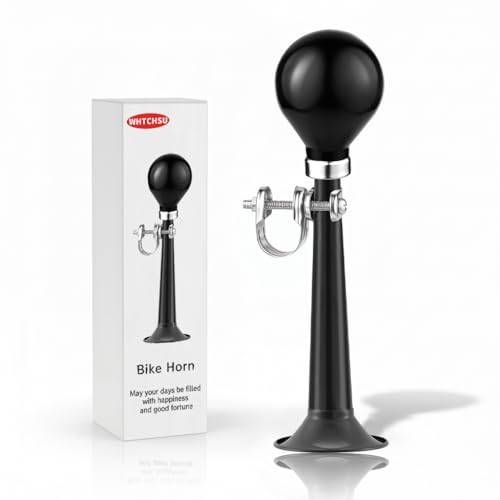
WHTCHSU Metal Squeeze Horn, Black has the longest specified horn in this comparison at 7.87 inches, with a black finish and an aluminum-alloy front section. Its rubber bulb provides the manual squeeze operation, and installation requires a screwdriver. The maker says it fits all bicycle handlebars, but the product gives no clamp diameter to compare with a particular bar. That makes fit less certain than a model with a measured clamp size; check your mounting area before choosing it if your handlebar is nonstandard.
Bottom line: Pick this if a longer horn matters more than having a clamp diameter.
How to Choose an Ooga Horn for a Bicycle
Choose by clamp fit first, then by horn length and material. Many standard bicycle grip sections are about 22.2 mm in diameter, but bars can taper or change diameter near the stem, so measure the exact mounting spot rather than relying on the bike’s general size. A longer horn also needs more clear space around the brake levers, shifter, and cables; leave room to reach every control without moving your hand off its normal position. Manual squeeze horns need the rider to press a bulb, unlike electronic horns activated by a button. For regular traffic use, keep an ordinary bell available where local rules require one; horn rules vary by location.
Handlebar Fit and Mounting Position
Measure the bar with a ruler or caliper at the intended clamp location; a 22.2 mm target is about 0.87 inch. Do not measure over a grip or tape, because the clamp attaches to the bar itself and may not sit securely on a soft covering. Position the horn where a thumb or fingers can squeeze its bulb without blocking a brake lever, shifter, or cable. A clamp that is loose can rotate, while overtightening can damage a bar or clamp. Before riding, check that the horn stays aligned and that steering and all controls move freely.
Manual Squeeze Horns Compared
Manual ooga horns work by squeezing a bulb to push air through a reed, creating the characteristic honk. Metal describes the horn body or bugle, not necessarily every part of the assembly; a rubber bulb remains part of these squeeze models. Use the table to narrow the choice by a measurable mounting feature and stated construction rather than sound claims, which are not consistently quantified here.
| Need | Useful choice | Check before riding |
|---|---|---|
| Measured 22.2 mm mount | Model with 22.2 mm clamp | Measure the bare bar at the clamp site |
| Stainless-steel construction | Model specifying polished stainless steel | Confirm clamp clears controls |
| Longer horn body | Model measuring 7.87 inches | Check space beside levers and cables |
Safe Use and Common Fit Mistakes
A bicycle horn is an alert, not a substitute for braking, steering, or yielding; reduce speed and keep control of the bike when approaching pedestrians. Squeeze only when needed, since loud signals at close range can startle people or be uncomfortable to hear. Common mistakes include measuring a grip instead of the bare bar, mounting over a cable, and placing the bulb where it cannot be reached while holding the handlebar. After installation, squeeze the bulb and inspect the clamp before the first ride, then recheck it if the horn shifts. In shared paths, use a signal early and leave room for others to respond.
Frequently Asked Questions
How do you measure a bicycle handlebar for a horn?
Measure the bare bar at the exact clamp location, not over the grip or tape. A common grip-area diameter is 22.2 mm, or about 0.87 inch, but verify your own bar.
How does a squeeze bicycle horn make its sound?
A squeeze bulb pushes air through a reed, which vibrates to produce the horn tone. Keep the bulb reachable without releasing your normal grip on the handlebar.
Where should an ooga horn sit on a bicycle?
Mount it where the bulb is reachable and the horn clears brake levers, shifters, and cables. Turn the handlebar fully in both directions after mounting to check clearance.
Can a bicycle horn replace a bell on every ride?
Not necessarily; bell requirements depend on local rules, and a manual horn is not automatically a legal substitute. Check the rules for the roads and paths where you ride.
How often should a bicycle horn clamp be checked?
Check the clamp after installation and before the first ride, then whenever the horn shifts or the handlebar has been serviced. A loose clamp can rotate into a control or cable.