
OUT White Brite Laundry Whitener Compared by Size and Form

OUT White Brite Powder, 76 oz is the OUT White Brite laundry whitener to choose for a larger supply of powder, while OUT White Brite Powder, 28 oz is the same brand’s smaller 28-ounce option. Both target stains such as rust and red clay on white clothing; choose an alternative if you prefer liquid, measured packets, or an oxygen-based whitener.
We earn a commission if you buy through links on this page. As an Amazon Associate I earn from qualifying purchases. Products are compared on manufacturer specifications, not hands-on testing.
- Best overall: OUT White Brite Powder, 76 oz – The 76-ounce powder is the larger OUT White Brite option and targets rust, hard-water yellowing, and red clay.
- Best for a smaller supply: OUT White Brite Powder, 28 oz – The 28-ounce OUT White Brite powder comes in a smaller package and is aimed at white clothes and uniforms.
- Best for liquid dosing: OxiClean White Revive Liquid, 45 fl oz – The 45-fluid-ounce oxygen-based liquid is a pour-in additive for machine-washable whites.
| Product | Best for | Form | Package size | Stain or use focus | Shop |
|---|---|---|---|---|---|
| OUT White Brite Powder, 76 oz | Larger powder supply | Powder | 76 oz | Rust, red clay, yellowing | Check Price on Amazon |
| OUT White Brite Powder, 28 oz | Smaller powder supply | Powder | 28 oz | Rust, red clay, color bleed | Check Price on Amazon |
| OxiClean White Revive Liquid, 45 fl oz | Pour-in liquid | Liquid | 45 fl oz | Dingy whites, stains | Check Price on Amazon |
| OxiClean White Revive Powder, 5 lb | Bulk powder option | Powder | 80 oz | Whites, presoak or wash | Check Price on Amazon |
| OxiClean White Revive Power Paks, 24 count | Premeasured packets | Packets | 24 count | Dingy whites, stains | Check Price on Amazon |
OUT White Brite Laundry Whitener and Alternatives
Compare the OUT White Brite powders with other whitener formats by package size and the laundry job each is designed to handle.
OUT White Brite Powder, 76 oz

For a larger package of OUT White Brite, this powder contains 76 ounces and is intended for brightening white clothes. The maker says its mineral-based formula targets rust, red clay, and yellowing from hard water or dirt, and can be used on many fabrics, including delicates. It is described as compatible with all washer types and septic-friendly. Choose it if those stain types and a larger powder container fit your laundry routine; the package size may be less convenient if you want a smaller amount to store.
Bottom line: Choose this if you want the larger OUT White Brite powder package for white laundry.
OUT White Brite Powder, 28 oz
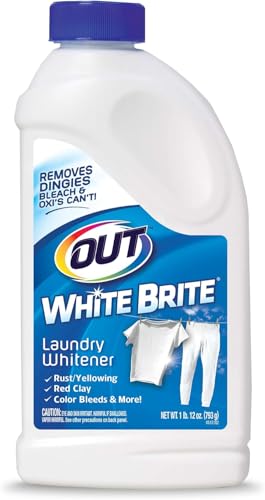
The 28-ounce package makes this the smaller OUT White Brite powder option, with a focus on white clothing and uniforms. The maker says it targets rust, iron-related yellowing, and red clay or dirt, and can reverse color bleeds. It is also described as safer on white and colorfast fabrics than bleach. That makes it a fit for buyers seeking this product in a smaller container, especially for uniform stains. Its smaller package is the tradeoff if you want more powder on hand.
Bottom line: Pick this for OUT White Brite in a smaller package, especially for white uniforms.
OxiClean White Revive Liquid, 45 fl oz
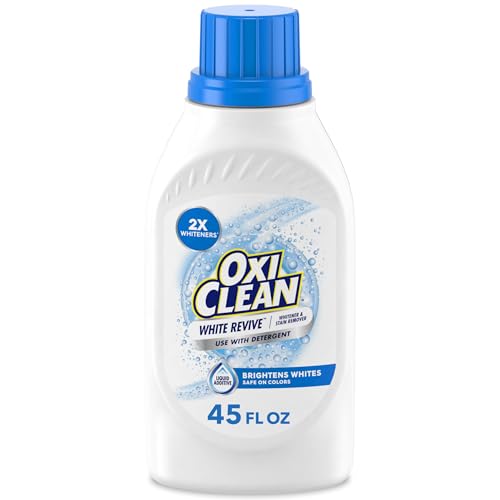
Unlike the OUT White Brite powders, this is a liquid oxygen-based whitener in a 45-fluid-ounce bottle. The maker says to use it with detergent to brighten faded whites and remove stains, and describes it as chlorine-free and color-safe. The product is intended for machine-washable white clothing, sheets, and canvas shoes. Choose the liquid if you prefer a pour-in additive over powder. It is a different formula and is not the OUT White Brite product, so buyers specifically seeking that brand should stick with OUT White Brite Powder, 76 oz or OUT White Brite Powder, 28 oz.
Bottom line: Choose this if you prefer a liquid oxygen-based additive to powder.
OxiClean White Revive Powder, 5 lb

This oxygen-based powder offers an 80-ounce container, slightly larger by weight than the 76-ounce OUT White Brite package. The maker says it can be used as a presoak or added to the washer, and that it is color-safe and compatible with HE and standard washers. Its flexible presoak-or-wash format may suit households that want more than one way to use a powder booster. Choose it for an oxygen-based alternative; buyers looking for OUT White Brite specifically should note the brand and formula differ.
Bottom line: Pick this if you want an oxygen-based powder with presoak and in-wash use.
OxiClean White Revive Power Paks, 24 count

Premeasured packets set this option apart from both loose powders and liquid. The maker says each pak goes into the washer drum before clothes and detergent, and describes the chlorine-free, oxygen-based booster as color-safe. A 24-count bag suits buyers who want to avoid measuring powder for each load. The fixed packet format is less adaptable if you need a partial dose or want to presoak laundry with a separately mixed solution; consider the powder alternative for that routine.
Bottom line: Choose these if premeasured packets suit your washer routine.
How to choose a laundry whitener
Choose by stain target, formula, and dosing format rather than package wording alone. Oxygen-based whiteners use an oxidizer such as sodium percarbonate, which releases hydrogen peroxide in water; chlorine bleach uses sodium hypochlorite and can damage or discolor some fabrics. For rust or red clay on whites, the OUT White Brite products specifically target those stains. For general dinginess, the OxiClean options are described as oxygen-based boosters. Powder and packets are convenient for washer use, while a liquid can be easier to pour. Always check the garment care label; avoid chlorine bleach on wool, silk, leather, and garments labeled nonchlorine bleach only.
A measurable rule helps with package choice: 76 ounces is more than twice the 28-ounce OUT White Brite size, while the 80-ounce OxiClean powder is 4 ounces larger than the 76-ounce package. If you do laundry infrequently or have limited storage, the 28-ounce package takes less space; if you often treat white uniforms, the larger package leaves more powder available. Follow the product label for dosing because the right amount depends on load size and washer use.
Powder, liquid, and packet formats
Powder, liquid, and packets differ most in measuring and preparation. Powder lets you measure a dose and may be mixed into a presoak where the label allows; a liquid is already dissolved and pours directly; packets avoid measuring but come in a fixed dose. Typical washing-machine loads hold about 12 to 16 pounds of dry laundry in many household machines, but capacity varies, so don’t assume a packet or scoop is enough for every load. HE washers use less water than traditional top-load machines, making label dosing especially important. Never add more whitener than directed to compensate for a large load.
Use the garment’s care label to decide whether a whitener is suitable, and test colorfast items on an inconspicuous area before treating them. A color-safe claim does not make every dye or fabric immune to fading. Never mix chlorine bleach with ammonia, vinegar, toilet cleaner, or other acids; dangerous gases can result. Store laundry products in their original containers, away from children and pets, and keep powders dry to reduce clumping.
Removing rust, red clay, and yellowing
Rust, red clay, and general yellowing may need different treatment, so identify the stain before choosing a whitener. OUT White Brite is specifically presented for rust, hard-water yellowing, and red clay; the OxiClean products are described more broadly for dingy whites and stains. Do not put a rust-stained garment through a hot dryer before treating it: heat can make some stains harder to remove. Brush off dry clay first rather than rubbing grit deeper into the weave, then pretreat or wash according to the product label and garment care instructions.
Hard water contains dissolved minerals that can leave deposits and make laundry appear dull; a whitener may help with appearance, but it does not repair fabric wear or restore damaged fibers. For persistent rust, avoid chlorine bleach because it can set rust stains. Repeat treatment only as directed, and inspect the garment before drying. Delicate fabrics need particular care: even when a product is described as suitable for delicates, the garment label and a hidden-area test remain the safer decision points.
Frequently Asked Questions
Can laundry whitener remove rust from clothes?
Some products are specifically formulated for rust, including the OUT White Brite options here. Do not use chlorine bleach on rust stains, and avoid machine drying until the stain is gone because heat can make it harder to remove.
Should whitener go in before or with detergent?
The required order depends on the product format and label. The OxiClean White Revive powder and packets are directed into the washer drum before clothes, while the liquid is described as an additive used with detergent.
Can laundry whitener be used on colored clothes?
Only use it on colors when the product label permits it and the garment is colorfast. Test a hidden area first; a color-safe claim does not guarantee every dye will resist fading.
What water temperature works best for laundry whitener?
Warm water can help many oxygen-based boosters dissolve and work, but the garment care label takes priority. Use the warmest water the fabric allows, and check the product label for any temperature directions.
Is laundry whitener safe for delicate fabrics?
Suitability depends on the specific fabric and product directions. Even where a product says it can be used on delicates, check the care label and test a hidden area before treating the whole garment.