
Outdoor Flooring Over Concrete: 4 Options Compared

For most concrete patios, Klyyo Clyro Outdoor Vinyl Roll is the clearest fit because its maker says it is designed for concrete and the 3.28-by-32.8-foot roll covers 107.6 square feet. Choose interlocking tiles instead when removable sections or a tile-by-tile layout better fits your space.
Outdoor flooring is a surface layer placed over an existing slab; the concrete should be sound, clean, and able to drain before covering it.
We earn a commission if you buy through links on this page. As an Amazon Associate I earn from qualifying purchases. Products are compared on manufacturer specifications, not hands-on testing.
- Best overall: Klyyo Clyro Outdoor Vinyl Roll – The roll is explicitly intended for concrete and covers 107.6 square feet.
- Best for wood appearance: PrimeZone Acacia Wood Deck Tiles – Acacia wood tiles have a 12-by-12-inch format and a plastic interlocking base.
- Best for drainage: Jocoevol Polypropylene Drainage Tiles – The polypropylene tiles have 0.65-inch support pegs for drainage.
- Best for simple tile layout: Dark Brown Pebble Plastic Deck Tiles – Plastic tiles snap together without tools and have a drainage structure.
| Product | Best for | Material and format | Tile or roll size | Thickness | Shop |
|---|---|---|---|---|---|
| Klyyo Clyro Outdoor Vinyl Roll | Larger flat areas | PVC vinyl roll | 3.28 × 32.8 ft; 107.6 sq ft | — | Check Price on Amazon |
| PrimeZone Acacia Wood Deck Tiles | Wood-look patios | Acacia wood with PP base | 12 × 12 in | 1 in | Check Price on Amazon |
| Jocoevol Polypropylene Drainage Tiles | Drainage-focused patios | Polypropylene tiles | 12 × 12 in | 0.61 in | Check Price on Amazon |
| Dark Brown Pebble Plastic Deck Tiles | Tool-free tile floors | Plastic tiles | — | — | Check Price on Amazon |
Outdoor Flooring Over Concrete Options
Match the covering to the slab’s drainage, the area you need to cover, and whether you want a roll or individual tiles.
Klyyo Clyro Outdoor Vinyl Roll

For covering a broad, flat slab with fewer separate pieces, this PVC vinyl roll measures 3.28 by 32.8 feet and covers 107.6 square feet. Its gray wood-grain surface is designed to cover worn or stained outdoor flooring, and installation tape is included. The maker says the roll is waterproof and UV resistant and recommends it for concrete, patios, balconies, and porches. It can be trimmed to fit, which suits a continuous surface better than a tile pattern. The trade-off is that it needs a flat, clean surface, so it is less adaptable than individual tiles on uneven concrete.
Bottom line: Choose this for a broad, flat concrete area where a cut-to-fit roll is preferable to tile seams.
PrimeZone Acacia Wood Deck Tiles

For a real-wood surface rather than a molded plastic finish, these 12-by-12-inch acacia tiles have a polypropylene base and interlocking edges. The 1-inch-high tile format makes them a more substantial layer than the thinner polypropylene drainage tiles here. The maker says the wood is FSC-certified and the tiles are designed for outdoor use in changing weather. Tool-free installation and removal suit renters or anyone who wants a sectional layout. The limitation is the wood surface: buyers wanting a uniform, hose-rinsable plastic covering may prefer a plastic tile or vinyl roll instead.
Bottom line: Choose these when a wood surface and removable square sections matter more than a continuous roll.
Jocoevol Polypropylene Drainage Tiles
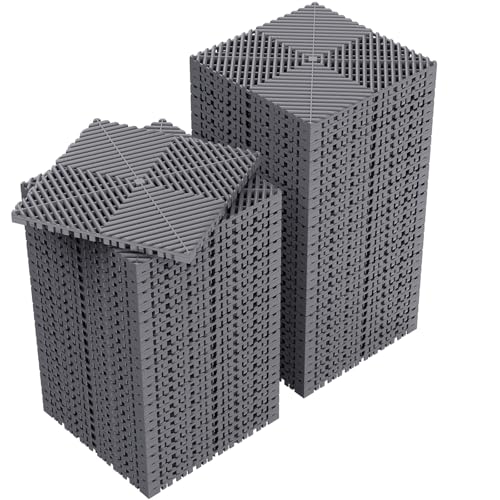
These polypropylene tiles prioritize drainage: each 12-by-12-inch square sits on 0.65-inch support pegs, creating space beneath the walking surface for water to pass. At 0.61 inch overall height, they form a thinner layer than the acacia tiles. The maker describes the surface as non-slip and the assembly as tool-free, which makes the tiles a practical option for patios or other areas where surface water is a concern. Their gray plastic finish does not provide a wood look, and the modular tile pattern remains visible across the floor.
Bottom line: Choose these for a modular plastic surface with drainage pegs beneath each tile.
Dark Brown Pebble Plastic Deck Tiles

These dark brown pebble-finish plastic tiles emphasize a snap-together layout with a drainage structure, making them suited to a tile-by-tile patio or balcony covering. The maker says the tiles are waterproof and weather resistant, and their tool-free installation allows the floor to be assembled or removed without cutting a full roll. The pebble finish is also a different visual choice from the wood-look roll or acacia squares.
Bottom line: Choose these for a snap-together plastic tile layout, after confirming dimensions and finished height.
How to Choose Outdoor Flooring Over Concrete
Start with drainage and slab condition, then choose the floor format. A concrete patio should slope away from the building; a common planning target is about 1/4 inch per foot, though existing construction and local requirements can differ. Do not cover standing water or loose, flaking concrete, because a surface layer cannot correct either problem. For a broad, flat area, a roll minimizes separate pieces; for a smaller area or a layout with corners, modular tiles are easier to arrange. Measure the slab in feet and multiply length by width to estimate area, then allow extra material for trimming or edge adjustments. If the slab is uneven, resolve high and low spots before installing a covering.
Allow for Drainage and Door Clearance
Keep water moving across and away from the slab rather than trapping it under a covering. Patio slope, drains, and the tile or roll design all affect how quickly water clears; open-backed tiles create a gap below the surface, while a continuous roll sits directly over the concrete. Before selecting a thicker surface, measure the gap beneath exterior doors and at transitions: every added inch of floor height reduces clearance by an inch. Avoid blocking weep holes, drains, or routes that direct water away from the house. If the slab has persistent puddles or moisture problems, correct those conditions first rather than relying on flooring to hide them.
Compare Tile and Roll Formats
Tiles suit layouts that benefit from smaller sections, while a roll covers a larger footprint with fewer joints. Use this format comparison to narrow the choice before measuring the exact area.
| Format | Useful when | Check before installing |
|---|---|---|
| Interlocking wood tiles | You want a wood surface in removable squares | Tile height and slab drainage |
| Interlocking plastic tiles | You want modular sections or drainage space | Tile dimensions and threshold clearance |
| Vinyl roll | You want broad, cut-to-fit coverage | Slab flatness and surface cleanliness |
Concrete joints and edges may remain visible through or between flooring, depending on the format. Dry-lay a small section first to check orientation, edge cuts, and door movement.
Prepare Concrete Before Covering It
Clean concrete and a dry installation surface help a covering sit evenly; remove grit, leaves, and loose coatings before laying tiles or a roll. New concrete commonly needs about 28 days to cure before a surface covering is applied, but weather, mix, and product requirements can change the timing. Patch cracks or spalled areas and let repairs cure as directed before installing flooring. Do not use a covering to conceal a slab that shifts, sheds material, or collects water. For the roll format, a flat, clean surface matters particularly because ridges and debris can telegraph through the covering; modular tiles can accommodate small layout changes but do not repair damaged concrete.
Frequently Asked Questions
How much extra outdoor flooring should I buy?
Measure the slab’s length and width, multiply them for square footage, and add material for edge cuts and layout adjustments. A simple rectangular area has fewer cuts than one with posts, corners, or drain openings.
Can outdoor flooring cover a sloped concrete patio?
A gentle slope helps drain water, but a steep or irregular slab can make the finished surface unstable or awkward. Check the floor height at the door and keep existing drains and water paths unobstructed.
How long should new concrete cure before flooring?
About 28 days is a common curing period for new concrete before applying a floor covering. Temperature, mix, and the covering’s installation requirements can affect the right wait.
Should concrete be sealed before outdoor flooring?
There is no universal answer because the covering’s attachment method and the sealer both matter. For a roll secured with tape, confirm the tape is compatible with the slab’s finish; do not seal concrete that is still curing.
How do I keep water from collecting under patio flooring?
Keep the slab’s drainage path open and clear debris from drains and tile gaps. A patio should generally fall away from the building, with roughly 1/4 inch of slope per foot as a common planning target.