
Outdoor Gas Can Storage: Cabinets Compared by Fit

For outdoor gas can storage, VEVOR 4-Cylinder Storage Cabinet is the only cabinet here designed to hold gas cylinders; ordinary resin yard boxes are not substitutes for fuel-rated storage. If you mean portable gasoline cans rather than cylinders, none of these products clearly identifies that purpose, so choose a storage solution designed for approved fuel cans.
We earn a commission if you buy through links on this page. As an Amazon Associate I earn from qualifying purchases. Products are compared on manufacturer specifications, not hands-on testing.
- Best overall: VEVOR 4-Cylinder Storage Cabinet – Its two-tier cabinet is made for four 33-pound cylinders.
- Best for yard gear: IWDOO 31-Cubic-Foot Resin Cabinet – The horizontal resin cabinet has 31 cubic feet of general outdoor storage.
- Best for flammable liquids: LOYALHEARTDY 12-Gallon Flammable Cabinet – The steel cabinet is intended for safe cans containing up to 12 gallons.
| Product | Best for | Intended storage | Capacity | Material | Shop |
|---|---|---|---|---|---|
| VEVOR 4-Cylinder Storage Cabinet | Propane cylinders | Gas cylinders | 4 × 33 lb cylinders | Carbon steel | Check Price on Amazon |
| LOYALHEARTDY 12-Gallon Flammable Cabinet | Safe-can storage | Flammable liquids | Up to 12 gal | Cold-rolled steel | Check Price on Amazon |
| IWDOO 31-Cubic-Foot Resin Cabinet | Outdoor yard gear | General outdoor items | 31 cu ft | Waterproof resin | Check Price on Amazon |
| LHBcraft 36-Cubic-Foot Resin Cabinet | Large yard storage | General outdoor items | 36 cu ft | HDPE resin | Check Price on Amazon |
Outdoor Gas Can Storage Options
Choose by the container you need to store; general outdoor cabinets and cylinder cabinets serve different purposes.
VEVOR 4-Cylinder Storage Cabinet

Unlike the general-purpose yard cabinets, this two-tier steel unit is built for horizontal cylinder storage and holds four 33-pound cylinders. Its 31.02 × 30.04 × 35-inch dimensions and yellow powder-coated carbon-steel construction make it a distinct choice for cylinder storage rather than portable gasoline cans. The maker says each tier supports up to 66 pounds and describes the finish as corrosion resistant. Choose it only when its horizontal layout and cylinder capacity match your tanks; it is not presented as a gasoline-can cabinet.
Bottom line: Pick this for storing compatible cylinders horizontally, not portable gasoline cans.
LOYALHEARTDY 12-Gallon Flammable Cabinet

This compact steel cabinet is the only option here explicitly meant for safe cans containing flammable liquid, rather than for yard items or compressed cylinders. It measures 17 × 17 × 22 inches and has a galvanized adjustable shelf with a 350-pound maximum load. The maker says the unit has a leak-proof sump, lock, and vents. Its 12-gallon capacity is a limit for the stored liquid, not a guarantee that every can arrangement will fit; confirm can dimensions and required installation conditions before choosing it for outdoor use.
Bottom line: Choose this for safe-can liquid storage when its dimensions and siting suit your setup.
IWDOO 31-Cubic-Foot Resin Cabinet

At 31 cubic feet, this is a general-purpose horizontal resin cabinet rather than a dedicated fuel cabinet. Its 47.6 × 26.8 × 42.13-inch footprint provides room for bulky outdoor items, with double doors, lockable access (lock sold separately), and a foot-operated lower latch. The maker says the resin is waterproof and designed to withstand weather. It may suit yard storage kept separate from fuel, but its general-purpose design does not establish suitability for gasoline cans or cylinders.
Bottom line: Use it for weather-exposed yard equipment, not as fuel-rated storage.
LHBcraft 36-Cubic-Foot Resin Cabinet
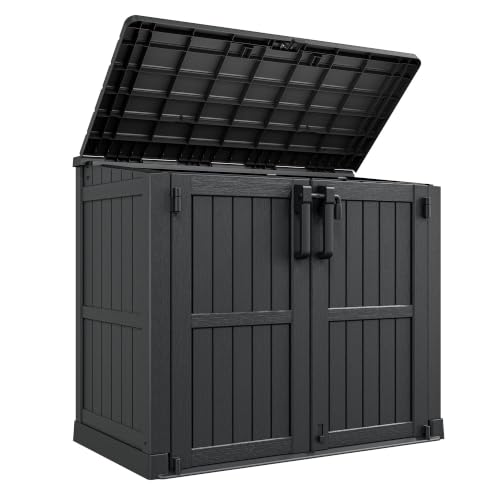
This resin shed offers the largest general-storage volume among the outdoor cabinets here at 36 cubic feet. It measures 51.1 × 29.1 × 43.3 inches and uses high-density polyethylene, with lock holes at the top and a foot-activated bottom latch. The maker describes it as waterproof and suited to patios and gardens. Unlike the cylinder and safe-can cabinets, it is for ordinary outdoor belongings; do not infer fuel compatibility from its weather resistance or lockable design.
Bottom line: Pick it for larger outdoor gear storage when fuel containment is not the goal.
Choose storage by the fuel container
Start by separating gasoline cans from compressed-gas cylinders: they require different storage arrangements, and a weatherproof yard box is not automatically a fuel cabinet. A product meant for cylinders may specify tank count and pounds per cylinder, while a flammable-liquid cabinet may specify safe-can volume. Portable gasoline cans should be approved containers intended for fuel; keep them closed and upright, away from ignition sources and living spaces. For any product, match the actual container dimensions and total loaded weight to the cabinet capacity. If the product does not identify gasoline-can use, do not assume it is suitable merely because it locks or resists rain.
Outdoor placement and ventilation
Gasoline storage outdoors still calls for a cool, well-ventilated location away from direct sun, heat, flames, and other ignition sources. Keep fuel away from doors, windows, and air intakes so vapors cannot drift indoors; gasoline vapor is heavier than air and can collect in low spots. Avoid placing cans in basements, pits, or enclosed sheds. Never store fuel near appliances with pilot lights or electrical equipment that can spark. Follow local fire rules and the fuel-container maker’s guidance, especially for distance from buildings and property lines, since requirements depend on location and quantity.
Compare cabinet types and capacity
Cabinet labels can sound similar while serving different contents. Use the unit and design purpose, not appearance, to narrow the choice: cubic feet describes general storage volume, gallons describe liquid capacity, and cylinder weight/count describe compatible tanks. The table separates the products by use.
| Cabinet type | Stated capacity | Suitable decision point |
|---|---|---|
| Horizontal cylinder cabinet | 4 cylinders, 33 lb each | Choose only for compatible cylinders and horizontal storage |
| Flammable-liquid cabinet | 12 gallons | Safe cans and cabinet dimensions must both fit |
| General resin storage | 31 or 36 cu ft | Use for non-fuel outdoor gear |
For cylinders, verify valve protection, restraint, and required upright or horizontal orientation for the particular gas; not every cylinder is designed to be stored horizontally. For liquid fuel, account for the can’s outside dimensions, not just its gallon label.
Common outdoor fuel-storage mistakes
A common mistake is treating waterproofing, a lock, or a large capacity as proof of fuel safety. Those features address weather, access, or volume; they do not by themselves establish ventilation, fire protection, or approval for gasoline. Another mistake is storing fuel in a cabinet attached to a house or in a garage where vapors may reach an ignition source. Keep fuel in the container designed for that fuel, tightly closed, and away from children. Do not decant gasoline near a running engine, hot equipment, or open flame. Check local fire-code limits before accumulating multiple cans or cylinders, since allowable quantities and placement rules can vary.
Frequently Asked Questions
Can gasoline cans go in a resin deck box?
Do not assume a general-purpose resin deck box is suitable for gasoline cans. Fuel storage needs an approved, closed gasoline container and placement away from heat, flames, and indoor air intakes; weather resistance alone does not establish fuel suitability.
Should propane cylinders be stored upright outdoors?
Store propane cylinders upright unless the cylinder is specifically designed and approved for another orientation. Keep cylinders outdoors in a well-ventilated area, away from heat and ignition sources, and protect the valve from damage.
How far should gasoline be kept from a house?
There is no single distance that applies to every location and quantity; local fire codes set requirements. Keep gasoline outdoors, away from doors, windows, air intakes, flames, and heat, and check local rules before selecting a storage spot.
Can I store gasoline in a locked shed?
A lock does not make a shed appropriate for gasoline storage. Use only approved fuel containers and avoid enclosed or attached spaces where vapor can build up or reach an ignition source.
How do I know if a cabinet fits my gas cans?
Measure each can’s length, width, and height, then compare those dimensions with usable interior clearance and door opening. Leave room to set cans upright and close the doors without pressing or tipping them.