
Outdoor Patio Tiles Over Concrete: Non-Slip Options

For outdoor patio tiles over concrete, BEEFURNI Cobbled Stone Tile, 12-inch is the named option with a textured pebble surface and water-draining gaps, useful when wet-weather grip is the deciding factor. Choose a different option if you need a large quantity of small pieces, a thicker raised drainage mat, or a brown wood-look appearance.
We earn a commission if you buy through links on this page. As an Amazon Associate I earn from qualifying purchases. Products are compared on manufacturer specifications, not hands-on testing.
- Best overall: BEEFURNI Cobbled Stone Tile, 12-inch – A textured pebble pattern is paired with drainage gaps and 12-inch square tiles.
- Best for larger areas: PrimeZone Plastic Deck Tile, 12-inch – The 432-piece set uses 12-inch squares for broad patio coverage.
- Best for brown finish: Brown Interlocking Deck Tile, 11.42-inch – Brown crossed-pattern tiles are 11.42 inches square and 0.79 inch high.
| Product | Best for | Tile size | Height | Pack count | Shop |
|---|---|---|---|---|---|
| BEEFURNI Cobbled Stone Tile, 12-inch | Wet patio areas | 12 × 12 in | 0.6 in | 60 tiles | Check Price on Amazon |
| Jocoevol Self-Drainage Tile, Gray | Raised drainage mat | 12 × 12 in | 0.61 in | 60 tiles | Check Price on Amazon |
| PrimeZone Plastic Deck Tile, 12-inch | Broad patio coverage | 12 × 12 in | 1 in | 432 pieces | Check Price on Amazon |
| Brown Interlocking Deck Tile, 11.42-inch | Brown patio finish | 11.42 × 11.42 in | 0.79 in | 68 tiles | Check Price on Amazon |
Outdoor Patio Tiles Over Concrete
Compare surface texture, drainage design, and dimensions before choosing tiles for a concrete patio.
BEEFURNI Cobbled Stone Tile, 12-inch

BEEFURNI Cobbled Stone Tile, 12-inch is the only option here with a pebble-pattern surface explicitly described as slip-resistant, making it the closest match for a wet patio. Each black plastic tile measures 12 by 12 inches and is 0.6 inch thick; the interlocking format also suits poolside and balcony use. Water passes through the gaps rather than sitting on the tile surface. The pack contains 60 tiles, so it may be less practical than a larger set for a broad patio; measure the area and allow for edge cuts before choosing a pack size.
Bottom line: Pick it when textured grip and drainage matter more than covering a large area with one pack.
Jocoevol Self-Drainage Tile, Gray
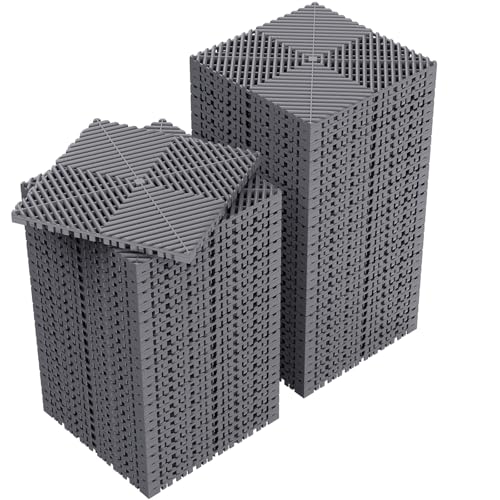
Jocoevol Self-Drainage Tile, Gray is a gray polypropylene drainage mat with support pegs, rather than a decorative stone-look tile. Each 12-inch square stands 0.61 inch high, creating space beneath the tile for water to drain. The interlocking edges press together without glue or tools, which can make it easier to lift sections for cleaning than a bonded floor. Its selling point is the drainage structure, not a specified surface pattern; buyers choosing primarily for grip should compare the actual surface texture and suitability for their conditions before installation.
Bottom line: Choose it when a raised, easy-to-assemble drainage surface is the main need.
PrimeZone Plastic Deck Tile, 12-inch

PrimeZone Plastic Deck Tile, 12-inch offers the largest piece count in this group: 432 dark gray plastic squares, each 12 by 12 inches and 1 inch high. That scale can suit a broad concrete patio, while the snap-interlocking format allows sections to be assembled or disassembled without tools. The maker describes the tiles as waterproof and all-weather, but the features do not establish a specific slip-resistance rating or surface texture. Confirm that the surface works for your expected wet conditions before selecting it for a poolside or frequently soaked area.
Bottom line: Pick it when a large patio area and modular assembly outweigh a specifically described grip pattern.
Brown Interlocking Deck Tile, 11.42-inch

Brown Interlocking Deck Tile, 11.42-inch stands apart with a brown crossed pattern and a wood-and-plastic construction, rather than the all-plastic options here. The 68 tiles are each 11.42 inches square and 0.79 inch high; the interlocking system is designed for tool-free assembly. The maker describes the tiles as suitable for indoor and outdoor use and says the design allows drainage. No particular slip-resistance property is given, so this is a less direct match when non-slip performance is the main requirement; consider it for appearance only after checking surface grip for the intended setting.
Bottom line: Choose it for a brown crossed-pattern finish when its surface suits your wet-weather needs.
How to choose patio tiles over concrete
Start with drainage and surface grip, then check height and total coverage. Interlocking outdoor tiles usually sit above the slab on a grid or pegs, allowing water to move beneath them; a textured top can add traction, but a product’s non-slip wording is not a substitute for a tested wet slip rating. For an area that stays damp, prioritize a clearly textured surface and a path for water to escape. Measure the patio in square feet, then divide by each tile’s face area: a 12-inch square covers 1 square foot, while an 11.42-inch square covers about 0.91 square foot. Add extra for edge cuts and irregular outlines.
Check concrete slope and drainage first
Concrete should direct water away from the house; a common exterior drainage target is about 1/4 inch of fall per foot. Interlocking tiles can let water through, but they do not correct a slab that slopes toward a doorway or holds puddles. Clear debris and inspect cracks before covering the surface, since trapped dirt and standing water can make upkeep harder. Raised tile heights in this group range from 0.6 to 1 inch, so account for the finished floor level at doors, steps, and transitions. With less than an inch of clearance at a threshold, choose a thinner tile and verify that the doorway still opens freely.
Compare tile sizes and installation
Tile dimensions affect layout more than appearance alone: 12-inch squares make a one-foot grid, while 11.42-inch squares require more pieces for the same area. Lay out a dry row along the longest edge before snapping sections together, and plan cuts at borders rather than narrow strips in a main walking route. Most interlocking patio tiles connect at their edges without adhesive, allowing them to be removed if access to the slab is needed. The chart summarizes the size and height differences that affect planning.
| Option | Tile dimensions | Height | Pack |
|---|---|---|---|
| BEEFURNI Cobbled Stone Tile, 12-inch | 12 × 12 in | 0.6 in | 60 |
| Jocoevol Self-Drainage Tile, Gray | 12 × 12 in | 0.61 in | 60 |
| PrimeZone Plastic Deck Tile, 12-inch | 12 × 12 in | 1 in | 432 |
| Brown Interlocking Deck Tile, 11.42-inch | 11.42 × 11.42 in | 0.79 in | 68 |
Keep outdoor tiles safer and cleaner
Standing water, algae, and loose debris can reduce traction even on a textured tile, so sweep the floor and clear drainage gaps regularly. Avoid assuming that a non-slip label means the surface is safe in every condition: wet footwear, soap, leaves, and frost change grip. Plastic tiles can become slippery if a film builds up, so wash away grime with water and a mild cleaner compatible with the material. Check connections after major temperature swings or heavy use, especially at edges and transitions where a raised corner could catch a shoe. For poolside paths, keep the walking surface free of hoses and other trip hazards.
Frequently Asked Questions
Can interlocking patio tiles go directly over concrete?
Yes, interlocking tiles can be placed over a sound, clean concrete slab without bonding them down. The slab still needs an outward drainage slope, commonly around 1/4 inch per foot, so water does not collect beneath the tiles.
How do I estimate how many patio tiles I need?
Measure the patio’s length and width in feet and multiply them for square footage; a 12-inch square tile covers 1 square foot. Add extra for edge cuts, corners, and irregular shapes rather than ordering only the exact calculated count.
Do drainage tiles stop water from pooling?
Drainage gaps let water pass through the tile surface, but they do not stop pooling caused by a flat or inward-sloping slab. A common exterior target is about 1/4 inch of fall per foot away from the building.
Are plastic patio tiles safe when wet?
Wet traction depends on the top texture and what is on the surface, such as soap, leaves, or algae. For frequently wet paths, favor a clearly textured tile and regularly clear debris from both the surface and drainage gaps.
How much height do patio tiles add over a slab?
Tile height adds directly to the finished floor level, with the options here ranging from 0.6 to 1 inch. Measure door clearance and step transitions before installation; a raised edge can create a trip point.