
Paint for Shoes Rubber: 4 Options Compared by Fit

For black shoe rubber and foam midsoles, Angelus Instant Midsole Color Restorer is the closest fit because its maker says it is formulated for those surfaces. Choose another option if you need a pen for small marks or paint specifically for smooth leather; these products do not all target rubber.
We earn a commission if you buy through links on this page. As an Amazon Associate I earn from qualifying purchases. Products are compared on manufacturer specifications, not hands-on testing.
- Best overall: Angelus Instant Midsole Color Restorer – Its maker says the midsole formula is designed for rubber and foam.
- Best for detail work: Wilkins Premium Midsole Marker – The marker has a 3-in-1 head and is intended for midsole marks and blemishes.
- Best for smooth leather: Angelus Flat Black Acrylic Leather Paint – The water-based acrylic paint is intended for smooth leather goods and comes in a 1-ounce bottle.
| Product | Best for | Format | Volume or count | Target surface | Shop |
|---|---|---|---|---|---|
| Angelus Instant Midsole Color Restorer | Rubber midsoles | Liquid restorer | 3.3 fl oz | Rubber and foam midsoles | Check Price on Amazon |
| Wilkins Premium Midsole Marker | Midsole touch-ups | Marker | 2–4 pairs claimed | Leather, suede, fabric, soft foam | Check Price on Amazon |
| Angelus Flat Black Acrylic Leather Paint | Smooth leather panels | Liquid paint | 1 fl oz | Smooth leather, canvas | Check Price on Amazon |
| Umidoby Black Fabric Markers | Small black scuffs | Marker | 1 count | Fabric, leather | Check Price on Amazon |
Paint for Shoes Rubber
Match the paint or restorer to the shoe surface and the size of the area you need to recolor.
Angelus Instant Midsole Color Restorer

For the clearest rubber-specific match here, Angelus Instant Midsole Color Restorer is made for midsoles. Its maker says the black formula works on rubber and foam and is intended to recolor worn, faded midsoles. The 3.3-ounce size suits broader midsole areas better than a narrow marker tip. It is a midsole restorer, not a general paint for every shoe component, so it is a poor choice for fabric uppers or leather panels. Keep it off the tread: friction from walking can wear color away faster on the ground-contact surface.
Bottom line: Choose this for recoloring a black rubber or foam midsole.
Wilkins Premium Midsole Marker
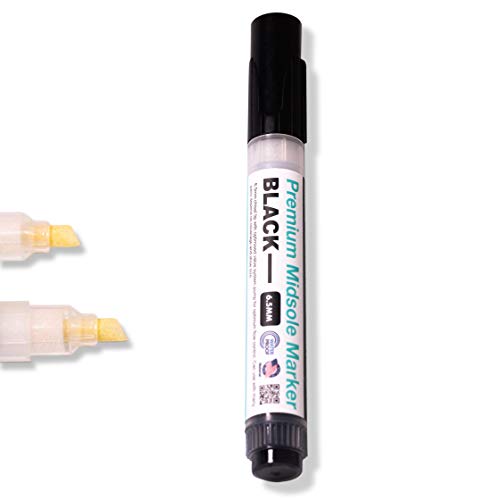
Wilkins offers a marker format for midsole touch-ups, while its surface range names soft foam rather than rubber. The acrylic-based black paint has a 3-in-1 head and a natural matte finish; its maker says one layer can make a visible difference and claims coverage for 2–4 pairs. That makes it a useful option for detailed application when foam is the target. It is only a partial match for rubber shoes because a rubber-specific surface is not among the materials. Use it where the shoe material matches its intended surface.
Bottom line: Pick it for precise midsole marks on soft foam.
Angelus Flat Black Acrylic Leather Paint

Unlike the midsole-focused options, Angelus Flat Black is a small-bottle acrylic paint aimed at smooth leather goods, including leather shoes, and canvas. The 1-ounce water-based formula has a low-shine finish, and its maker says it dries quickly and remains flexible without cracking or peeling. That flexibility is relevant when a shoe bends, but the surface list does not include rubber. Choose it for a smooth leather shoe panel rather than assuming it will adhere to a rubber sole. Soap and water are the cleanup method.
Bottom line: Choose it for smooth leather panels, not a rubber sole.
Umidoby Black Fabric Markers
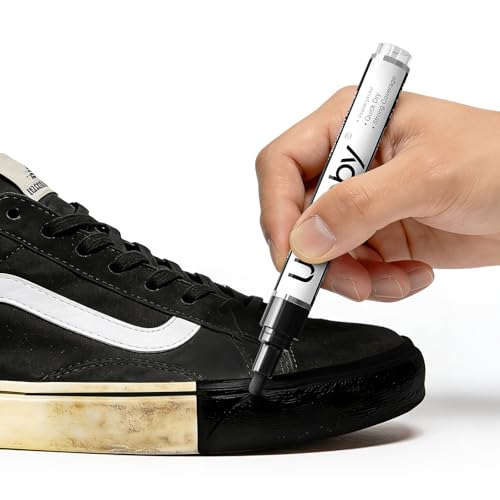
Umidoby is a single black marker for localized marks, rather than a bottle of general-purpose shoe paint. The maker describes it for scratches and scuffs on black sneakers, leather dress shoes, and canvas, with a quick-drying, flexible, water-resistant finish. That application style can suit small touch-ups on a compatible upper, but rubber is not among the surfaces named. It is therefore a less certain choice for a rubber sole or midsole than a product formulated for those materials. The one-marker pack is also less suited to recoloring a broad area.
Bottom line: Use it for small scuffs on black fabric or leather.
How to Choose Paint for Shoe Rubber
Start with the exact surface: rubber, soft foam, leather, and fabric do not necessarily accept the same coating. Shoe rubber is often smooth and flexible, so a coating needs both surface compatibility and enough flexibility to move with the shoe. A product explicitly made for rubber or midsoles is a better starting point than one aimed only at leather or canvas. Clean off dirt and oils first and let the material dry fully; residue can interfere with adhesion. Apply thin coats rather than one heavy layer, since thick paint is more likely to look uneven or crack as the shoe flexes. If you cannot identify the sole material, test a small hidden area before covering a visible panel.
Where Shoe Rubber Paint Can Wear
Keep color off the tread that contacts the ground whenever possible. Tread blocks and grooves flex and scrape against pavement, so even a flexible coating can wear quickly in those high-friction areas. Midsole sidewalls are a more suitable target for recoloring because they are visible but do not take the same direct abrasion as the outsole tread. Rubber also varies: some shoe soles have smooth rubber, while others use textured or coated compounds that may not hold paint equally well. Clean, dry, lightly handled surfaces generally give coatings a better chance to bond. Avoid assuming a paint made for leather, canvas, or foam is suitable for every rubber compound.
Marker, Paint, and Midsole Restorer Compared
Format affects control and coverage: markers suit small marks, while liquid products can cover larger areas. Check the surface named by the maker as well as the format; a marker is not automatically compatible with rubber, and a midsole product is not necessarily intended for an upper. This chart summarizes the primary distinction.
| Format | Useful for | Key fit check |
|---|---|---|
| Marker | Small scuffs and detail work | Confirm the surface material is within the range |
| Acrylic shoe paint | Smooth leather or canvas panels | Do not assume leather suitability means rubber suitability |
| Midsole restorer | Recoloring a midsole | Look for rubber or foam compatibility |
Preparing and Applying a Shoe Color Restorer
Preparation matters as much as color choice: remove loose dirt, then make sure the surface is clean and completely dry before applying paint. Keep coats thin and even, especially around bends and edges where a thick film can crack or peel. Allow each coat to dry before adding another, and follow the product’s own drying and curing directions because formulas differ. A small hidden-area test can reveal poor adhesion or an unwanted finish before the visible sidewall is coated. Do not paint the outsole tread as a shortcut to a uniform look; the walking surface experiences repeated abrasion and can become slippery or lose color quickly.
Frequently Asked Questions
Can regular acrylic paint go on shoe rubber?
Not every acrylic paint is formulated to adhere to shoe rubber. Look for a product that specifically names rubber or midsoles, and test a small hidden spot first because rubber compounds and surface finishes differ.
Should I paint the shoe tread or just the midsole?
Keep paint on the midsole sidewall and away from the tread that contacts the ground. Tread sees repeated abrasion, so color can wear quickly and a coating may affect traction.
How should I prepare rubber before painting it?
Remove dirt and residue, then let the rubber dry completely before applying color. Oils or moisture can interfere with adhesion, and testing a hidden area helps check compatibility.
How many coats of shoe rubber paint should I use?
Apply thin coats and let each dry before adding another; a heavy coat is more likely to look uneven or crack when the shoe flexes. Follow the product’s directions for drying and curing because formulas vary.
Will paint stay on a flexible shoe sole?
A flexible coating is better suited to a bending shoe surface than a rigid one, but adhesion still depends on the rubber and preparation. Avoid coating high-abrasion tread, where walking can wear paint away quickly.