
Palmer’s Body Oil: 5 Formulas Compared by Use

Palmer’s Coconut Body Oil in the 8.5-ounce pour bottle suits most shoppers seeking a straightforward body moisturizer, because it pairs coconut and Tahitian Monoi oils with 48-hour moisture.
Choose the spray for a smaller 5.1-ounce package, the shea formula for dry or sensitive skin, the Brazilian Coco formula for a firming-focused routine, or the trio to rotate three formulas.
We earn a commission if you buy through links on this page. As an Amazon Associate I earn from qualifying purchases. Products are compared on manufacturer specifications, not hands-on testing.
- Best overall: Palmer’s Coconut Body Oil, 8.5 oz – The 8.5-ounce pour bottle combines coconut and Tahitian Monoi oils with a 48-hour moisture claim.
- Best for spray application: Palmer’s Coconut Body Oil Spray, 5.1 oz – The 5.1-ounce spray uses the same coconut and Tahitian Monoi oil blend.
- Best for sensitive skin: Palmer’s Raw Shea Body Oil, 8.5 oz – Raw shea and vitamin E are positioned for dry, sensitive and eczema-prone skin.
- Best for variety: Palmer’s Body Oil Variety Pack, 3 x 8.5 oz – The set combines cocoa butter, coconut and shea body oils in three 8.5-ounce bottles.
| Product | Best for | Formula | Size | Application | Shop |
|---|---|---|---|---|---|
| Palmer’s Coconut Body Oil, 8.5 oz | Everyday moisturizing | Coconut, Tahitian Monoi | 8.5 fl oz | Pour cap | Check Price on Amazon |
| Palmer’s Coconut Body Oil Spray, 5.1 oz | Spray application | Coconut, Tahitian Monoi | 5.1 fl oz | Spray | Check Price on Amazon |
| Palmer’s Raw Shea Body Oil, 8.5 oz | Sensitive skin | Raw shea, vitamin E | 8.5 fl oz | Pour or bath | Check Price on Amazon |
| Palmer’s Brazilian Coco Firming Oil, 6.5 oz | Firming routines | Coconut, vitamin E, peptides | 6.5 fl oz | Body oil | Check Price on Amazon |
| Palmer’s Body Oil Variety Pack, 3 x 8.5 oz | Formula variety | Cocoa, coconut, shea | 3 x 8.5 fl oz | Three bottles | Check Price on Amazon |
Palmer’s Body Oils Compared
Compare the oil blends and formats to choose the formula that best fits your skin-care routine.
Palmer’s Coconut Body Oil, 8.5 oz

The 8.5-ounce pour bottle is the larger single-bottle coconut option, with the same blend as Palmer’s 5.1-ounce spray. Its formula includes Fair Trade Certified organic extra virgin coconut oil and Tahitian Monoi oil, and the brand says it provides 48-hour moisture and absorbs without greasiness. Use it after bathing or when skin needs a moisture boost. This is a straightforward fit for shoppers who want one coconut formula in a pour bottle; choose another option if you want spray application, a sensitive-skin-focused shea blend, or several formulas in one set.
Bottom line: Choose this if you want a single coconut body oil in a larger pour bottle.
Palmer’s Coconut Body Oil Spray, 5.1 oz

The 5.1-ounce spray is the compact coconut option, while the 8.5-ounce version comes in a pour bottle. Its coconut oil and Tahitian Monoi blend is described by the brand as fast-absorbing and non-greasy, with 48-hour moisture. The spray format suits someone who prefers applying body oil without pouring it into a hand first. It has less volume than the larger bottle, so it is a less suitable pick if bottle size matters more than spray application.
Bottom line: Pick this for spray application and a smaller bottle.
Palmer’s Raw Shea Body Oil, 8.5 oz

The raw shea formula is the option specifically positioned for dry, sensitive and eczema-prone skin, unlike the coconut oils. It combines African shea butter and vitamin E; the brand says it absorbs without greasiness and provides 48-hour moisture. Palmer’s suggests adding it to bathwater or applying after a shower. Choose it when the shea-and-vitamin-E blend is a priority. The formula is not the coconut scent-and-ingredient option, and a cosmetic body oil is not a treatment for eczema or other skin conditions.
Bottom line: Choose this for a shea-and-vitamin-E body oil aimed at sensitive skin.
Palmer’s Brazilian Coco Firming Oil, 6.5 oz
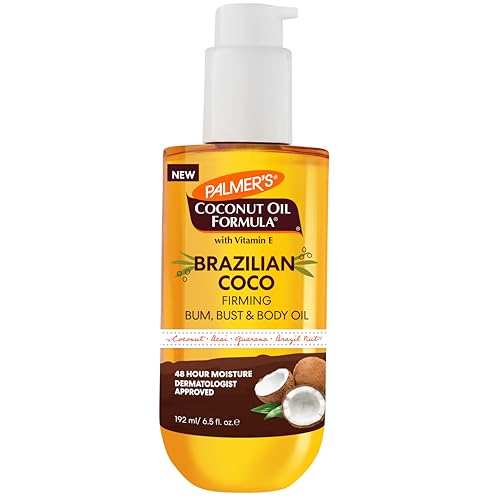
The Brazilian Coco formula is the only single bottle here marketed for a firming-focused routine rather than general moisturizing alone. It combines coconut oil and vitamin E with ingredients including peptides, hyaluronic acid, and several plant oils. The brand claims 48-hour moisture and a visible firming effect in as little as two weeks; those are performance claims, not a guarantee. It is intended for areas such as the stomach, arms, thighs, bust and bum. Choose another formula if you want the simpler coconut blend, a spray format, or a sensitive-skin focus.
Bottom line: Pick this if you specifically want a body oil marketed for a firming routine.
Palmer’s Body Oil Variety Pack, 3 x 8.5 oz

The variety pack is the only choice that includes three different Palmer’s body oil formulas: cocoa butter, coconut and shea, each in an 8.5-ounce bottle. The brand says the oils provide 48-hour moisture and can be used on damp, dry or wet skin, in the shower, as massage oil, or blended with body lotion. This set fits someone who wants to alternate formulas or use different oils in a routine. It is less suited to anyone who wants only one formula or prefers the smaller spray bottle.
Bottom line: Choose the trio if you want cocoa, coconut and shea formulas together.
How to choose a Palmer’s body oil
Choose by formula and application first: coconut is the general moisturizing blend, shea is positioned for sensitive skin, and Brazilian Coco is marketed for firming. Coconut oil is an emollient, meaning it helps soften skin by reducing moisture loss at the surface; body oils generally work best when applied to damp skin after bathing. For broader hydration, apply a body lotion first and seal it with a thin oil layer, rather than using a heavy coat that can feel slick. The 5.1-ounce spray and 8.5-ounce pour bottle share the coconut blend, so the deciding difference is format and volume. The trio is a practical choice when you want multiple formulas rather than a single repeat-use blend.
What to know about body oil and sensitive skin
Body oils help soften skin but do not replace treatment for eczema or other skin conditions. For sensitive skin, test a small amount on a limited area and wait 24 hours before broader use; stop if irritation develops. Fragrance and botanical ingredients can bother some users even when a product is marketed for sensitive skin. Apply a thin layer to damp skin, since water on the skin helps spread oil and reduces the amount needed. Avoid using oil on broken or inflamed skin unless a clinician advises it. The shea formula is the one in this group specifically positioned for sensitive and eczema-prone skin, but that positioning does not make it a medical treatment.
Body oil formats and routine choices
Use this guide to match a formula with the routine rather than treating all body oils as interchangeable.
| Need | Formula or format | Why it fits |
|---|---|---|
| Single coconut formula | Pour bottle or spray | Same coconut and Tahitian Monoi blend; choose by format and size |
| Sensitive-skin focus | Raw shea with vitamin E | Positioned for dry and sensitive skin |
| Firming-focused routine | Brazilian Coco | Marketed for firming and toning |
| Rotate formulas | Three-bottle set | Cocoa, coconut and shea oils together |
Body oil can make floors and tubs slippery, especially when used in the shower or bath. Keep the bottle and oily hands away from walking surfaces, and rinse any residue from the tub before stepping out. A spray format can also disperse oil beyond the intended area, so aim it close to skin and away from the floor.
How to apply body oil without a greasy feel
Apply a small amount to damp skin within a few minutes after bathing; a thin layer usually spreads more evenly than oil on fully dry skin. Allow the surface to absorb before dressing, because oils can transfer to fabric and leave slippery residue. If you use a body lotion too, layer lotion first and oil second to help reduce water loss. Avoid combining multiple oils at once until you know how your skin responds, particularly with a new formula. The variety pack can support alternating formulas, but using all three on the same area is not necessary for hydration.
Frequently Asked Questions
Should body oil go on damp or dry skin?
Body oil is easiest to spread over damp skin after bathing, and a thin layer is usually enough. Pat skin rather than rubbing it fully dry before application.
Can body oil replace body lotion every day?
Body oil can soften skin, but a lotion often adds water-based hydration that oil alone does not provide. For very dry skin, apply lotion first and a light oil layer afterward.
How much body oil should I apply at once?
Start with a few drops for each limb and add only enough to leave a light sheen. A heavy coating can feel slippery and transfer to clothing.
Can body oil be used in a bathtub?
Oil can make a tub and surrounding floor slippery, so avoid stepping onto an oily surface. Clean the tub before the next use and take care when getting out.
How should I patch test a new body oil?
Apply a small amount to a discreet area and wait 24 hours before broader use. Stop using the oil if redness, itching or irritation appears.