
Permanent Black Fabric Dye: 5 Options Compared

For a ready-made kit to overdye or refresh black clothing, Rit Back to Black Dye Kit stands out because it includes a dye fixative; the right choice still depends on the fabric fiber. All-purpose dye suits many natural fibers and nylon, while fabric with 35% or more polyester, acrylic, or acetate calls for synthetic-fiber dye.
Choose a single bottle or powder packet if you want dye without the kit’s fixative, and compare package quantities with the weight of the fabric. Check the garment’s fiber content before choosing, especially for blended fabrics.
We earn a commission if you buy through links on this page. As an Amazon Associate I earn from qualifying purchases. Products are compared on manufacturer specifications, not hands-on testing.
- Best overall: Rit Back to Black Dye Kit – Includes Jet Black All-Purpose Dye, Colorstay Dye Fixative, and gloves.
- Best for powder dyeing: Tulip Permanent Fabric Dye Powder, Black – One 1.76-ounce packet makes 1 gallon of dye and covers up to 1/2 pound of fabric.
- Best for multiple projects: Rit All-Purpose Liquid Dye, Black, 3-Pack – The pack contains three 8-ounce bottles and covers a range of natural fibers and nylon.
| Product | Best for | Format | Amount | Fabric fit | Shop |
|---|---|---|---|---|---|
| Rit Back to Black Dye Kit | Black clothing refresh | Kit | 1 count | Cotton, linen, silk, wool, rayon, ramie | Check Price on Amazon |
| Tulip Permanent Fabric Dye Powder, Black | Powder dyeing | Powder packet | 1.76 oz | Natural and cotton/poly fabrics | Check Price on Amazon |
| Rit All-Purpose Liquid Dye, Black, 3-Pack | Several projects | Liquid dye | 3 × 8 fl oz | Cotton, linen, silk, wool, rayon, ramie | Check Price on Amazon |
| Rit Liquid Fabric Dye, Black, 8 oz | Single bottle | Liquid dye | 8 oz | Crafting, clothing, décor | Check Price on Amazon |
| Rit All-Purpose Liquid Dye, Black, 4-Pack | Four-bottle supply | Liquid dye | 4 bottles | — | Check Price on Amazon |
Permanent black fabric dye options
Compare these black dyes by format, quantity, and the fibers they are intended to color.
Rit Back to Black Dye Kit

Unlike the single-dye options, this kit pairs Jet Black All-Purpose Dye with Colorstay Dye Fixative and gloves. The brand says it is intended to restore faded clothing or overdye other colors to black, and lists cotton, linen, silk, wool, rayon, ramie, and nylon among suitable fabrics. That combination makes it a useful pick for someone who wants dye and a fixative together. Its main limitation is fiber compatibility: garments with substantial polyester, acrylic, or acetate need a synthetic-fiber dye approach instead.
Bottom line: Pick this kit if you want black dye with a fixative for a compatible garment.
Tulip Permanent Fabric Dye Powder, Black
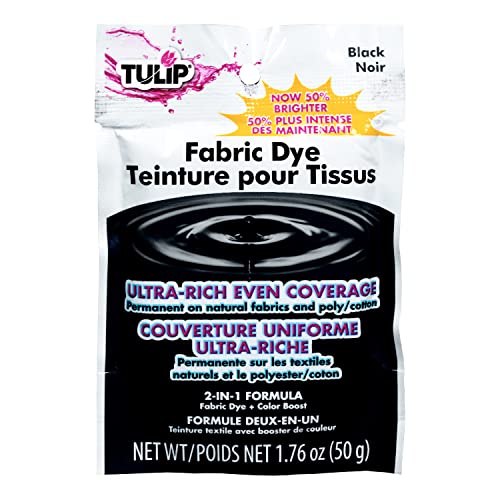
This is the only powder option in the group, with a 1.76-ounce packet intended to make 1 gallon of dye and color up to 1/2 pound of fabric. The brand says it uses a traditional hot-water method and is designed for natural and cotton/poly fabrics, with strongest results on natural fibers. It suits a small one-color project or dip-dye work where a powder format is preferred. The capacity is a limitation for larger pieces: weigh the fabric and compare it with the packet’s coverage before starting.
Bottom line: Choose this packet for a small project that fits its fabric capacity.
Rit All-Purpose Liquid Dye, Black, 3-Pack

This multipack supplies three 8-fluid-ounce bottles, unlike the single-bottle and one-count options. The brand says the all-purpose liquid dye can color cotton, linen, silk, wool, rayon, ramie, and nylon, and can also be used on materials such as wood, wicker, paper, and cork. It can suit someone planning multiple projects or wanting extra dye on hand. The key limitation is synthetic content: the brand directs users to a synthetic-fiber dye when the fabric contains 35% or more polyester, acrylic, or acetate.
Bottom line: Choose the multipack when you have several compatible dye projects.
Rit Liquid Fabric Dye, Black, 8 oz

This 8-ounce black liquid dye is a single-bottle option for clothing, crafts, and décor projects. The brand’s directions call for mixing dye into hot water with 1 teaspoon of liquid dish detergent, then submerging the fabric until it reaches the desired shade. That makes it suited to someone who wants to control the depth of color during a soak. The directions do not establish fiber compatibility for every fabric, so check the dye packaging against the garment’s fiber content before committing to a project.
Bottom line: Pick the single bottle for a controlled soak-dye project.
Rit All-Purpose Liquid Dye, Black, 4-Pack

This option is a four-bottle pack of black Rit All-Purpose Liquid Dye, making it the largest bottle count among the choices here. It may suit a project that needs multiple bottles, but its fabric compatibility and the amount in each bottle should be confirmed before choosing it for a specific garment. All-purpose dye generally targets natural fibers and some nylon; fabric with 35% or more polyester, acrylic, or acetate calls for synthetic-fiber dye instead. The product name gives the bottle count but not a usable per-bottle volume, so that quantity is the key limitation to resolve.
Bottom line: Choose the four-pack only after confirming bottle volume and fabric compatibility.
How to choose black fabric dye
Choose dye by fiber content first, then match the amount to the fabric weight. All-purpose dyes are commonly used on cellulose fibers such as cotton, linen, and rayon, as well as protein fibers such as wool and silk; nylon can also take many all-purpose dyes. Polyester, acrylic, and acetate behave differently, and the Rit guidance calls for a synthetic-fiber dye when these fibers make up 35% or more of the fabric. Read the garment label, including blend percentages, before selecting a dye. For a blend below that threshold, color may still vary according to the fiber mix, so a small hidden-area test can help assess the result. Choose the kit if a fixative is useful, or choose powder or liquid based on the process you prefer.
How much dye a black fabric project needs
Match dye quantity to dry fabric weight rather than garment count: a heavy pair of pants takes more coverage than a lightweight shirt. The Tulip packet here makes 1 gallon of dye and is intended for up to 1/2 pound of fabric, giving a concrete capacity for smaller projects. Bottle count alone does not tell you how much fabric a dye batch will cover, so check the package directions for the specific amount and method. Keep the fabric submerged and moving during a hot-water dye process to reduce uneven patches, and use a vessel large enough for the piece to move freely. Do not assume that adding extra dye will overcome an unsuitable fiber blend.
Liquid, powder, and dye kits compared
Liquid dye is ready to measure, powder needs dissolving, and a kit can combine dye with an additional treatment. The Rit Back to Black kit includes Colorstay Dye Fixative and gloves, while the Tulip packet uses a hot-water powder method. Those format differences matter because dyeing requires thorough mixing: undissolved powder can leave concentrated spots, and crowded fabric can color unevenly. For a useful comparison, identify the kind of project and the package capacity before choosing a format.
| Project need | Format to consider | What to check |
|---|---|---|
| Fixative included | Kit | Fiber compatibility |
| Small batch with a capacity | Powder packet | Fabric weight, up to 1/2 pound here |
| Several dye projects | Multi-bottle pack | Bottle volume and package coverage |
Safe setup and avoiding uneven results
Use gloves and protect nearby surfaces when working with dye, especially with hot water; the kit includes gloves, but other options may require separate protection. Keep dyeing tools separate from cookware and food preparation, and use a vessel large enough that fabric can move through the bath. Common causes of blotchy results include folds that stay pressed together, poor circulation, and dye that has not dissolved evenly. Wash the item separately after dyeing until excess color no longer transfers, then follow the dye package’s care directions. A black result can also shift with the original color and fiber mix, so do not treat the word “permanent” as a guarantee that every textile will have identical shade or washfastness.
Frequently Asked Questions
Can all-purpose dye color polyester clothing?
All-purpose dye is not the right choice when polyester, acrylic, or acetate make up 35% or more of the fabric; the Rit guidance recommends synthetic-fiber dye at that threshold. Check the garment label for blend percentages before dyeing.
How much fabric does one Tulip packet cover?
One 1.76-ounce Tulip packet makes 1 gallon of dye and can color up to 1/2 pound of fabric. Weigh the dry fabric and compare it with that limit before mixing.
Does black fabric dye work on colored clothes?
Dye can overdye colored clothing, but the starting color affects the finished shade because dye adds color rather than removing the original. The Back to Black kit is described for overdyeing clothing of any color to black, but check fiber compatibility first.
Do I need a fixative for black fabric dye?
A fixative is a separate treatment intended to help reduce bleeding and fading; the Back to Black kit includes Colorstay Dye Fixative. Follow the dye and fixative package directions, since dye formulas and fabric fibers affect the process.
How can I avoid uneven black dye coverage?
Use enough water for the fabric to move freely, dissolve dye thoroughly, and keep the fabric circulating rather than bunched in folds. Uneven mixing or restricted movement can create patchy results, particularly during a hot-water dye process.