
Phosphorus Binder for Dogs: Powder and Capsule Options

For a phosphorus binder for dogs, start with the formula your veterinarian recommends and whether you can mix a powder into each meal or prefer sprinkle capsules. Rx Vitamins Phos-Bind 35 g is the closest match for a straightforward aluminum hydroxide powder; choose another option if you want an aluminum-hydroxide-free blend or capsules.
We earn a commission if you buy through links on this page. As an Amazon Associate I earn from qualifying purchases. Products are compared on manufacturer specifications, not hands-on testing.
- Best overall: Rx Vitamins Phos-Bind 35 g – A superfine aluminum hydroxide powder in a 35 g size.
- Best for aluminum-free formula: Vetoquinol Epakitin 60 g – Its formula uses lactose, calcium carbonate, and hydrolyzed soy protein without aluminum hydroxide.
- Best for sprinkle capsules: Nutramax Naraquin 60 Count – Capsules can be sprinkled on food with each meal for measuring convenience.
| Product | Best for | Form | Binder ingredients | Size | Shop |
|---|---|---|---|---|---|
| Rx Vitamins Phos-Bind 35 g | Fine powder | Powder | Aluminum hydroxide | 35 g | Check Price on Amazon |
| Vetoquinol Epakitin 60 g | Aluminum-free powder | Powder | Chitosan, calcium carbonate | 60 g | Check Price on Amazon |
| Nutramax Naraquin 60 Count | Sprinkle capsules | Sprinkle capsules | Ferric citrate, calcium acetate, chitosan | 60 capsules | Check Price on Amazon |
| Rx Vitamins Phos-Bind 200 g | Larger powder size | Powder | Aluminum hydroxide | 200 g | Check Price on Amazon |
Phosphorus Binders for Dogs
Compare these options by binder ingredients, serving format, and package size before discussing a choice with your veterinarian.
Rx Vitamins Phos-Bind 35 g

For a small package of aluminum hydroxide powder, Rx Vitamins Phos-Bind 35 g comes in a 35 g size. Rx Vitamins says the superfine powder is tasteless and odorless and can be mixed into dog food. That format may suit a dog whose meals are easy to portion and mix. The package is much smaller than the 200 g version, so it may be more practical when you want a smaller quantity on hand. A powder must be measured consistently and mixed with food as directed by your veterinarian; ask about timing if your dog takes other oral medicines.
Bottom line: Choose this if your veterinarian recommends aluminum hydroxide and you prefer a fine powder in a smaller package.
Vetoquinol Epakitin 60 g
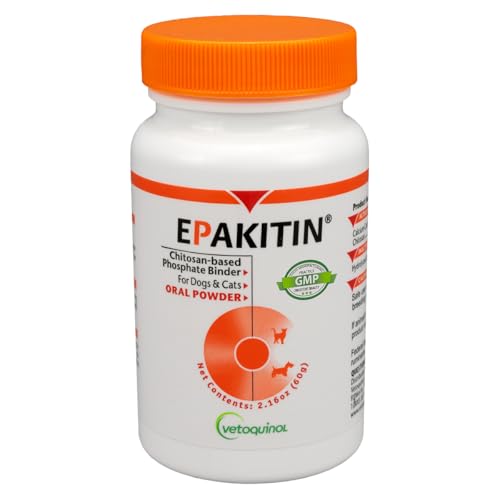
Unlike the aluminum hydroxide powders, Vetoquinol Epakitin 60 g is an aluminum-hydroxide-free powder with lactose, calcium carbonate, and hydrolyzed soy protein. Vetoquinol says it acts as a phosphate binder and blends with food as a palatable mix. The 60 g package suits buyers comparing a multi-ingredient powder rather than a single-ingredient aluminum hydroxide option. Its soy-protein ingredient matters for dogs with a relevant dietary restriction, so check the full formula with your veterinarian before use. As with any binder, the veterinarian should decide whether its ingredients fit your dog’s diet and lab results.
Bottom line: Choose this if your veterinarian prefers an aluminum-hydroxide-free powder and the ingredients suit your dog.
Nutramax Naraquin 60 Count

Nutramax Naraquin 60 Count differs from the powders by using sprinkle capsules and a three-binder blend of ferric citrate, calcium acetate, and chitosan. Nutramax says the capsules are sprinkled on food with each meal, which offers a pre-portioned format for meal-time administration. The formula also includes omega-3 fatty acids and beta-glucan, according to the maker. This option may suit households that would rather open a capsule than measure loose powder. The ingredient mix is distinct from the aluminum hydroxide products, so have your veterinarian check compatibility with your dog’s diet and other medicines.
Bottom line: Choose this if you want a capsule-based, multi-binder formula that is sprinkled over meals.
Rx Vitamins Phos-Bind 200 g

Rx Vitamins Phos-Bind 200 g offers the same aluminum hydroxide powder format as Rx Vitamins Phos-Bind 35 g in a larger 200 g package. Rx Vitamins says its superfine powder is tasteless and odorless and mixes into dog food. The larger size is the key distinction for someone whose veterinarian has recommended this formula and who expects to use it over time. It is still a measured powder, not a capsule, so serving accuracy and mixing with meals matter. Have your veterinarian determine the amount and review ongoing blood phosphorus and calcium results rather than adjusting the quantity on your own.
Bottom line: Choose this if your veterinarian recommends this aluminum hydroxide powder and you prefer a larger package.
How to choose a phosphorus binder for dogs
Choose a binder with your veterinarian, based on your dog’s blood phosphorus, calcium, kidney status, and current diet. In chronic kidney disease, a renal diet is generally considered before adding a binder; a binder may be considered when phosphorus remains above the desired range despite dietary management. Common binder ingredients include aluminum hydroxide, calcium salts, and chitosan, and they are not interchangeable. A practical decision rule is to match the ingredient to the veterinarian’s plan first, then choose powder or sprinkle capsules based on which format you can give reliably with every meal. Do not start, stop, or change a binder dose without veterinary direction.
When and how binders are given with food
Phosphate binders work in the digestive tract by binding phosphorus from food, so they are generally given with meals rather than well apart from them. The amount and timing depend on the product, meal phosphorus, and the veterinarian’s prescription; a missed meal can change whether a dose is appropriate. Keep the food and dose routine consistent, and tell the veterinarian about every oral medicine and supplement because binders can affect absorption. Monitoring matters: veterinarians use repeat blood tests, including phosphorus and calcium, to see whether a plan is working and to identify unwanted changes. Never compensate for a missed serving by doubling a later dose unless the veterinarian specifically says to.
Binder ingredients and formats compared
Ingredient and format are the useful differences among these options: aluminum hydroxide powders, a chitosan-based powder blend, and sprinkle capsules with a multi-binder blend. Each meal’s phosphorus content and the dog’s lab results matter more than package size alone. Use this guide to narrow the format, then confirm the specific ingredient with your veterinarian.
| Need | Format or ingredient to discuss | Consideration |
|---|---|---|
| Measure loose supplement into food | Powder | Keep the amount and meal routine consistent |
| Avoid aluminum hydroxide | Alternative formula | Check all ingredients and dietary fit |
| Prefer pre-portioned serving format | Sprinkle capsule | Confirm capsule directions for each meal |
Calcium-based binders warrant particular attention to blood calcium, while aluminum-based products may cause constipation. Those risks make veterinary monitoring part of choosing a product, not an optional extra.
Monitoring and safety for dogs taking binders
Bloodwork is essential because a binder changes phosphorus exposure and some ingredients can affect other minerals or medicines. Veterinary chronic-kidney-disease plans commonly follow phosphorus alongside calcium and kidney values, with the schedule set according to disease stage and response. Report constipation, reduced appetite, vomiting, or a change in stool to the veterinarian, especially after a dose or diet change. Keep binders and all supplements out of reach of children and pets, and use only the prescribed amount. A dog with kidney disease should not receive a human phosphate binder unless its veterinarian specifically directs it; human products can have different ingredients and dosing.
Frequently Asked Questions
Should a dog take a phosphorus binder with every meal?
Binders are generally given with food because they act on phosphorus in the digestive tract. The veterinarian should set the dose and meal schedule, since food phosphorus and the product’s directions affect the plan.
Can I give a dog phosphorus binder with medication?
Some binders can interfere with absorption of oral medicines, so timing may need to be separated. Give the veterinarian a complete medication and supplement list and ask for a specific spacing plan.
How often should phosphorus levels be checked?
Blood phosphorus is rechecked after starting or changing a binder, with timing set by the veterinarian based on kidney disease stage and response. Calcium should also be monitored, particularly with calcium-containing binders.
Can a phosphorus binder replace a renal diet for dogs?
No; a binder is not a replacement for a veterinarian-recommended renal diet. Diet phosphorus and protein management are considered alongside lab results, and a binder may be added when dietary measures alone do not meet the treatment goal.
What side effects should I watch for in dogs?
Constipation is a potential concern with aluminum hydroxide, while calcium-containing binders make blood calcium monitoring important. Contact your veterinarian if your dog develops persistent constipation, vomiting, appetite changes, or other new symptoms.