
Physix Gear Compression Socks: Fit and Support Compared

Physix Gear 20–30 mmHg, L/XL is the closest match for shoppers seeking Physix Gear compression socks, with 20–30 mmHg graduated support and sizing guided by shoe size and calf width. Choose another option if you want multiple pairs in a pack or a milder compression level.
Compression socks apply closer-fitting pressure around the ankle that eases up the leg; the right size depends on measurements, not just shoe size.
We earn a commission if you buy through links on this page. As an Amazon Associate I earn from qualifying purchases. Products are compared on manufacturer specifications, not hands-on testing.
- Best overall: Physix Gear 20–30 mmHg, L/XL – The only Physix Gear option here, with 20–30 mmHg graduated support.
- Best for three-pair packs: FITRELL 3-Pack, L/XL – Includes three pairs and gives calf-size ranges for S/M and L/XL.
- Best for an eight-pair pack: fenglaoda 8-Pack, 20–30 mmHg – The product name specifies eight pairs and 20–30 mmHg compression.
| Product | Best for | Compression | Pack size | Sizing | Shop |
|---|---|---|---|---|---|
| Physix Gear 20–30 mmHg, L/XL | Physix Gear shoppers | 20–30 mmHg | — | L/XL | Check Price on Amazon |
| FITRELL 3-Pack, L/XL | Calf-based sizing | 20–30 mmHg | 3 pairs | L/XL: 14–16 in calf | Check Price on Amazon |
| FuelMeFoot Copper 3-Pack, L/XL | Copper-fiber option | — | 3 pairs | L/XL | Check Price on Amazon |
| fenglaoda 8-Pack, 20–30 mmHg | Large multipack | 20–30 mmHg | 8 pairs | L/XL | Check Price on Amazon |
| Dr. Scholl’s 8–15 mmHg Knee High | Mild compression | 8–15 mmHg | 1 pair | US shoe 4–10 | Check Price on Amazon |
Physix Gear Compression Socks and Alternatives
Compare compression level, pack size and fit guidance to find the pair that suits your routine.
Physix Gear 20–30 mmHg, L/XL

Physix Gear 20–30 mmHg, L/XL is the only Physix Gear pair in this comparison, and it combines firm graduated compression with a unisex L/XL size. The maker says pressure is strongest at the ankle and eases up the calf, and positions the socks for long shifts, running and travel. The maker also says to choose a size using shoe size and calf width. This option suits shoppers set on the Physix Gear name who want 20–30 mmHg support. The product name identifies one pair, but the pack count is not clear, so verify the quantity if you need more than one.
Bottom line: Pick this if Physix Gear is your priority and 20–30 mmHg matches your needs.
FITRELL 3-Pack, L/XL
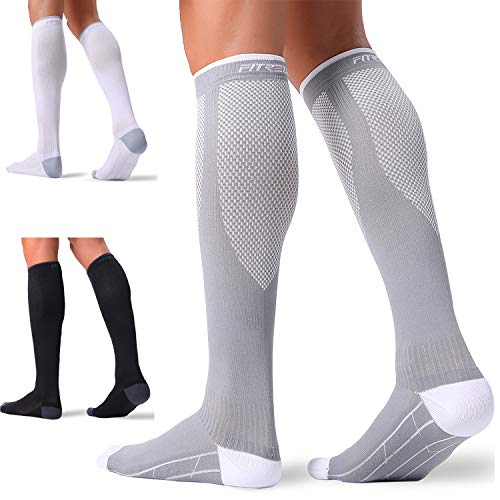
FITRELL 3-Pack, L/XL stands apart with explicit calf-size ranges and a three-pair pack, rather than the Physix Gear brand. The maker recommends choosing by calf size first; its L/XL range is 14–16 inches, while S/M is 9–15 inches. Its features also describe moisture-wicking fabric, calf mesh and a seamless toe. This is a practical alternative if measuring your calf is easier than relying on shoe size alone, or if you want several pairs in rotation. The overlap between the calf ranges means shoppers near 14–15 inches should compare the maker’s full size guidance before choosing.
Bottom line: Choose this for a three-pair pack with calf measurements.
FuelMeFoot Copper 3-Pack, L/XL
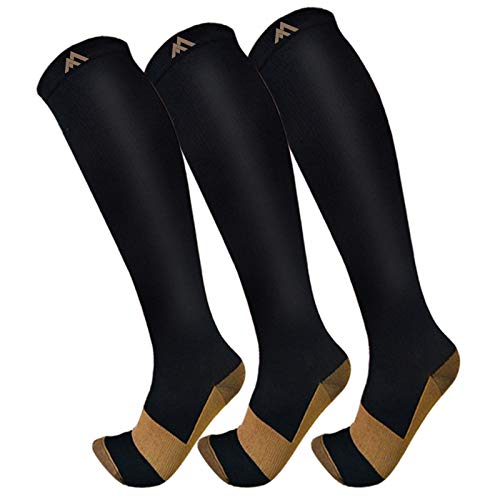
FuelMeFoot Copper 3-Pack, L/XL is the alternative here that specifically highlights copper-infused fabric, alongside a three-pair bundle and L/XL sizing. The maker says the socks use nylon and describes ventilation intended to help keep feet dry. The product is presented for varied routines including running, travel, nursing and everyday wear, so it may suit a shopper looking for a multi-use three-pack with a different material emphasis. The compression strength is not given in the specifications, unlike the 20–30 mmHg options. Choose it only if you can confirm that its compression level is appropriate for your needs.
Bottom line: Consider this if a copper-infused three-pack matters more than a confirmed compression level.
fenglaoda 8-Pack, 20–30 mmHg
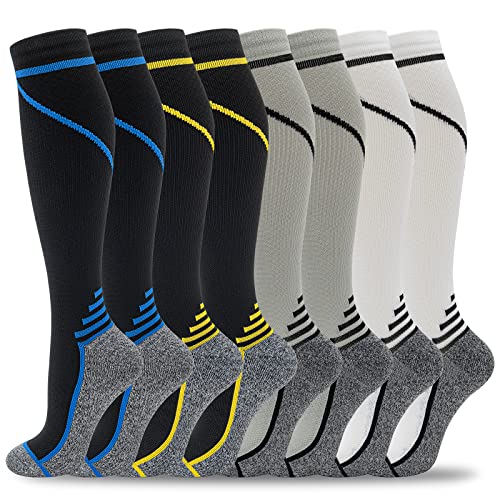
fenglaoda 8-Pack, 20–30 mmHg offers the largest pack in this comparison: eight pairs, with 20–30 mmHg compression and L/XL sizing. Its features describe non-slip ribbing, a thickened heel and toe, and arch support, setting it apart from the Physix Gear pair’s graduated-pressure focus. The maker positions these knee-high socks for activities such as nursing, travel, running and cycling. This option may fit someone who wants a larger rotation of socks in varied designs.
Bottom line: Pick this for eight pairs if L/XL sizing fits your measurements.
Dr. Scholl’s 8–15 mmHg Knee High

Dr. Scholl’s 8–15 mmHg Knee High differs most in compression strength: its 8–15 mmHg level is milder than the 20–30 mmHg choices. The selected option is one pair in a US shoe-size 4–10 range, with moisture-wicking fibers and a gray-purple floral color. The maker describes graduated pressure from the ankle upward and says the product is accepted by the APMA for promoting good foot health. This can suit a shopper seeking a lighter everyday sock rather than firmer support. Its mild compression is not a direct substitute when a clinician has recommended a specific higher pressure.
Bottom line: Choose this for mild 8–15 mmHg compression in a single pair.
How to choose compression socks
Start with the compression range and the reason you want the socks; a tighter feel is not automatically a better fit. Common retail ranges include 8–15 mmHg for mild compression, 15–20 mmHg for moderate compression and 20–30 mmHg for firmer compression. Measure your ankle and the widest part of your calf, then use the maker’s size chart; shoe size alone can miss a calf-fit problem. If your calf is at the upper end of a size range or between sizes, prioritize calf measurements and check the product’s sizing guidance before ordering. For prescribed compression, use the level and fit guidance from your clinician rather than selecting by activity label alone.
How compression sock sizing works
Calf circumference is a key fit measurement, and sizing charts can differ between brands. For example, FITRELL 3-Pack, L/XL gives an L/XL calf range of 14–16 inches, while Physix Gear 20–30 mmHg, L/XL says to use both shoe size and calf width. Measure around the widest calf point without pulling the tape tight, and compare it with the matching brand chart; a sock that bunches or rolls can feel uncomfortable, while excess tightness can be a problem. Knee-high socks should reach below the knee crease rather than fold over it. If you have swelling that changes during the day, ask a clinician when to measure and whether the size should be reassessed.
What compression levels mean
Compression strength is measured in millimeters of mercury (mmHg), and larger numbers indicate firmer pressure. Mild 8–15 mmHg socks and firm 20–30 mmHg socks are not interchangeable choices, as the difference can matter for comfort and medical use. Graduated socks are designed to apply more pressure near the ankle and less higher up the leg. Use this quick guide to compare common retail ranges, not as a diagnosis or a prescription.
| Range | General category | Choice cue |
|---|---|---|
| 8–15 mmHg | Mild | Consider for lighter everyday support |
| 15–20 mmHg | Moderate | Confirm fit and intended use |
| 20–30 mmHg | Firm | Use when appropriate for your needs |
People with circulation problems, reduced sensation, or a clinician’s compression recommendation should get individualized advice before using firmer socks.
How to wear and care for compression socks
Put compression socks on when your legs are least swollen, often in the morning, and smooth wrinkles rather than folding the top edge down. Check your skin after removing them, especially if you have reduced sensation; remove the socks and seek medical advice if you notice pain, numbness, unusual color change or skin irritation. Wash frequency and drying method depend on the fabric, so use the care label and avoid excessive heat when the maker warns against it. Replace socks when elastic loosens or fabric wears through, because stretched-out material may no longer fit as intended. Do not use compression as a reason to ignore sudden leg swelling or pain; those symptoms warrant prompt medical guidance.
Frequently Asked Questions
How tight should compression socks feel?
Compression socks should feel snug and evenly supportive, not painful or numb-making. Remove them if you notice tingling, unusual color change or increasing discomfort, and reassess the size and fit.
When should I put on compression socks?
Many people put them on in the morning, before prolonged standing or travel, when leg swelling is often lower. If a clinician prescribed them, ask about timing for your particular condition.
Can I wear compression socks overnight?
Do not assume daytime compression socks are suitable for sleeping; overnight use should be guided by a clinician. If you have reduced sensation or circulation concerns, seek advice before wearing them for extended periods.
How do I measure my calf for compression socks?
Measure around the widest part of the calf with a flexible tape, keeping it level without pulling it tight. Compare the measurement with the exact brand’s chart, since size ranges vary.
Are 20–30 mmHg socks firmer than 8–15 mmHg?
Yes, 20–30 mmHg indicates a firmer pressure range than 8–15 mmHg. If you have a medical condition or need prescribed compression, confirm the suitable level with a clinician.