
Physix Gear Sport Compression Socks: 5 Options Compared

Physix Gear Compression Socks, 20–30 mmHg is the closest match for shoppers seeking Physix Gear compression socks, with 20–30 mmHg graduated support and S/M sizing. Choose a different option if you want multiple pairs in one set, a lower 15–20 mmHg pressure range or a different stated size.
Compression socks apply graduated pressure, typically firmest at the ankle and lighter up the leg; fit and pressure are the key distinctions here.
We earn a commission if you buy through links on this page. As an Amazon Associate I earn from qualifying purchases. Products are compared on manufacturer specifications, not hands-on testing.
- Best overall: Physix Gear Compression Socks, 20–30 mmHg – It is the named Physix Gear option and provides 20–30 mmHg graduated compression.
- Best for lower pressure: CHARMKING Compression Socks, 3 Pairs – Its 15–20 mmHg range is lower than the 20–30 mmHg options.
- Best for three pairs: FITRELL Compression Socks, 3 Pairs – The set includes three pairs in black, white and grey.
| Product | Best for | Compression | Pairs | Size | Shop |
|---|---|---|---|---|---|
| Physix Gear Compression Socks, 20–30 mmHg | Named product | 20–30 mmHg | — | S/M | Check Price on Amazon |
| FITRELL Compression Socks, 3 Pairs | Calf-size guidance | 20–30 mmHg | 3 pairs | S/M | Check Price on Amazon |
| Momcozy Medical Grade Compression Socks | Large size | 20–30 mmHg | 2 pairs | Large | Check Price on Amazon |
| CHARMKING Compression Socks, 3 Pairs | Lower pressure | 15–20 mmHg | 3 pairs | S/M | Check Price on Amazon |
| Copper Fit Easy-Off Knee High Socks | Cushioned footbed | — | 1 pair | S/M | Check Price on Amazon |
Physix Gear Compression Socks and Alternatives
Compare pressure range, package count and size details to narrow down a pair for your routine.
Physix Gear Compression Socks, 20–30 mmHg

Physix Gear Compression Socks, 20–30 mmHg is the direct match for the Physix Gear search, with 20–30 mmHg graduated compression for long shifts, running, travel and athletic recovery. The selected option is black in S/M, and the product offers S/M, L/XL and XXL sizes overall. Brand says sizing should be chosen using shoe size and calf width. The main limitation is that the option is only S/M, so shoppers outside that fit range should compare other sizes or alternatives before choosing.
Bottom line: Choose this if you want the named Physix Gear sock in S/M with 20–30 mmHg compression.
FITRELL Compression Socks, 3 Pairs
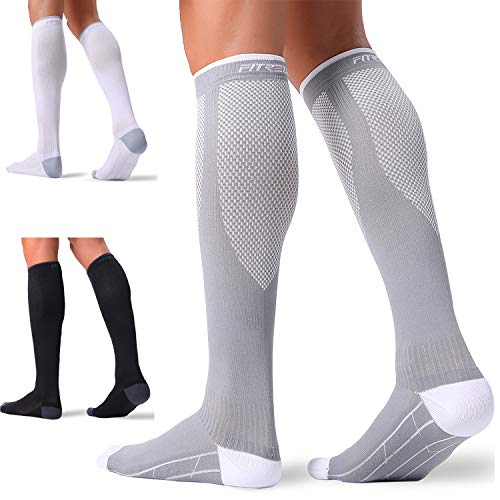
FITRELL Compression Socks, 3 Pairs stands out with explicit S/M calf guidance: 9–15 inches, alongside men’s US shoe sizes 6–8.5 and women’s US shoe sizes 7–9.5. The three-pair set mixes black, white and grey; the maker also describes moisture-wicking fabric, calf mesh and a seamless toe. This is a related alternative rather than the requested Physix Gear product. Its S/M calf range overlaps the L/XL range of 14–16 inches, so shoppers near 14–15 inches should compare the sizing information carefully.
Bottom line: Pick this if an explicit calf range and three colors matter more than the Physix Gear name.
Momcozy Medical Grade Compression Socks

Momcozy Medical Grade Compression Socks is the alternative with a Large size and a two-pair package, while retaining 20–30 mmHg graduated compression. The maker identifies Lycra fiber and describes the socks for extended sitting, standing, travel and post-activity use. The specifications also call it an FDA-registered Class I medical device; that designation is the maker’s claim. Its option is Large, so shoppers needing a smaller size should compare another choice instead of assuming this size will fit.
Bottom line: Choose this if you need the Large size and want two pairs.
CHARMKING Compression Socks, 3 Pairs
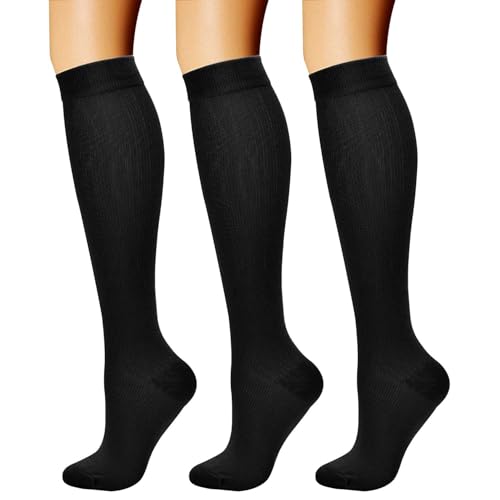
CHARMKING Compression Socks, 3 Pairs is the lower-pressure alternative at 15–20 mmHg, compared with the 20–30 mmHg options. Its three pairs are all black in S/M, and the maker describes a nylon-rich, breathable fabric with 360-degree stretch. The lower range may suit someone specifically seeking less compression, but it is not a like-for-like pressure match for the requested Physix Gear sock. The sizing is S/M, so anyone comparing fit should check calf and shoe measurements before settling on a size.
Bottom line: Pick this if you prefer the lower 15–20 mmHg range and a three-pair set.
Copper Fit Easy-Off Knee High Socks
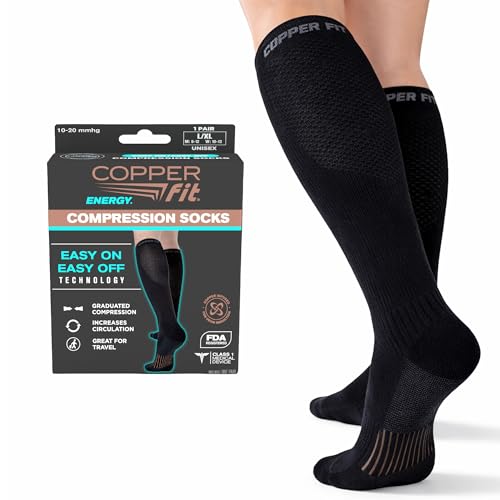
Copper Fit Easy-Off Knee High Socks differs from the named option by emphasizing an easy-on, easy-off design and a fully cushioned footbed. The black S/M package contains one pair, and the maker describes it for standing, work and travel. The specifications do not give a pressure range, so shoppers who need a particular mmHg level should compare a sock with a range instead. Its copper-infused fabric is also a maker claim, not a substitute for checking the fit and compression level you need.
Bottom line: Choose this if an easy-off style and cushioned footbed are your priorities.
How to Choose Compression Sock Pressure
Start by matching the mmHg range to the support level you are seeking, not by assuming every compression sock feels the same. These options span 15–20 mmHg and 20–30 mmHg, with the latter being the firmer range. Graduated socks are designed to apply the most pressure at the ankle and less higher up the calf. If you have circulation problems, reduced sensation, or a leg condition, ask a clinician before using firm compression; a sock that causes pain, numbness or color changes should be removed. For routine shopping, compare the pressure printed for the exact option and do not infer it from words such as “medical” or “support.”
How to Check Compression Sock Fit
Measure calf circumference at its widest point and compare it with the maker’s size chart; shoe size alone can miss a calf-fit mismatch. FITRELL Compression Socks, 3 Pairs gives a concrete S/M calf range of 9–15 inches and pairs it with shoe-size ranges, while Physix Gear Compression Socks, 20–30 mmHg says to choose using shoe size and calf width. A sock should feel snug without pinching, and the heel should sit in place rather than pulling the fabric out of alignment. Avoid rolling or folding the top band, which can create a tight edge. If you fall near a size boundary, compare both calf and shoe measurements before deciding; sizing by shoe size alone is not a reliable shortcut.
Compression Sock Types and Package Differences
Pressure, pair count and purpose are separate comparison points: a three-pair bundle does not mean higher compression, and a “medical grade” label does not by itself tell you the mmHg. The table separates what these choices offer by pressure and package quantity.
| Need | Relevant option | Distinction |
|---|---|---|
| Lower pressure | CHARMKING Compression Socks, 3 Pairs | 15–20 mmHg |
| Three pairs at 20–30 mmHg | FITRELL Compression Socks, 3 Pairs | Three colors |
| Easy-on design | Copper Fit Easy-Off Knee High Socks | Pressure range not provided |
Use the pressure value when a specific compression range matters, and use package count when you want spare pairs for rotation. The exact size and selected color still matter because package-level features do not establish an individual fit.
When to Remove Compression Socks
Remove a compression sock if you notice pain, numbness, tingling or unusual skin color changes, and seek medical guidance rather than tightening or doubling the sock. Firm 20–30 mmHg compression deserves extra care for anyone with circulation or sensation concerns. Put socks on smoothly so the fabric is not twisted or bunched, and keep the top band flat rather than rolling it down. A poor fit can create pressure in the wrong place even when the marked mmHg range seems suitable. Choose only the size supported by both calf and shoe measurements, and ask a clinician if a health condition makes compression uncertain.
Frequently Asked Questions
What is the difference between 15–20 and 20–30 mmHg socks?
The 20–30 mmHg range is firmer than 15–20 mmHg. Choose based on the pressure you need or have been advised to use, rather than treating the ranges as interchangeable.
How do I measure my calf for compression socks?
Measure around the widest part of your calf and compare that number with the maker’s size chart. FITRELL Compression Socks, 3 Pairs gives an S/M calf range of 9–15 inches, so a measurement near a size boundary merits extra care.
Can I sleep in compression socks overnight?
For routine use, compression socks are generally worn while awake rather than overnight unless a clinician advises otherwise. Ask a clinician first if you have circulation problems or reduced sensation.
What should I do if compression socks feel painful?
Remove them if they cause pain, numbness, tingling or unusual skin color changes. Do not roll down a tight band or add another layer; ask a clinician if symptoms persist.