
Plant Clips for Tomatoes: 4 Options Compared by Fit

CIQIYO 100-Count Plant Support Clips is the most straightforward choice for tomato vines because its plastic clips are reusable and designed to connect in multiple configurations. Choose PERSZEN 60-Count Two-Size Plant Clips or GXXMEI 100-Count Stake Clips instead if you want spring-steel wire clips or different clip sizes; confirm the clip opening fits your plant stem and support before ordering.
We earn a commission if you buy through links on this page. As an Amazon Associate I earn from qualifying purchases. Products are compared on manufacturer specifications, not hands-on testing.
- Best overall: CIQIYO 100-Count Plant Support Clips – Reusable plastic clips have a smooth inner surface and can connect in multiple configurations.
- Best for two sizes: PERSZEN 60-Count Two-Size Plant Clips – The pack contains 20 large clips and 40 small clips.
- Best for stakes: GXXMEI 100-Count Stake Clips – Spring-steel wire construction is designed to secure stems to stakes or trellises.
| Product | Best for | Pack count | Clip dimensions | Material | Shop |
|---|---|---|---|---|---|
| CIQIYO 100-Count Plant Support Clips | Reusable vine support | 100 | 3 x 0.92 x 0.4 in | Plastic | Check Price on Amazon |
| 200-Count Plastic Trellis Clips | Large gardens | 200 | 1.2-in middle diameter | Plastic | Check Price on Amazon |
| PERSZEN 60-Count Two-Size Plant Clips | Mixed stem sizes | 60 | 1.77 x 2.36 in; 1.57 x 1.18 in | Spring steel wire | Check Price on Amazon |
| GXXMEI 100-Count Stake Clips | Stake attachment | 100 | 1.6 x 1.2 in | Plastic and spring steel wire | Check Price on Amazon |
Plant clips for tomatoes
Compare the clip sizes, construction, and pack counts to match your tomato plants and support system.
CIQIYO 100-Count Plant Support Clips
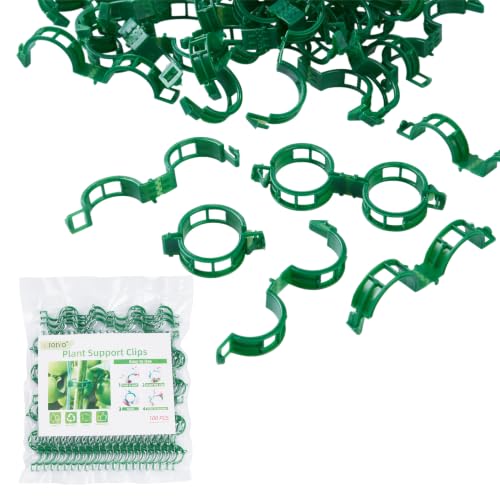
CIQIYO 100-Count Plant Support Clips stands out for its smooth inner surface and ability to connect with additional clips, giving tomato growers flexibility when arranging vines. The pack has 100 green plastic clips, each 3 inches long, 0.92 inches wide, and 0.4 inches high. The maker says the plastic is built to withstand varied weather and repeated seasonal use. These are suited to gardeners who want a simple open-place-close fastening without tools. The product’s broad dimensions may not suit every stem or cage; check fit against the plant and support before choosing.
Bottom line: Choose these for reusable plastic clips that can be connected in multiple configurations.
200-Count Plastic Trellis Clips

200-Count Plastic Trellis Clips is the largest pack here, with 200 transparent-white plastic clips and a 1.2-inch middle diameter. Its smooth, burr-free surface and hinged joint are designed for repeated opening and closing, while a wedge-and-square closure lets the user fasten or release each clip. The maker says these clips help hold tomato and grape vines upright and reduce bending under fruit weight. This pack suits gardeners supporting many plants with similar stem sizes. Its single stated diameter is less adaptable than a mixed-size pack, so check that 1.2 inches works with your stems and trellis.
Bottom line: Pick this pack when you need 200 matching plastic clips with a wedge closure.
PERSZEN 60-Count Two-Size Plant Clips
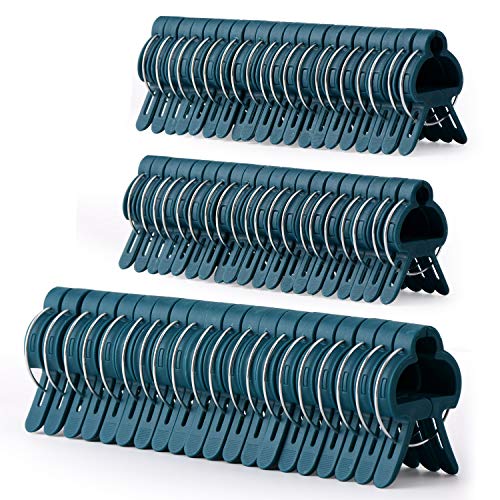
PERSZEN 60-Count Two-Size Plant Clips differs from the plastic options by using heavy-duty spring steel wire and supplying two clip sizes. The pack includes 20 large clips measuring 1.77 by 2.36 inches and 40 small clips measuring 1.57 by 1.18 inches. The maker says the waterproof clips are reusable and suited to tomatoes, cucumbers, peppers, and other climbing vegetables. This mix is useful when stems or support points vary across a planting. The pack contains fewer total clips than the 100- and 200-piece options, which matters if you need to secure many vines at once.
Bottom line: Choose this set when two clip sizes are more useful than a larger count.
GXXMEI 100-Count Stake Clips
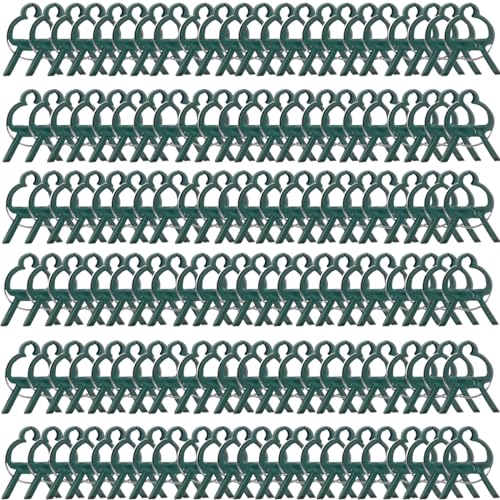
GXXMEI 100-Count Stake Clips combines plastic with sturdy spring steel wire in 100 small green clips sized 1.6 by 1.2 inches. The maker says the non-rusting wire can hold stems to bamboo stakes or trellises, and the clips can be reopened by pinching their handles. That stake-focused design distinguishes this option from the larger, multi-connection plastic clip and the mixed-size spring-wire set. It suits gardeners who want to guide individual tomato stems along a fixed support. The clips come in one stated size, so gardeners with thicker stems should verify that the opening will fit.
Bottom line: Pick these for fastening tomato stems to stakes with a pinch-open clip.
How to choose tomato plant clips
Choose clips by the stem size, support type, and how often you need to reposition vines. Tomato stems thicken as plants grow, so a clip should hold the vine without pinching it; leave room for growth and inspect fasteners as the plant expands. Plastic clips with a smooth contact surface reduce snagging, while spring-wire designs can attach a stem to a stake or trellis. For a small planting or mixed stem sizes, a mixed-size pack can avoid forcing every stem into one opening. If you are supporting a large row, compare total clip count with the number of stems you plan to guide.
Tomato clips guide stems but do not replace a sturdy support. Indeterminate tomato varieties can grow more than 6 feet tall, so use a cage, stake, or trellis that can carry the mature plant and fruit load.
Tomato clip sizes and plant fit
Match a clip to both the stem and the trellis wire, stake, or string it must engage. A clip that is too tight can constrict a growing stem, while a loose clip may slide or fail to guide the vine. Leave a little clearance around the stem and reposition the clip as growth continues; do not clamp across flower clusters or fruit stems. For stems that differ noticeably in thickness, choose a pack with more than one clip size rather than trying to make one size work everywhere.
Use this size comparison as a starting point, then check the actual opening against your plant and support.
| Need | Useful feature | Tradeoff |
|---|---|---|
| Many matching stems | Single-size pack | May not fit every stem |
| Mixed stem sizes | Two clip sizes | Fewer clips in each size |
| Fastening to a stake | Pinch-open wire clip | One clip size |
Using clips with tomato stakes and trellises
Attach the support to the plant without bending a loaded vine sharply. For a stake-trained tomato, guide the main stem upward in small increments and place clips below strong stem sections, not around delicate leaf stems. For a trellis, use clips to hold the vine near a support line while leaving the growing tip free. A tomato cage should be anchored firmly, since wind and wet foliage add load. Check ties and clips weekly during rapid growth; remove or reposition any clip that rubs, pinches, or traps a stem against a rigid support.
Do not rely on clips to keep a tall, fruit-heavy plant upright if the stake or trellis itself is unstable. Secure supports before the plant becomes difficult to handle.
Common tomato clip mistakes
The most common mistake is fastening a growing stem too tightly. Tomato stems thicken during the season, so inspect each attachment regularly and open or move a clip if it leaves a mark or restricts growth. Another mistake is attaching a clip to a leaf stalk instead of the main vine; leaf stalks are less suitable for carrying the plant’s weight. Clips also cannot compensate for a support that is too short or weak. Set the stake, cage, or trellis before the plant gets large, and distribute attachment points along the vine rather than concentrating weight at one spot.
Clean reusable clips before storing them, and discard any cracked plastic or bent wire that no longer closes securely. Keep small clips away from children and pets who might swallow them.
Frequently Asked Questions
How often should I move tomato plant clips?
Check tomato clips about once a week during rapid growth and reposition any that pinch or rub the stem. A clip should guide the vine while leaving room for its diameter to increase.
Can tomato clips hold plants without a cage?
Yes, clips can guide stems on a stake or trellis, but the support must carry the mature plant and fruit. Indeterminate tomatoes can grow taller than 6 feet, so use a support long and sturdy enough for the variety.
Should tomato stems be clipped tightly to a stake?
No, leave clearance so the stem can thicken and avoid pinching. Inspect attachments weekly during active growth and loosen or move any clip that leaves a mark.
Where should I attach clips on tomato plants?
Attach clips to sturdy sections of the main stem near the support, not across leaf stalks, flowers, or fruit clusters. Several spaced attachment points guide a tall vine more gently than one tight point.
Are plastic tomato clips reusable each season?
Reusable plastic clips can be saved if they still close securely and have no cracks. Clean and dry clips before storage, and discard damaged clips that could release the vine.