
Pledge Floor Care Multi Surface Cleaner Compared

Pledge Floor Care Multi Surface Cleaner is the closest match for shoppers seeking a cleaner for tile and vinyl, with a 27-ounce bottle and no-rinse use. Choose a wood-specific option instead if your floors are wood, or consider the larger ProCare alternative if you want a cleaner whose maker names several flooring types.
We earn a commission if you buy through links on this page. As an Amazon Associate I earn from qualifying purchases. Products are compared on manufacturer specifications, not hands-on testing.
- Best overall: Pledge 22220 Multi Surface Cleaner – The 27-ounce formula is identified for tile and vinyl and requires no rinsing.
- Best for wood floors: Pledge 5-in-1 Wooden Floor Cleaner – Its 5-in-1 positioning is specifically for wood floors and furniture.
- Best for larger quantities: ProCare Citrus Floor Cleaner, 1 Gallon – The 128-ounce citrus cleaner names tile, stone, laminate, vinyl, and natural wood.
| Product | Best for | Size | Surface fit | Shop |
|---|---|---|---|---|
| Pledge 22220 Multi Surface Cleaner | Tile and vinyl | 27 fl oz | Tile, vinyl | Check Price on Amazon |
| Pledge 5-in-1 Wooden Floor Cleaner | Wood floor care | 33.81 fl oz | Wood floors, furniture | Check Price on Amazon |
| Pledge Gentle Wood Floor Cleaner, Lemon | Lemon-scented wood | 27 fl oz | Wood floors | Check Price on Amazon |
| ProCare Citrus Floor Cleaner, 1 Gallon | Multiple floor types | 128 fl oz | Tile, stone, laminate, vinyl, natural wood | Check Price on Amazon |
Pledge Floor Care Multi Surface Cleaner and Alternatives
Match the cleaner to the floor material first, then compare bottle size and the maker’s use.
Pledge 22220 Multi Surface Cleaner

For shoppers who want a Pledge cleaner for tile or vinyl, this 27-ounce formula is the direct fit. The maker describes it as a gentle way to clean those surfaces, with a squirt-and-mop method and no rinsing required. That makes it a straightforward option when you want to mop without adding a separate rinse step. Its surface range is narrower than the ProCare cleaner’s, which names several other floor materials, so choose another product if your floor is wood, stone, or laminate.
Bottom line: Choose this for tile or vinyl when a no-rinse mop routine is the priority.
Pledge 5-in-1 Wooden Floor Cleaner

Unlike the multi surface formula, this Pledge cleaner is aimed at wood floors and furniture, with a 33.81-ounce container. The maker presents it as a 5-in-1 product for cleaning, dusting, moisturizing, freshening, and caring for wood, and says it enhances wood’s natural beauty. Its wood-focused use is the reason to consider it over the tile-and-vinyl option. The features do not give a mop method or rinse direction, so shoppers who need those specific instructions should check the container before use.
Bottom line: Pick this when the cleaning job is specifically for wood floors or furniture.
Pledge Gentle Wood Floor Cleaner, Lemon

This Pledge option differs from the multi surface cleaner by naming wood floors and a lemon scent; the bottle size is 27 ounces. It suits shoppers who want a wood floor product in the same general size as the tile-and-vinyl cleaner but prefer a wood-specific label. The name calls the formula gentle, but the product facts do not establish a rinse method, fragrance strength, or compatibility with every wood finish. Confirm the floor’s finish is suitable for the product before applying it broadly.
Bottom line: Choose this for a wood floor cleaner with a lemon scent.
ProCare Citrus Floor Cleaner, 1 Gallon
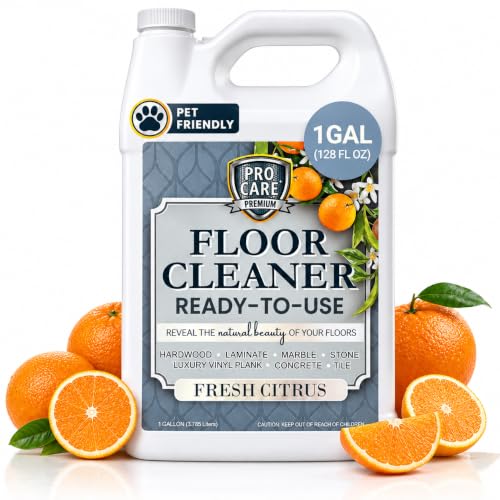
For a larger container and a broader named surface range, ProCare is the alternative to the Pledge products here: it comes in 128 ounces and names tile, stone, laminate, vinyl, and natural wood. Its maker describes a citrus-aroma formula for mopping and says it leaves no sticky or oily residue. The range makes it useful when one cleaner is needed across several hard-floor materials. It is not a Pledge product, and shoppers seeking a cleaner specifically identified for wood furniture should choose a different option.
Bottom line: Pick this when you need a gallon-size cleaner for several named floor materials.
How to choose a floor cleaner by material
Start with the floor material and finish, because a cleaner suited to tile is not automatically suitable for wood. Pledge’s multi surface cleaner names tile and vinyl, while its other cleaners here name wood floors or wood furniture; ProCare names tile, stone, laminate, vinyl, and natural wood. Use this decision rule: if the flooring material is not among the cleaner’s named surfaces, do not assume compatibility—verify the container directions first. For wood, avoid leaving puddles or letting mop water sit, since excess moisture can damage wood flooring. Apply cleaner to a small, inconspicuous area first when the finish or material is uncertain.
Cleaner versus floor finish
A floor cleaner removes soil during routine maintenance; a floor finish is a separate coating product, not a substitute for everyday cleaner. Finish products may change sheen or build a surface layer, so confirm the flooring manufacturer permits that type of treatment before applying one. For routine mopping, remove loose grit first with a dry dust mop or vacuum using a hard-floor setting, then use a damp rather than dripping mop. Fine grit can scratch many hard surfaces, and excess liquid is especially risky at wood floor seams. Do not mix floor-care chemicals unless both labels explicitly allow it, and keep treated floors clear of foot traffic until dry.
How much cleaner to use for mopping
Use the cleaner’s container directions for dilution and application; concentrated floor cleaners and ready-to-use formulas are not interchangeable. A product that says to squirt and mop, such as the 27-ounce Pledge multi surface option, has a different stated routine from a product without a method. Applying more cleaner than directed can leave film, while too little may not lift soil effectively. Rinse only when the directions call for it: unnecessary rinsing adds water exposure, while skipping a required rinse can leave residue. Wring a mop until damp, change dirty water as it clouds, and test an unfamiliar cleaner in a discreet spot before cleaning the full floor.
Floor-cleaning mistakes to avoid
Using one formula on every hard floor is a common mistake; cleaner compatibility depends on material and finish, not just the word “floor.” A second mistake is soaking the floor: use a damp mop and dry standing liquid promptly, particularly on wood. Abrasive pads and stiff scouring tools can scratch finishes, so use a soft mop or cloth for routine cleaning. Dirt tracked in from outdoors also acts like grit under shoes, so regular dry sweeping reduces abrasion between wet cleanings. For a slippery floor or a visible film after mopping, stop adding cleaner, review the label’s dilution directions, and remove residue only with a method approved for that floor material.
Frequently Asked Questions
Can I use Pledge multi surface cleaner on wood floors?
The Pledge multi surface cleaner is identified for tile and vinyl, not wood. For wood floors, choose a product specifically identified for wood and confirm it suits the floor’s finish.
Does Pledge multi surface floor cleaner need rinsing?
The 27-ounce Pledge multi surface cleaner says no rinsing is required. Use its squirt-and-mop method as directed rather than adding excess cleaner.
How do I keep a wood floor from getting too wet?
Use a damp, well-wrung mop rather than a dripping one, and wipe up standing water promptly. Avoid letting liquid sit at seams or edges, where moisture can affect wood.
Should I sweep before using floor cleaner?
Yes, remove loose dirt and grit before wet mopping. Grit can scratch floor finishes when dragged under a mop or shoes.
Can one floor cleaner work on several surfaces?
Only rely on surfaces named by the cleaner’s maker. For example, the ProCare option names tile, stone, laminate, vinyl, and natural wood, while the Pledge multi surface formula names tile and vinyl.