
Poise Impressa Bladder Supports: Options Compared

For light leaks during activity, Revive Bladder Support is the closest match because it is a reusable internal support device; the Poise products here are absorbent pads, not Impressa supports.
Choose a pad instead if you want an external option or need absorbency for leaks beyond light stress incontinence; sudden urges are not the intended use for Revive Bladder Support.
We earn a commission if you buy through links on this page. As an Amazon Associate I earn from qualifying purchases. Products are compared on manufacturer specifications, not hands-on testing.
- Best overall: Revive Bladder Support – Reusable internal support designed for light leaks during physical activity.
- Best for higher absorbency: Poise 7-Drop Long Pads – Seven-drop ultra absorbency in a long pad.
- Best for light leaks: Poise Ultra Thin 3-Drop Regular Pads – Three-drop light absorbency in a regular-length ultra-thin pad.
| Product | Best for | Product type | Absorbency or use | Pack count | Shop |
|---|---|---|---|---|---|
| Revive Bladder Support | Light stress leaks | Internal reusable device | Light activity leaks | 1 pack | Check Price on Amazon |
| Poise 7-Drop Long Pads | Higher absorbency | External absorbent pad | 7-drop ultra absorbency | 39 pads | Check Price on Amazon |
| Poise Ultra Thin 4-Drop Regular Pads | Thin regular pads | External absorbent pad | 4-drop moderate absorbency | 144 pads | Check Price on Amazon |
| Poise 4-Drop Long Pads | Moderate long pads | External absorbent pad | 4-drop moderate absorbency | 108 pads | Check Price on Amazon |
| Poise Ultra Thin 3-Drop Regular Pads | Light regular pads | External absorbent pad | 3-drop light absorbency | 144 pads | Check Price on Amazon |
Poise Impressa bladder support alternatives
These options differ in whether they provide internal support or absorb leaks externally, and in pad absorbency and length.
Revive Bladder Support
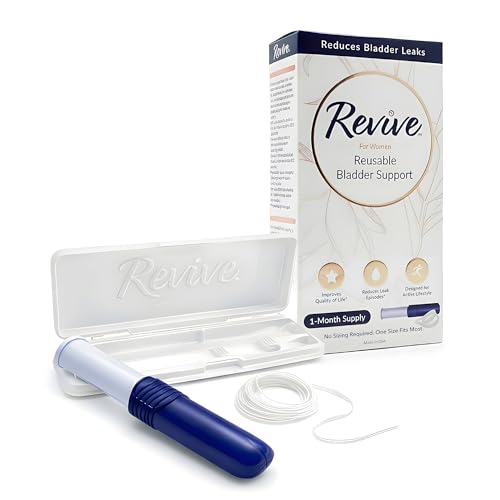
Unlike the Poise pads, this is a reusable internal support device intended for light leaks triggered by movement such as coughing, laughing, or exercise. Its maker says it can reduce leaks for up to 12 hours and describes it as an alternative to pads and urinary underwear. It is intended for stress urinary incontinence, not urge-related leakage or sudden urges. Choose it if your leaks are activity-related and internal support is acceptable; choose an absorbent pad if you want an external product or your leakage is not light and movement-related.
Bottom line: Choose this for light activity-related leaks when an internal reusable device suits you.
Poise 7-Drop Long Pads

Among the absorbent options, this long pad has the highest absorbency, at seven drops, rather than internal support. It comes in a 39-count pack and has a moisture-wicking top layer and a contoured shape with a wider front and back. The maker says its odor-reducing material helps control odor for up to 12 hours. It suits someone who wants a long pad and higher absorbency; the 39-pad count is lower than the larger packs in this group, and it does not provide internal support.
Bottom line: Pick this if you want a long pad with seven-drop absorbency.
Poise Ultra Thin 4-Drop Regular Pads

This regular-length ultra-thin pad pairs moderate, four-drop absorbency with the largest pack count in this comparison. Its Thin-Flex design is made to hold its shape, while the Dry-Touch layer and Leak-Block sides are intended to manage wetness and leaks. The maker says FreshSense helps neutralize bladder-leak odors. Choose it when a regular-length, thin pad is preferable to an internal device; it is still an absorbent product, so it does not support the bladder from inside.
Bottom line: Choose this for a large pack of regular-length, moderate-absorbency pads.
Poise 4-Drop Long Pads

Compared with the regular-length pads, this option pairs moderate four-drop absorbency with a long cut and a 108-count pack. Its moisture-wicking top layer is designed to feel dry, and the maker says the pads absorb instantly and help control odor for up to 12 hours. This can suit someone who prefers longer coverage without stepping up to the seven-drop absorbency of Poise 7-Drop Long Pads. It remains an external pad rather than a reusable internal support device, so it will not provide the type of support sought by someone looking specifically for Impressa.
Bottom line: Pick this for long coverage with moderate absorbency.
Poise Ultra Thin 3-Drop Regular Pads

This is the light-absorbency regular pad option, with three drops and a 144-count pack. Its GushProtect Zone is designed to absorb wetness quickly and lock in odor, while the Dry-Touch layer is intended to keep the surface feeling dry. The maker says odor control lasts up to 12 hours. It suits lighter leaks when a thin external pad is preferred; unlike an internal bladder support, it manages fluid after leakage rather than addressing activity-related leaks with internal support.
Bottom line: Choose this for lighter leaks and a regular-length pad.
Internal bladder support and absorbent pads work differently
An internal support device is worn in the vagina to support the urethra during stress that can trigger leakage; an absorbent pad catches fluid externally. Stress urinary incontinence commonly means leaks with coughing, sneezing, laughing, or exercise, while urge incontinence involves a sudden need to urinate. That distinction matters more than drop count: pads manage wetness, but a support device is intended for activity-related leaks. The products here span both approaches, so first identify whether movement or urgency is the main trigger. If leakage is new, worsening, painful, or accompanied by blood, seek medical advice rather than relying only on a product choice.
Choose pad length and absorbency by your leak pattern
Drop ratings distinguish absorbency within a product line, but they are not a universal volume measurement across brands. The four-drop options here are moderate absorbency, while the three-drop pad is light and the seven-drop pad is ultra absorbent. Length also differs: the regular pads are shorter coverage choices than the long pads. Start with the least absorbency that reliably handles your usual leakage and move up if wetness regularly reaches the edges; do not treat a drop rating as a guarantee against leaks. A pad can be a practical choice when internal devices are unwanted, unsuitable, or not matched to the leakage pattern.
The following guide separates the two product approaches and the absorbency choices.
| Need | Option type | Distinction |
|---|---|---|
| Light leaks during activity | Internal support | Reusable device intended for stress leakage |
| Lighter external coverage | 3-drop pad | Light absorbency, regular length |
| Moderate external coverage | 4-drop pad | Moderate absorbency; regular or long |
| More absorbency in this group | 7-drop pad | Ultra absorbency, long length |
Fit and safety matter for internal support devices
Internal support products must fit comfortably and stay in place; pressure, pain, difficulty urinating, or repeated slipping are reasons to stop and ask a clinician about fit. Pelvic anatomy, vaginal tissue changes, and the degree of prolapse can affect suitability, so a device is not a one-size-fits-all substitute for clinical assessment. Reusable devices also require cleaning between uses according to their care directions; do not share them. For a support device, verify fit and care requirements before use, especially if you have pelvic pain, recurrent urinary infections, or have recently had pelvic surgery. These practical checks are more important than comparing package size.
When to seek help for urinary leakage
Urinary leakage is common, but sudden onset, painful urination, blood in urine, fever, or new trouble emptying the bladder warrants prompt medical attention. Activity-related leakage and urgency can have different causes and care options, so noting when leakage occurs can help a clinician distinguish them. A simple record of triggers, approximate episodes, and fluid timing over several days can make that discussion more useful. Do not deliberately restrict water to avoid leaks; concentrated urine can irritate the bladder. If a pad repeatedly leaks through despite moving up in absorbency, reassess fit and timing with a clinician rather than assuming a higher drop rating alone will solve the problem.
Frequently Asked Questions
How is a bladder support device different from a pad?
A bladder support device is worn internally to support the urethra during activity, while a pad absorbs fluid externally. The internal approach is intended for stress leakage, not sudden urge-related leakage.
What causes leaks when coughing or exercising?
Leaks with coughing, sneezing, or exercise are typical of stress urinary incontinence, when pressure on the bladder leads to leakage. Sudden urgency without an activity trigger points to a different leakage pattern.
Can an absorbency drop rating be compared across brands?
Drop ratings are useful within a brand’s range but do not represent a universal fluid volume across brands. Compare the intended absorbency category and length, then adjust if your usual leakage escapes the pad.
When should I ask a clinician about urinary leakage?
Seek prompt advice for leakage with blood in urine, pain, fever, or difficulty emptying the bladder. New or worsening leaks also merit assessment, especially if urgency and activity-related leakage occur together.