
Post Spikes for Fence: Four Sizes Compared by Fit

For most standard 3.5-inch fence posts, VEVOR 24-Inch Fence Post Anchor is the practical pick because its 24-inch spike includes 18 inches of ground-penetrating length and comes in an eight-pack. Choose a longer spike for more embedment, or a shorter option when site conditions and the post load allow it.
Fence post spikes are metal sleeves driven into the ground to hold posts without a buried concrete footing; they are not a substitute for checking soil conditions or the post’s load needs.
We earn a commission if you buy through links on this page. As an Amazon Associate I earn from qualifying purchases. Products are compared on manufacturer specifications, not hands-on testing.
- Best overall: VEVOR 24-Inch Fence Post Anchor – Eight spikes have a 3.5-inch inner width and 18 inches of spike length.
- Best for longer embedment: VEVOR 36-Inch Fence Post Anchor – The 36-inch anchor has a 30-inch nail length for deeper placement.
- Best for shorter installs: 16-Inch Fence Post Anchor, 4-Pack – The 16-inch option has a 12-inch lower section.
| Product | Best for | Spike length | Post opening | Pack count | Shop |
|---|---|---|---|---|---|
| VEVOR 24-Inch Fence Post Anchor | Standard 4×4 posts | 24 in overall; 18 in spike | 3.5 in inner width | 8 | Check Price on Amazon |
| VEVOR 36-Inch Fence Post Anchor | Deeper embedment | 36 in overall; 30 in spike | 3.5 in inner diameter | 8 | Check Price on Amazon |
| Sekcen 24-Inch Post Anchor, 6-Pack | Six-post projects | 24 in | 3.5 x 3.5 in lumber | 6 | Check Price on Amazon |
| 16-Inch Fence Post Anchor, 4-Pack | Shorter anchors | 16 in overall; 12 in lower section | 3.6 x 3.6 in internal | 4 | Check Price on Amazon |
Post Spikes for Fence
Compare post opening, ground-penetrating length, and quantity before choosing a spike for your fence posts.
VEVOR 24-Inch Fence Post Anchor
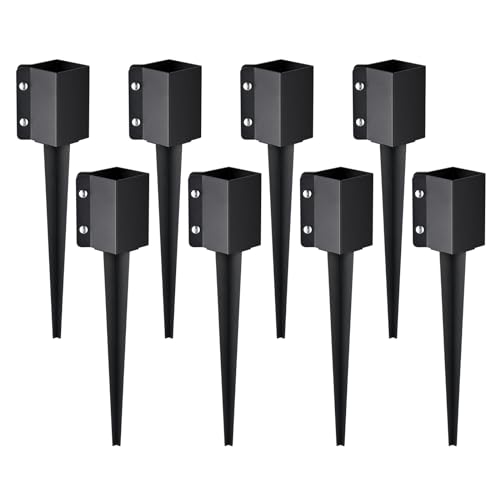
Among these choices, this anchor pairs a standard 3.5-inch inner width with 18 inches of ground-penetrating spike length. The eight-pack is suited to projects needing several matching post bases. The steel has a black powder-coated finish; the maker says the coating protects against corrosion and rust. Check the sleeve fit against the actual lumber before installation, since nominal 4×4 lumber commonly measures 3.5 by 3.5 inches. The 24-inch overall length provides less embedment than the 36-inch option, so it may not suit a site where deeper placement is needed.
Bottom line: Choose it for a multi-post project using standard 3.5-inch lumber.
VEVOR 36-Inch Fence Post Anchor

This is the longest option here, with a 30-inch spike section and an eight-piece pack. Its inner diameter is given as 3.5 inches in the product name, while the maker gives an inner width of 3.7 inches, so verify the opening against your post before buying. The maker says the powder coating protects against corrosion and rust. Greater length can help when a project calls for deeper placement, but it does not by itself guarantee a stable post: soil firmness, drainage, and lateral loads still matter. Its 36-inch overall size is less convenient where shallow ground or obstructions limit driving depth.
Bottom line: Pick this option when the site and post design call for longer embedment.
Sekcen 24-Inch Post Anchor, 6-Pack

This six-pack distinguishes itself with a 13-gauge steel construction and a fit for standard 3.5-by-3.5-inch lumber. The maker says the anchor supports posts without digging or concrete, and the black powder-coated finish is intended for outdoor use. Its 24-inch overall length matches the other mid-length choice, but the maker does not break out a separate spike length, so compare the complete anchor dimensions with the depth your project requires. The six-piece quantity suits a smaller run than the eight-packs. Confirm your post’s actual width before installation.
Bottom line: Choose it for six standard-size posts when the 13-gauge steel matters.
16-Inch Fence Post Anchor, 4-Pack

This four-pack is the shortest option, with a 12-inch lower section and a 3.6-by-3.6-inch internal opening. That can be useful where a longer anchor cannot be driven, but the shorter embedment is a tradeoff for posts exposed to lateral force. The anchor is made of steel with an anti-rust coating; the maker says it is intended to resist corrosion and deformation. The opening is wider than a 3.5-inch post, so check how the sleeve holds your lumber and whether any fastening hardware is needed. This option may not suit projects where deeper ground engagement is important.
Bottom line: Pick it where the shorter length fits the site and post loads are modest.
How to Choose Post Spikes for Fence
Start with the post opening and the spike’s actual ground-penetrating length, not just its overall height. Nominal 4×4 lumber commonly measures 3.5 by 3.5 inches, so measure the post and compare it with the sleeve’s internal width; openings that are too tight may not accept the post, while loose sleeves need secure fastening. For these choices, the lower spike sections range from 12 to 30 inches where that figure is provided. A longer spike can offer more embedment, but soil and fence loads still determine whether the assembly is suitable. Choose the 36-inch overall model when 30 inches of spike length fits the site; choose a shorter one only when the post and ground conditions support that tradeoff.
Install Fence Post Spikes Safely
Locate buried utility lines before driving any spike: in the United States, call 811 or use your state’s 811 service to request marking before digging or ground penetration. Keep the anchor plumb as it enters the soil, since a tilted sleeve makes a straight post harder to install. Drive spikes with a suitable block or tool rather than striking the sleeve directly if that could deform it. Rocky, frozen, or very compacted soil can prevent proper embedment; do not force a spike into a blocked path. A ground spike is not a guarantee against wind or impact loads, so use post and foundation methods appropriate to the fence design and exposure.
Spike Length and Fence Post Fit
Measure both the post cross-section and the anchor’s internal opening before assembly. Lumber sold as 4×4 is commonly 3.5 inches square, but actual dimensions can vary; compare across both sides rather than relying on the label. Also distinguish total anchor height from the part that enters the soil: the two VEVOR models specify 18- and 30-inch spike sections, while the 16-inch anchor specifies a 12-inch lower section. Make sure the intended depth is physically available below grade.
Ground Spikes Versus Concrete Footings
Ground spikes use a metal sleeve and driven stake to hold a post, while a concrete footing supports a post in a prepared hole with concrete. Spikes can avoid mixing and curing concrete, but their performance depends heavily on soil resistance and the forces on the post. A small garden screen in firm ground and a tall privacy fence in exposed or loose soil are not equivalent loads. Use spikes only when the product, post size, soil, and fence design are compatible; a longer spike is not an automatic substitute for a properly designed footing. Avoid installing near buried utilities, and stop if the spike will not enter straight or encounters an obstruction.
Frequently Asked Questions
How deep should a fence post spike go?
Use the embedment depth required by the fence design and site, not just the anchor’s total height. The options here specify lower spike lengths from 12 to 30 inches; soil firmness and wind exposure affect whether that depth is suitable.
Will a fence post spike fit a 4×4 post?
Many nominal 4×4 wood posts measure about 3.5 by 3.5 inches, but actual lumber varies. Measure both post sides and compare them with the anchor’s internal opening before installation.
Can I drive a post spike into concrete?
These products are ground spikes intended for soil, not tools for driving through a concrete slab. For hard or obstructed ground, stop rather than forcing the spike; locate buried utilities through 811 before ground penetration.
Are fence post spikes suitable for every soil type?
No; rocky, frozen, or very compacted soil can prevent a spike from entering to its intended depth. Loose soil and high wind exposure can also affect stability, so choose a foundation method suited to the ground and fence load.
Do I need to protect a fence post spike from rust?
The anchors in these options have powder or anti-rust coatings, but exposed metal can still be damaged if the coating is scratched. Inspect the coating during installation and avoid leaving damaged areas unaddressed outdoors.