
Pressure Cookers for Camping: 4 Models Compared

For most campers, Keith Ti6302 Titanium Micro Pressure Cooker is the clearest choice because its maker specifies a 20–35 kPa micro-pressure system and a dual-pot design. Choose Portable 2.6-Quart Stainless Steel Cooker or 304 Stainless Steel Mini Pressure Cooker if a portable stainless steel cooker matters more, or Hawkins Classic 3-Liter Aluminum Cooker if you want a 3.2-quart aluminum cooker for a group.
A camping pressure cooker cooks in a sealed pot under pressure, so it can shorten cooking time but needs stable heat and careful handling. Check stove compatibility and carrying weight before choosing a model for backpacking.
We earn a commission if you buy through links on this page. As an Amazon Associate I earn from qualifying purchases. Products are compared on manufacturer specifications, not hands-on testing.
- Best overall: Keith Ti6302 Titanium Micro Pressure Cooker – The maker gives a 20–35 kPa micro-pressure range and a removable inner pot.
- Best for induction: Portable 2.6-Quart Stainless Steel Cooker – Its maker says it suits induction cookers and most stove types.
- Best for larger batches: Hawkins Classic 3-Liter Aluminum Cooker – Its 3.2-quart capacity is larger than the other capacities.
| Product | Best for | Capacity | Material | Design feature | Shop |
|---|---|---|---|---|---|
| Keith Ti6302 Titanium Micro Pressure Cooker | Micro-pressure cooking | 1.9 qt | Grade 1 titanium | Dual-pot system | Check Price on Amazon |
| Portable 2.6-Quart Stainless Steel Cooker | Induction cooking | 2.6 qt | Stainless steel | Foldable handle | Check Price on Amazon |
| 304 Stainless Steel Mini Pressure Cooker | Safety features | — | 304 stainless steel | Foldable design | Check Price on Amazon |
| Hawkins Classic 3-Liter Aluminum Cooker | Larger batches | 3.2 qt | Virgin aluminum | Tall design | Check Price on Amazon |
Camping Pressure Cookers Compared
Compare capacity, construction and cooking design to find a cooker that fits your camp stove and group.
Keith Ti6302 Titanium Micro Pressure Cooker

The Ti6302 stands out for its controlled micro-pressure design and two-pot setup. Its 1.8-liter outer pot holds a removable titanium inner pot with steam-circulation holes, and integrated rice and water markings support rice preparation. The maker specifies a 20–35 kPa operating range and a three-valve system. This suits campers who want a compact cooker with a dedicated inner vessel for steaming or rice. Its 1.9-quart capacity is smaller than the 3.2-quart option, so it is a less suitable pick for larger groups or batch cooking.
Bottom line: Choose this for a compact titanium cooker with a specified micro-pressure range and two-pot setup.
Portable 2.6-Quart Stainless Steel Cooker

The 2.6-quart portable cooker is the option here whose maker explicitly names induction compatibility alongside most stove types. It is made of stainless steel, has a folding handle and measures 4.72 by 7.48 inches. The maker describes it as suitable for stewing and boiling under micro-pressure conditions, making it a fit for campers who may also use it at home. The size is between the smaller titanium cooker and the 3.2-quart aluminum model. The specifications do not provide a pressure range, so choose it for its stove fit rather than a particular pressure target.
Bottom line: Pick this when induction compatibility and a folding handle matter most.
304 Stainless Steel Mini Pressure Cooker
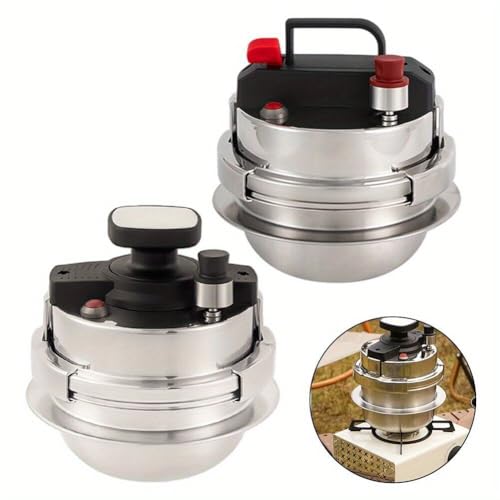
The mini cooker distinguishes itself with a multi-part safety system and a foldable carrying design. Its maker lists a pressure-control valve, safety check valve, pressure-sensing device and double-caliper lid lock; it also specifies 304 stainless steel with three-layer composite steel and a weight of 1.2 kilograms. That combination suits campers prioritizing a compact cooker with several named pressure controls. Verify those measurements before choosing it for a specific camp menu.
Bottom line: Choose this for its foldable form and multiple named pressure-control components.
Hawkins Classic 3-Liter Aluminum Cooker
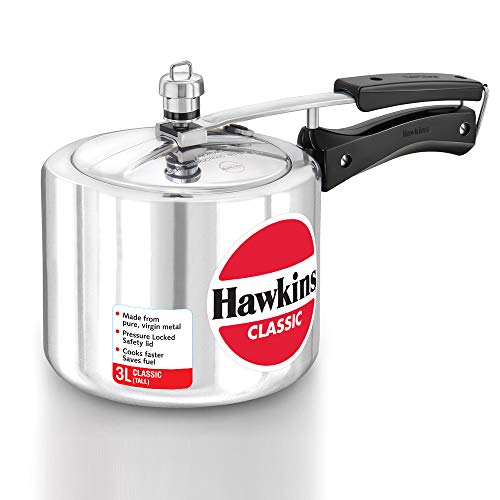
The Hawkins offers the largest capacity among these pressure cookers at 3.2 quarts, making it the better fit for larger batches than the 1.9-quart titanium model. It has a tall inner-lid design, a mirror-polished exterior and a 3.25- to 4.06-millimeter base made from virgin aluminum. The maker says its pressure regulator is designed to save fuel. This suits car campers or group cooks who can carry a taller cooker; the 13-inch length and 3.8-pound weight make it less appealing for backpacking than a compact foldable option.
Bottom line: Pick this when a larger capacity matters more than compact packing.
How to choose a camping pressure cooker
Choose by meal volume, heat source and the way you will carry the cooker. A quart of capacity is roughly enough for four 1-cup servings before accounting for ingredients that expand, foam or need cooking liquid; leave room rather than filling a pressure cooker to the rim. For foods that foam or expand, a common pressure cooker limit is half full, while other foods should stay below the two-thirds fill line. A stable, level stove surface matters because a pressure cooker is a heavy, sealed vessel, especially when full. For backpacking, compare the packed shape and weight; for car camping, capacity and stove compatibility can matter more. With a group of four or more, favor a capacity above 3 quarts if the meal is a one-pot main.
Pressure cooker size and camp stove fit
Match the cooker base to the burner rather than choosing by pot capacity alone. A flame that climbs the sides wastes heat and can damage handles or seals; keep the flame under the pot base and use a stable grate. Small canister stoves can be top-heavy under a full pressure cooker, so a wider base or a broad, stable camp stove is safer for substantial loads. At altitude, water boils at a lower temperature, which can affect cooking time and pressure behavior; adjust using the cooker maker’s guidance. For a compact pack, a folding handle can reduce snagging, but it does not reduce the vessel’s filled weight. If the cooker’s base diameter or packed weight is critical to your stove or pack, confirm those measurements before choosing.
Pressure cooking safety at camp
Never force a pressure cooker lid open while the cooker is pressurized; wait until the pressure indicator has dropped and release pressure as the cooker maker directs. Keep the vent clear, check that the lid locks correctly, and do not exceed the cooker’s fill limits because blocked vents and overfilling can interfere with pressure release. A camp stove should sit on firm, level ground away from tent walls, dry grass and loose gear. Keep hands and face clear of escaping steam, which can cause serious burns. The maker identifies several pressure-control parts for 304 Stainless Steel Mini Pressure Cooker, while Keith Ti6302 Titanium Micro Pressure Cooker has a specified three-valve system; those features do not replace careful handling. Do not leave a pressure cooker unattended over an open flame.
Pressure cooker versus regular camp pot
A pressure cooker traps steam and raises the boiling point inside the sealed pot; a regular camp pot vents steam and cooks at the local boiling temperature. The sealed method can reduce cooking time for foods such as beans and tough cuts, while a regular pot is simpler for quick meals and simmering where timing flexibility matters. Pressure cookers need a secure lid, functioning pressure controls and enough liquid to generate steam. A regular pot needs none of those pressure-specific steps. For a camp meal with long-simmering ingredients and a stable burner, pressure cooking can save fuel; for a lightweight kit or frequent lid opening, a conventional pot is usually easier to manage.
Frequently Asked Questions
Can I use a pressure cooker on a camp stove?
Yes, if the cooker is compatible with the heat source and the stove can support it steadily. Keep the flame beneath the base and avoid small, unstable burners under a full pot.
How much liquid goes in a camping pressure cooker?
Use the cooker maker’s minimum liquid amount, since pressure cooking needs steam to build pressure. Do not fill beyond two-thirds for most foods or half full for foods that foam or expand.
Can a pressure cooker work at high altitude?
Yes, but water boils at a lower temperature at higher elevations, which can change cooking times. Follow the cooker maker’s altitude guidance and adjust time rather than increasing heat beyond the cooker’s limits.
Is stainless steel or aluminum better for camping?
Neither material is best for every trip: compare the cooker’s capacity, construction and carry weight. Stainless steel appears in the portable choices here, while the 3.2-quart Hawkins uses virgin aluminum and weighs 3.8 pounds.
How do I safely open a pressure cooker outdoors?
Wait until the pressure indicator has dropped and follow the cooker maker’s release procedure before unlocking the lid. Keep your face and hands away from the vent because escaping steam can burn.