
Primal Life Organics: Toothpowder and Toothpaste Compared

Primal Life Organics’ 1-ounce Dirty Mouth Toothpowder suits shoppers who want a powder labeled for 200+ brushings; choose the 4-ounce mineral toothpaste instead if you prefer paste and nano-hydroxyapatite. These are oral-cleaning products, but the product names and features do not establish fluoride content, so buyers seeking cavity protection should verify fluoride before choosing.
The 0.25-ounce toothpowder is a smaller option labeled for 60+ brushings, while the full-size powder and toothpaste suit different format preferences.
We earn a commission if you buy through links on this page. As an Amazon Associate I earn from qualifying purchases. Products are compared on manufacturer specifications, not hands-on testing.
- Best overall: Primal Life Organics Dirty Mouth Toothpowder, 1 oz – The 1-ounce powder is labeled for 200+ brushings and uses spearmint essential oils.
- Best for paste format: Primal Life Organics Premium Dirty Mouth Toothpaste, 4 oz – This 4-ounce toothpaste contains nano-hydroxyapatite and mineral clays.
- Best for travel: Primal Life Organics Dirty Mouth Toothpowder, 0.25 oz – The 0.25-ounce powder is the smallest option and is labeled for 60+ brushings.
| Product | Best for | Format | Size | Brushings | Shop |
|---|---|---|---|---|---|
| Primal Life Organics Dirty Mouth Toothpowder, 1 oz | Regular powder use | Powder | 1 oz | 200+ | Check Price on Amazon |
| Primal Life Organics Premium Dirty Mouth Toothpaste, 4 oz | Mineral toothpaste | Toothpaste | 4 oz | — | Check Price on Amazon |
| Primal Life Organics Dirty Mouth Toothpowder, 0.25 oz | Small powder size | Powder | 0.25 oz | 60+ | Check Price on Amazon |
Primal Life Organics Toothpowder and Toothpaste
Compare the brand’s two spearmint toothpowders with its mineral toothpaste by format, size, and labeled brushing count.
Primal Life Organics Dirty Mouth Toothpowder, 1 oz

The 1-ounce spearmint toothpowder is the full-size powder option, labeled for 200+ brushings. Its features identify natural kaolin and bentonite clay, essential oils, and a vegan, organic formula; the maker says it is made without synthetic additives and foaming agents. Powder format suits someone who prefers dispensing a dry cleaner rather than squeezing paste. The specifications do not establish fluoride content, which matters to buyers choosing toothpaste for cavity protection. Confirm fluoride before ordering if that is a priority, and keep loose powder dry between uses.
Bottom line: Choose this if you want the larger powder size and a labeled count above 200 brushings.
Primal Life Organics Premium Dirty Mouth Toothpaste, 4 oz

The 4-ounce Premium Dirty Mouth is the only paste in this comparison and the only one whose features name nano-hydroxyapatite. Its spearmint formula also includes colloidal silver, charcoal, and bentonite, kaolin, and French green clays; the maker says it is free of SLS, artificial flavors, and foaming agents. Paste is the straightforward choice for shoppers who prefer a squeezable format over loose powder. No brushing count is provided in the specifications, so choose by its 4-ounce size rather than assuming a specific duration. Verify fluoride content if cavity protection is your deciding factor.
Bottom line: Pick this if you prefer toothpaste paste and want nano-hydroxyapatite in the formula.
Primal Life Organics Dirty Mouth Toothpowder, 0.25 oz
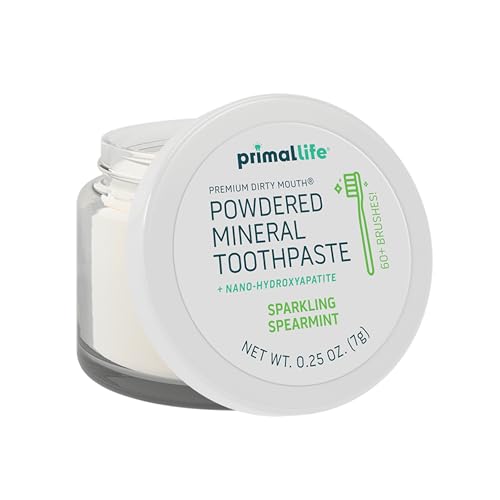
The 0.25-ounce Dirty Mouth Toothpowder is the compact powder choice, labeled for 60+ brushings. Its spearmint flavor, essential oils, and kaolin and bentonite clay make it similar in format to the 1-ounce powder, but the smaller size separates it as a trial or travel-sized option. The maker describes the powder as vegan, organic, and gluten-free, and says it is made without synthetic additives and foaming agents. The smaller package means fewer labeled brushings than the 1-ounce version. As with any oral-care choice, confirm fluoride content if it is needed for your cavity-prevention routine.
Bottom line: Choose this if you want the smallest powder package and a labeled count above 60 brushings.
How to choose a toothpowder or toothpaste
Choose first by format: toothpaste is a paste to dispense from a tube, while toothpowder is dry and needs careful handling to avoid moisture. Then compare package size and any brushing count rather than assuming equal use per ounce; these products range from 0.25 to 4 ounces, and only the powders give a count. For cavity prevention, the American Dental Association recommends brushing twice daily with fluoride toothpaste; many adult toothpastes contain about 1,000 to 1,500 ppm fluoride. Check the ingredient label for fluoride if cavity protection is your goal, because a product’s natural, mineral, or whitening language does not establish fluoride content. Children under 3 should use a rice-grain-sized smear of fluoride toothpaste, and children 3 to 6 a pea-sized amount.
What the package size and brushing count mean
Use the labeled count as a rough planning aid, not a guaranteed duration: brushing frequency and the amount dispensed change how quickly a package runs out. At two brushings daily, 60 brushings is about 30 days and 200 brushings is about 100 days, assuming one brushing consumes one count. A 0.25-ounce package is the smallest here; the 1-ounce powder states a larger count, while the 4-ounce paste has no count in its name or features. Powder can be messy if dispensed over a wet brush or sink. Keep the container dry and avoid sharing a brush or dipping a wet brush into communal product to limit contamination.
Fluoride and mineral ingredients in oral care
Fluoride is the established ingredient to look for when cavity prevention is the priority; ADA-accepted cavity-protection toothpastes contain fluoride, commonly sodium fluoride or stannous fluoride. Nano-hydroxyapatite is a different mineral ingredient, and its presence alone does not show that a product contains fluoride or carries ADA acceptance. Clay, charcoal, and whitening claims also do not establish a toothpaste’s fluoride level or abrasivity. For this comparison, the premium paste’s features name nano-hydroxyapatite, while the two powders’ features identify clay and essential oils. If you have a history of cavities or sensitivity, choose based on ingredient labels and ask a dentist about an appropriate fluoride product rather than relying on a whitening claim.
Brushing habits and safe use
Brush for two minutes twice daily with a soft-bristled toothbrush; gentle pressure helps avoid unnecessary wear to enamel and gum tissue. Replace a toothbrush or brush head about every three to four months, or sooner if the bristles are frayed. Use a pea-sized amount of fluoride toothpaste for children ages 3 to 6, supervise brushing, and encourage spitting rather than swallowing. Do not let young children use oral-care products unsupervised, especially loose powder that can spill or be ingested. Powder format does not change the value of consistent brushing technique, and whitening products should not substitute for dental evaluation when tooth pain or persistent sensitivity appears.
Frequently Asked Questions
How long could 200 toothpowder brushings last?
At two brushings a day, 200 brushings works out to about 100 days if each brushing uses one count. The package count is a guide, since the amount used each time can change how long the powder lasts.
How often should I replace a toothbrush?
Replace a toothbrush or brush head about every three to four months. Frayed bristles are a reason to replace it sooner because they are less effective at cleaning.
How much toothpaste should young children use?
Use a rice-grain-sized smear for children younger than 3 and a pea-sized amount for ages 3 through 6. An adult should supervise brushing to limit swallowing.
Does nano-hydroxyapatite mean toothpaste contains fluoride?
No; nano-hydroxyapatite and fluoride are different ingredients. Check the ingredient label for fluoride if you specifically want fluoride-based cavity protection.
How long should each brushing take?
Brush for two minutes twice daily, reaching all tooth surfaces with gentle pressure. A soft-bristled brush helps clean without excessive scrubbing.