
Pull Behind Motorcycle Trailers: 3 Models Compared

For a dedicated motorcycle cargo trailer, Ultra-Tow Tag-Along Cargo Trailer pairs 16.6 cubic feet of storage with a 600-pound load capacity. Choose Aluminum Diamond Plate Enclosed Trailer instead if you want an enclosed aluminum trailer with an 800-pound capacity, or Time Out Deluxe Camper if camping space matters more than cargo hauling.
Motorcycle pull-behind trailers connect to a motorcycle hitch and carry cargo or camping gear; confirm your motorcycle and hitch ratings, coupler fit, and permitted loaded trailer weight before choosing.
We earn a commission if you buy through links on this page. As an Amazon Associate I earn from qualifying purchases. Products are compared on manufacturer specifications, not hands-on testing.
- Best overall: Ultra-Tow Tag-Along Cargo Trailer – A motorcycle cargo trailer with 16.6 cubic feet of storage and a 600-pound load capacity.
- Best for enclosed hauling: Aluminum Diamond Plate Enclosed Trailer – An aluminum enclosed design with an 800-pound load capacity and 44 x 28 x 17-inch interior.
- Best for camping: Time Out Deluxe Camper – A camper with 23 cubic feet of cargo space, an air mattress, table, and chair.
| Product | Best for | Load capacity | Cargo volume | Dimensions | Shop |
|---|---|---|---|---|---|
| Ultra-Tow Tag-Along Cargo Trailer | Motorcycle cargo | 600 lb | 16.6 cu ft | 78 x 44.5 x 38 in | Check Price on Amazon |
| Aluminum Diamond Plate Enclosed Trailer | Higher load capacity | 800 lb | — | 59 x 30 x 28 in | Check Price on Amazon |
| Time Out Deluxe Camper | Camping trips | — | 23 cu ft | 175 x 64.8 x 32 in | Check Price on Amazon |
Pull Behind Motorcycle Trailers Compared
Match the trailer’s intended use and load limits to what your motorcycle can tow.
Ultra-Tow Tag-Along Cargo Trailer

Unlike an enclosed general-purpose trailer, this model is identified as a motorcycle cargo trailer and combines 16.6 cubic feet of storage with a 600-pound load capacity. Its steel frame supports a molded ABS shell with a lockable lid, two keys, and two side latches. Hydraulic struts assist with opening, and leaf springs provide suspension. The two tires measure 4.8 x 12 inches in diameter; a spare is sold separately. This is a focused choice for carrying gear, but its 600-pound limit is lower than the 800-pound rating of Aluminum Diamond Plate Enclosed Trailer, so check the planned loaded weight.
Bottom line: Choose it for lockable motorcycle cargo storage when the load stays within 600 pounds.
Aluminum Diamond Plate Enclosed Trailer

With an 800-pound load capacity, this enclosed aluminum trailer has the highest capacity among the motorcycle-suitable options. Its exterior measures 59 x 30 x 28 inches, while its interior is 44 x 28 x 17 inches; the diamond-plate body weighs 210 pounds. It uses 12 x 4-inch wheels, 5.3-12 tires, short torsion axle suspension, a 1-7/8-inch coupler, and a wiring harness. The coupler size and total loaded weight still need to match the motorcycle’s hitch and towing limits. Its compact interior may not suit bulky cargo as well as a larger-volume trailer.
Bottom line: Pick it when the enclosed form and 800-pound capacity fit your towing limits.
Time Out Deluxe Camper
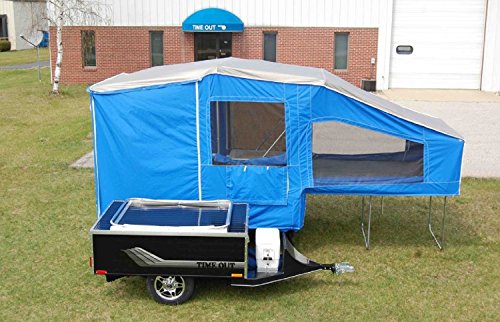
Unlike the cargo-focused trailers, this option is a pull-behind camper with 23 cubic feet of cargo space and sleeping and dining accessories: an air mattress, table, and chair. It has a 1-7/8-inch ball coupler, wiring harness, and 12-inch wheels. The maker says one person can set it up in about 3 minutes and describes an optional attachment for an air-conditioning unit.
Bottom line: Choose it for camping features rather than a cargo-load rating.
How to choose a motorcycle pull-behind trailer
Start with the motorcycle’s rated towing limit, hitch rating, and the trailer’s loaded weight, not just its advertised cargo capacity. Add the trailer’s empty weight to cargo and accessories; the resulting total must remain within the motorcycle and hitch limits. Also check coupler size, wiring compatibility, and whether the trailer is designed for motorcycle use. Motorcycle trailers are commonly chosen for cargo, enclosed transport, or camping, and those formats trade access and storage for different uses. A cargo box can protect gear; a camper adds living space but takes up more room. Before buying, measure the motorcycle’s hitch height and confirm the trailer can sit level when connected. A mismatched coupler or overloaded hitch can compromise safe handling.
Motorcycle trailer capacity and tongue weight
Keep the trailer’s total loaded weight below the lowest applicable rating: the motorcycle, hitch, coupler, and trailer each impose a limit. A common trailer-planning starting point is tongue weight around 10 to 15 percent of the loaded trailer weight, but motorcycle and hitch makers may set different limits; use their requirements rather than treating that range as permission. Too little or too much tongue weight can affect stability and steering. Weigh the loaded trailer and measure tongue weight with an appropriate scale before a trip. Leave margin for fuel, tools, and gear rather than loading to the maximum. If the motorcycle maker does not permit trailer towing, a trailer’s advertised capacity does not override that restriction.
Cargo trailers and motorcycle campers compared
Cargo trailers prioritize gear storage, while camper trailers add accommodations and may take more space to tow or store. A volume rating tells you how much space a compartment holds; it does not establish a safe payload, so compare cubic feet and weight capacity separately. The table summarizes the distinctions that matter for these three options.
| Need | Relevant choice | Decision point |
|---|---|---|
| Lockable motorcycle cargo | Ultra-Tow Tag-Along Cargo Trailer | 16.6 cu ft; 600 lb load capacity |
| Enclosed hauling with greater stated capacity | Aluminum Diamond Plate Enclosed Trailer | 800 lb load capacity; 44 x 28 x 17 in interior |
| Camping gear and accessories | Time Out Deluxe Camper | 23 cu ft; camper accessories |
Coupler, clearance, and pre-trip checks
Match the trailer coupler to the motorcycle hitch exactly; a 1-7/8-inch coupler must connect to a compatible ball and properly rated hitch. Check that the loaded trailer remains level and that tires, wheel bearings, lights, and safety connections are in serviceable condition before towing. Trailer dimensions affect both cornering clearance and storage, so compare the full exterior size with the motorcycle’s turning path and parking space. Confirm local requirements for registration, lighting, and towing equipment because rules vary by jurisdiction. Practice at low speed in a clear area before carrying a full load, then recheck cargo security after the first short stop. Never exceed the lowest weight rating in the towing setup.
Frequently Asked Questions
How much weight can a motorcycle pull behind a trailer?
The motorcycle maker’s towing rating sets the limit, and the hitch or trailer may impose a lower one. Count the trailer and cargo together, and do not infer a safe tow weight from the trailer’s payload rating alone.
How much tongue weight should a motorcycle trailer have?
A common starting range for trailers is about 10 to 15 percent of loaded trailer weight, but motorcycle and hitch requirements can differ. Measure the loaded tongue weight and stay within the motorcycle and hitch ratings.
Can a motorcycle tow a camper trailer?
Some campers are designed to pull behind motorcycles, but compatibility depends on the motorcycle’s towing permission, hitch rating, and loaded trailer weight. Verify all three before towing; a camper’s accessories do not establish its payload limit.
What coupler size does a motorcycle trailer need?
The coupler must match the hitch ball exactly, including size and rating. For example, a 1-7/8-inch coupler requires a compatible 1-7/8-inch ball and a hitch rated for the loaded trailer.
Should motorcycle trailer tires be checked before every ride?
Yes, check tire condition and pressure before each trip using the tire or trailer maker’s specified pressure. Also inspect the wheel bearings, lights, coupler, and secured cargo before towing.