
Punching Bag Filling Material: 3 Refills Compared

For most heavy-bag refills, SCS Heavy Bag Filler, 50 lb suits buyers who want 50 pounds of shredded textile fiber without a sand core. Choose SCS Heavy Bag Filler, 100 lb instead when you need roughly 100 pounds with 10 pounds of sand, or Threehoney Mixed Bag Filler, 8 lb for an 8-pound mix for smaller bags or top-ups.
We earn a commission if you buy through links on this page. As an Amazon Associate I earn from qualifying purchases. Products are compared on manufacturer specifications, not hands-on testing.
- Best overall: SCS Heavy Bag Filler, 50 lb – Its 50-pound textile-fiber fill offers a straightforward choice for a heavy-bag refill.
- Best for heavier bags: SCS Heavy Bag Filler, 100 lb – The roughly 100-pound blend includes a 10-pound sand core.
- Best for small refills: Threehoney Mixed Bag Filler, 8 lb – The 8-pound mixture combines textile scraps, foam, and wood chips.
| Product | Best for | Fill weight | Fill blend | Package dimensions | Shop |
|---|---|---|---|---|---|
| SCS Heavy Bag Filler, 50 lb | Standard refills | 50 lb | Shredded textile fiber | 30 × 17 in | Check Price on Amazon |
| SCS Heavy Bag Filler, 100 lb | Maximum fill weight | About 100 lb | About 90 lb fiber + 10 lb sand | 72 × 12 in | Check Price on Amazon |
| Threehoney Mixed Bag Filler, 8 lb | Small top-ups | 8 lb | Textile, foam, wood chips | 14.57 × 12.6 × 7.48 in | Check Price on Amazon |
Punching Bag Filling Material Compared
Match the refill’s weight and blend to the bag size and firmness you want.
SCS Heavy Bag Filler, 50 lb
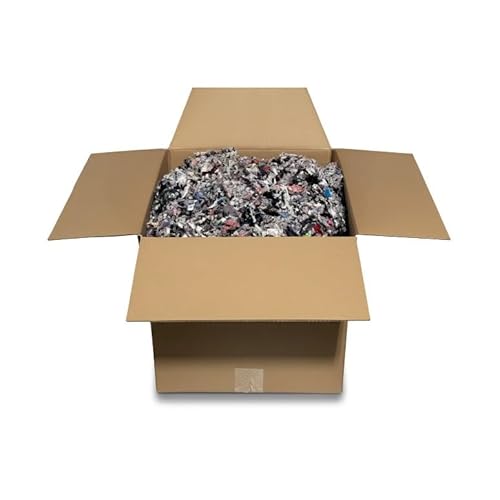
SCS Heavy Bag Filler, 50 lb is the middle-weight option here, with 50 pounds of finely shredded post-consumer textile fiber and no sand core in the blend. It suits buyers refilling a heavy bag who want a single-fiber fill rather than a mixed-weight core. The maker says the fiber is the material used in its UFC heavy bags and is designed to distribute evenly. The package measures 30 by 17 inches. Its main limitation is the 50-pound quantity: buyers trying to add substantially more weight may need a larger fill amount.
Bottom line: Choose this for a heavy-bag refill when 50 pounds of textile fiber is the target.
SCS Heavy Bag Filler, 100 lb
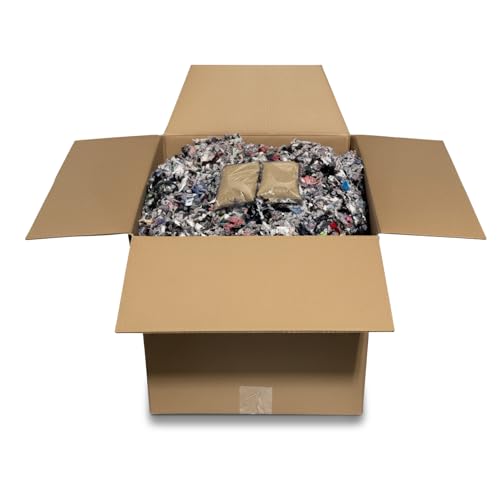
SCS Heavy Bag Filler, 100 lb differs by pairing approximately 90 pounds of premium fiber blend with a 10-pound sand core, for about 100 pounds total. That weighted center is useful when a buyer wants substantially more fill mass than the 50-pound fiber option. The package measures 72 by 12 inches, a tall, narrow form that may suit storage better than a broad box. The maker says the textile component matches material used in its UFC heavy bags. This is the heaviest option, so it is not the natural choice for a small refill or a bag with limited capacity.
Bottom line: Pick this when the bag can take about 100 pounds and a sand core is wanted.
Threehoney Mixed Bag Filler, 8 lb

Threehoney Mixed Bag Filler, 8 lb is the only small-quantity refill, with an 8-pound mixture of shredded fabric, foam, and wood chips. That combination offers a different feel strategy from the all-textile options: the maker describes fabric as adding weight, foam as adding rebound, and wood chips as filling gaps. It is suited to topping up or filling a smaller bag when a large box would be excessive. The quantity is modest, however, so it is unlikely to meet the needs of a large heavy bag on its own.
Bottom line: Choose this for a small bag or a limited top-up using a mixed fill.
How to choose punching bag filling material
Start with the amount of weight the bag can hold, then choose a blend for the feel you want. Textile scraps are a common soft-fill approach; adding a sand core concentrates weight, while foam or wood chips change the mix and how it compresses. A useful rule is to avoid putting the entire fill into a bag unless its capacity is known: check the bag maker’s maximum fill weight before adding a 50- or 100-pound package. For controlled firmness, add material in layers and compress each layer evenly rather than packing only the bottom. A heavy bag’s suspension and mount must also be rated for the finished loaded weight, not just the empty bag.
How fill weight affects bag firmness
More fill weight in the same bag generally makes it denser and less yielding; the result also depends on bag volume and how tightly the material is packed. A 100-pound fill is not automatically right for a large bag, because capacity and dimensions vary across models. Use the bag’s capacity as the limit, and choose a smaller quantity when topping up an already-filled bag. Loose textile fill can settle after repeated impact, so inspect the bag periodically and redistribute or replenish material if it develops soft spots. Avoid treating a package weight as a firmness guarantee: the fill blend and packing density both affect the striking surface.
Textile fill, sand cores, and mixed blends
Textile fill and mixed fill behave differently, so choose by the balance of mass and cushioning. The table compares the available fill approaches by composition and quantity; bag compatibility still depends on the bag’s own capacity.
| Fill approach | Typical role | Option here |
|---|---|---|
| Shredded textile | Soft, distributed fill | 50 lb fiber |
| Textile with sand core | More concentrated weight | About 100 lb total |
| Textile, foam, wood chips | Small mixed refill | 8 lb mixture |
A sand core can create a heavier central mass, so pack it securely and evenly rather than leaving loose sand to migrate. Mixed pieces can feel less uniform than a single textile blend if they are distributed unevenly. For any blend, use a bag with a sound closure and inspect seams regularly; loose fill can escape through damaged stitching.
Filling a heavy bag without uneven spots
Add fill gradually and check the bag’s shape after every few layers. A practical approach is to work from the bottom upward, pressing each layer down evenly and checking that the bag remains cylindrical rather than bulging to one side. Keep sand contained in a durable inner core or pouch instead of scattering it loose among fabric, which can concentrate hard material in isolated spots. Do not overfill to the point that the closure strains or seams pull tight. After the first training sessions, check for settling and redistribute material before adding more; adding weight without checking the suspension can overload a ceiling or stand mount.
Frequently Asked Questions
Can I use sand alone to fill a punching bag?
Sand alone can settle into a dense, hard mass, so many bag fills use fabric around a contained sand core instead. Keep sand securely enclosed and stay within the bag’s fill capacity.
How much filler does a heavy bag need?
Use the bag maker’s capacity and target firmness rather than choosing by height alone. The options here range from 8 pounds for small fills to about 100 pounds for a much heavier refill.
Does punching bag filler settle over time?
Textile and mixed fills can compact or shift after repeated impacts, creating soft spots. Check the bag periodically and redistribute material before deciding whether to add more.
Should I mix sand with shredded fabric?
A contained sand core adds concentrated weight while shredded fabric surrounds it with a softer fill. Keep the sand enclosed to prevent it migrating into hard, uneven pockets.
How do I make a punching bag firmer?
A denser pack generally feels firmer, but the same fill weight feels different in bags of different volumes. Add material in even layers and do not exceed the bag’s capacity or mount rating.