
Pure Monk Fruit Sweetener Without Additives: 5 Options

For pure monk fruit sweetener without additives, Morning Pep Pure Monk Fruit Extract is the clearest match: its name specifies 100% monk fruit extract with no fillers or erythritol. Choose a packet format or a different extract size if that better suits your measuring routine.
We earn a commission if you buy through links on this page. As an Amazon Associate I earn from qualifying purchases. Products are compared on manufacturer specifications, not hands-on testing.
- Best overall: Morning Pep Pure Monk Fruit Extract – The product name identifies 100% pure monk fruit extract with no fillers or erythritol.
- Best for organic certification: DureLife Organic Monk Fruit Sweetener – Its name includes USDA Organic and Non-GMO Project Verified claims.
| Product | Best for | Package size | Additives | Shop |
|---|---|---|---|---|
| Morning Pep Pure Monk Fruit Extract | Pure extract powder | 5 oz | No fillers or erythritol | Check Price on Amazon |
| DureLife Organic Monk Fruit Sweetener | Organic extract powder | 5 oz | No fillers or erythritol | Check Price on Amazon |
| WHYZ Organic Monk Fruit Powder | Baking extract powder | 5 oz | No erythritol or fillers | Check Price on Amazon |
| Organic Monk Fruit Extract Powder, 4 oz | Mogroside percentage | 4 oz | No erythritol | Check Price on Amazon |
Pure monk fruit sweetener without additives
Compare the formats, package sizes, and ingredient claims to find a monk fruit extract that fits your cooking and drink routine.
Morning Pep Pure Monk Fruit Extract
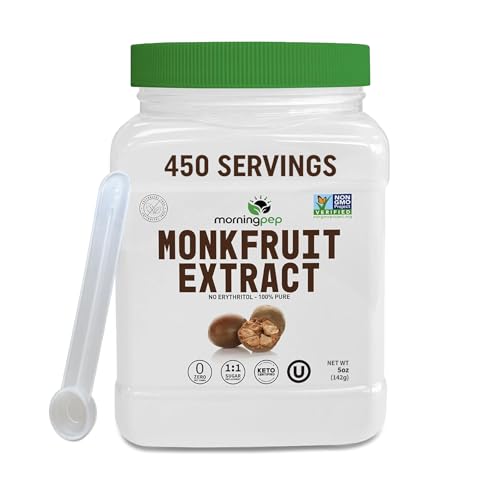
Morning Pep is a 5-ounce powder whose name identifies 100% pure monk fruit extract, with no fillers or erythritol. The maker also claims zero calories and more than 450 servings, so it is aimed at shoppers who want a single-ingredient extract rather than a packet blend. Non-GMO Project Verified and Keto Certified appear in the product name. Concentrated extracts can be much sweeter than sugar, so begin with a very small amount and adjust to taste. The package is a powder, not pre-portioned packets, which matters if you prefer individually measured servings.
Bottom line: Choose this if you want a 5-ounce pure extract powder without fillers or erythritol.
DureLife Organic Monk Fruit Sweetener

The maker says it contains no calories, fillers, erythritol, or other sugar alcohols, and that the powder blends into drinks and batters. It suits cooks who want to use a concentrated extract across beverages and baking. Pure extract does not behave like cup-for-cup granulated sugar: use a tiny starting quantity, then taste and adjust. Anyone looking for packets or a larger-volume sugar replacement should choose a different format.
Bottom line: Pick this when organic certification claims are a priority alongside pure extract.
WHYZ Organic Monk Fruit Powder

WHYZ highlights baking use and claims 458 servings in its 5-ounce package, setting it apart for people who want to keep a concentrated extract on hand for recipes. Its name calls it organic and 100% monk fruit extract, without erythritol; the maker also claims zero calories and no fillers or added sugar. The maker says it is 200 times sweeter than sugar, so it should not be substituted by volume; start with a small amount and adjust gradually. The maker offers an extract powder, not a granulated bulk sweetener, which may not provide sugar’s volume or texture in baked goods.
Bottom line: Choose this for a baking-oriented pure extract and a serving count.
Organic Monk Fruit Extract Powder, 4 oz
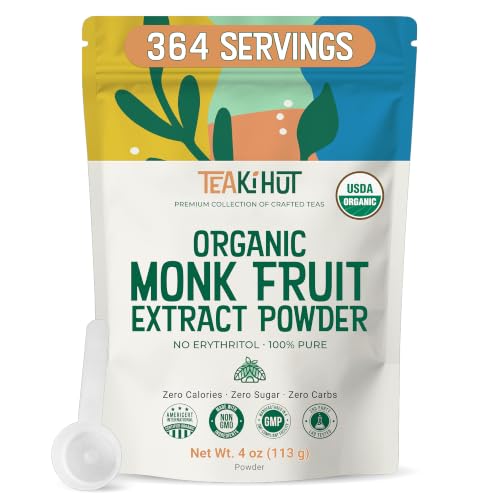
This 4-ounce organic monk fruit extract powder is the only option here that gives a Mogroside V concentration: the maker says it contains 10%. That figure can help shoppers compare extract concentration, though it does not by itself tell you the sweetness of a serving or provide a sugar-equivalent measure. The product name identifies pure organic extract with no erythritol, zero calories, and zero carbs. It suits buyers who value an extract marker over a larger package. The smaller 4-ounce size is less than the 5-ounce powders, and the specifications do not specify a serving count.
Bottom line: Choose this if the 10% Mogroside V concentration matters more than package size.
How to choose a pure monk fruit extract
Start with the ingredient panel and format: pure monk fruit extract is highly concentrated, while packet sweeteners may include ingredients that add bulk. For coffee or tea, packets can simplify portioning; loose extract is easier to scale in small amounts for recipes. Check for erythritol, other sugar alcohols, dextrose, or other carriers if your goal is no additives. A decision rule: if you require a single ingredient, choose a product whose full ingredient panel confirms monk fruit extract alone rather than relying on a front-label claim. Extract percentage, such as Mogroside V, helps characterize concentration, but it is not a direct conversion to sweetness in your recipe.
How to measure monk fruit sweetener in recipes
Pure monk fruit extracts can be far sweeter than sugar, so begin with a pinch or a very small fraction of a teaspoon instead of swapping cup for cup. The amount needed changes with extract concentration, the recipe’s other ingredients, and personal taste; add more gradually after tasting. Sugar also contributes bulk, browning, and structure, so a concentrated extract alone may not reproduce sugar’s texture in cakes or cookies. For beverages, dissolve a small amount and adjust before serving. Avoid assuming that a serving count or sweetness multiple translates directly into a standard baking conversion; use a tested recipe formulated for concentrated extract when texture matters.
Powder versus packets
Loose powder gives a cook control over tiny amounts, while packets offer pre-portioned convenience for drinks and travel. Pure extract is so concentrated that a small package can represent many uses, whereas packet contents may include carrier ingredients to make individual doses practical. The specifications here identify one packet option but do not confirm its full ingredient composition, so strict additive avoidance calls for checking the ingredient panel. This comparison table focuses on format and the practical choice it supports.
| Format | Useful when | Tradeoff |
|---|---|---|
| Loose extract powder | Adjusting tiny amounts in recipes or drinks | Requires careful measuring |
| Packets | Portioning a sweetener for drinks away from home | Ingredient composition needs checking for strict purity |
What to know about sweetness and baking
Monk fruit extract sweetness comes from mogrosides, naturally occurring compounds in the fruit; extract products may concentrate these compounds. A Mogroside V percentage is a concentration marker, not a universal teaspoon-for-teaspoon substitution guide. In baking, sugar contributes more than sweetness: it adds volume, moisture retention, spread, and browning. Replacing it entirely with a concentrated sweetener can change the result, especially in recipes where sugar is a major structural ingredient. For drinks and simple toppings, incremental adjustment is easier; for baked goods, use recipes designed around high-intensity sweeteners and make small batches before changing a favorite formula.
Frequently Asked Questions
Can pure monk fruit extract replace sugar cup for cup?
No; concentrated monk fruit extract is much sweeter than sugar and supplies little bulk. Begin with a tiny amount and use a recipe designed for concentrated sweeteners when baking structure matters.
What is Mogroside V in monk fruit extract?
Mogroside V is one of the naturally occurring compounds associated with monk fruit’s sweetness. A percentage such as 10% describes concentration, not a direct sugar-equivalent measure.
How should I store monk fruit powder?
Keep sweetener powder tightly closed and dry to limit moisture and clumping. Use a clean, dry measuring spoon rather than dipping a wet utensil into the container.
Do monk fruit packets always contain only monk fruit?
No; packet sweeteners can use carriers or bulking ingredients to make small doses easier to handle. Read the ingredient panel if avoiding every additive is essential.
Why does monk fruit sweetener affect baking texture?
Sugar contributes bulk, browning, and moisture as well as sweetness, while concentrated monk fruit extract may provide little volume. Use a baking formula designed for high-intensity sweeteners rather than substituting cup for cup.