
Push-Ups Weighted Vest: 4 Adjustable Options Compared

ZELUS Weighted Vest, 12 lb is the most straightforward choice for weighted push-ups if a 12-pound load suits you; its iron sand is distributed evenly through the vest. Choose an adjustable model instead if you want to change the load as your strength develops.
A weighted vest adds resistance while leaving your hands free, but the added load can change your push-up form. Confirm the selected vest size and load before ordering.
We earn a commission if you buy through links on this page. As an Amazon Associate I earn from qualifying purchases. Products are compared on manufacturer specifications, not hands-on testing.
- Best overall: ZELUS Weighted Vest, 12 lb – A fixed 12-pound option with evenly distributed iron sand suits a simple added-load setup.
- Best for small weight steps: CAP Adjustable Weighted Vest, 40 lb – Its adjustable load starts at 2.5 pounds and increases in 2.5-pound packets.
- Best for broad chest fit: RUNmax Run Fast Weighted Vest, 20 lb – Its adjustable straps accommodate chest sizes from 28 to 48 inches.
- Best for high capacity: CAP Adjustable Weighted Vest, 50 lb – The vest adjusts from 4 to 50 pounds using 4-pound packets.
| Product | Best for | Load range | Chest fit | Weight material | Shop |
|---|---|---|---|---|---|
| ZELUS Weighted Vest, 12 lb | Fixed 12-pound load | 12 lb | 31.5–45 in | Iron sand | Check Price on Amazon |
| CAP Adjustable Weighted Vest, 40 lb | Small load increments | 2.5–40 lb | — | Iron ore fines | Check Price on Amazon |
| RUNmax Run Fast Weighted Vest, 20 lb | Wide chest adjustment | 20–150 lb capacity | 28–48 in | — | Check Price on Amazon |
| CAP Adjustable Weighted Vest, 50 lb | Higher load capacity | 4–50 lb | — | Iron ore fines | Check Price on Amazon |
Weighted Vests for Push-Ups
Compare each vest’s load setup and fit before choosing one for your push-up routine.
ZELUS Weighted Vest, 12 lb

Unlike the adjustable options, this ZELUS vest is the 12-pound size, with evenly distributed iron sand for a set amount of resistance. Soft, wear-resistant spandex and adjustable buckle straps provide a snug fit for chest sizes from 31.5 to 45 inches. That makes it a fit for someone ready to train with 12 pounds rather than change the load between sessions. Its limitation is the fixed selected weight, so it may not suit someone who wants to progress in smaller increments. Wipe the vest down for care.
Bottom line: Choose this if a fixed 12-pound load and its chest-fit range work for you.
CAP Adjustable Weighted Vest, 40 lb

The smallest weight steps set this CAP vest apart: its load adjusts from 2.5 to 40 pounds in 2.5-pound packets of iron ore fines. A fully adjustable waist belt and padded shoulders are designed to distribute weight and help limit shifting. This setup suits push-up training where you want to add resistance gradually rather than begin with a larger fixed load. The vest’s maximum is 40 pounds, and the specifications do not give a chest-fit range, so buyers who need a specific torso fit should verify that before choosing it.
Bottom line: Pick this for 2.5-pound load steps and a 40-pound ceiling.
RUNmax Run Fast Weighted Vest, 20 lb
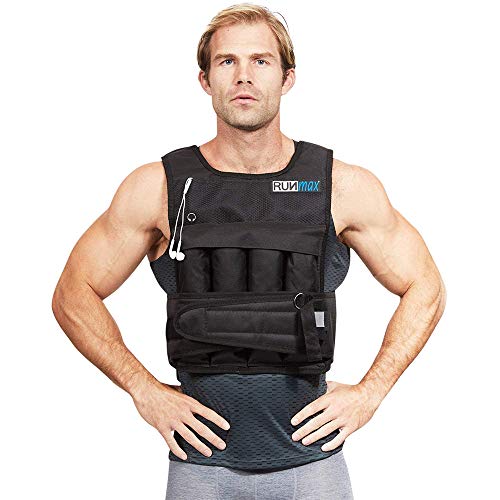
The broadest chest-fit range distinguishes this RUNmax vest: adjustable straps fit 28 to 48 inches, and quick-release buckles secure the fit. Removable weights allow progression from the selected 20-pound version toward the 150-pound capacity; breathable mesh panels and reflective strips are also included. It suits buyers who need more chest adjustment or expect to change the load. This version is without shoulder pads, so it may be a poor choice if you specifically want padded shoulders for comfort during push-ups.
Bottom line: Choose this for its wide chest range and removable-weight design.
CAP Adjustable Weighted Vest, 50 lb

This CAP vest reaches 50 pounds, a higher maximum than the other adjustable CAP model here, and its load starts at 4 pounds. It uses 4-pound packets of iron ore fines, with a fully adjustable waist belt and padded shoulders intended to distribute weight and reduce shifting. The higher ceiling suits experienced trainees seeking room to increase resistance over time. Its 4-pound steps are larger than the other CAP option’s 2.5-pound increments, which matters if you want finer control when adding weight.
Bottom line: Pick this if you want a 50-pound maximum and padded shoulders.
How to Choose a Weighted Vest for Push-Ups
Choose a vest load that lets you keep the same controlled push-up form you use without added weight. Start with bodyweight; add resistance only when you can complete your usual sets without sagging hips, flared elbows, or shortened range. A practical decision rule is to reduce the load if it costs you even one clean repetition from your normal set. Fixed-load vests keep setup simple, while removable-weight designs let you progress in increments. Check whether the weight is the selected version or the vest’s full capacity, since those figures can differ. Fit matters too: a vest that shifts toward your neck or abdomen can make the movement uncomfortable and distract from stable positioning.
Weighted Vest Fit and Push-Up Form
A secure torso fit is essential because a push-up places the vest parallel to the floor and gravity can pull it away from your body. Adjust straps so the vest sits close without restricting a full breath or pressing painfully on the shoulders. Chest measurements help narrow fit, but they do not replace checking shoulder and torso comfort in a push-up position. Keep the vest centered, brace your abdomen, and maintain a straight line from shoulders to heels. If the load slides, interferes with breathing, or changes your range of motion, stop and adjust the fit or remove weight. Do not use a load that makes you unable to lower and press under control.
Fixed and Adjustable Weighted Vests Compared
Fixed-load and adjustable vests suit different progression plans: a fixed load is simple, while removable weights give more control over resistance. Increment size determines how finely you can progress; smaller increments make it easier to add a little load without a large jump. Maximum capacity matters only if your training plan calls for more weight than the selected starting load. Use this comparison to match the vest type to your progression preference.
| Vest setup | Useful when | Tradeoff |
|---|---|---|
| Fixed 12 lb | You want one set load | Cannot adjust resistance |
| 2.5 lb packets | You want smaller load steps | 40 lb maximum |
| 4 lb packets | You want up to 50 lb | Larger progression steps |
| Removable weights | You need broad chest adjustment | Selected version is 20 lb |
Safe Progression for Weighted Push-Ups
Progress one variable at a time: add a small amount of weight, or add repetitions, rather than increasing both in the same session. Weighted push-ups increase loading on the shoulders, elbows, and wrists, so stop if you feel sharp pain, numbness, or loss of control. Warm up with several unweighted repetitions and use a stable, nonslip floor. Keep your hands planted and do not let the vest shift during the descent. If you cannot complete the movement through your normal range, remove weight and return to a load you can control. A vest should never compress your chest enough to limit breathing.
Frequently Asked Questions
How much weight should I start with for push-ups?
Start with bodyweight, then add the smallest manageable load only after your usual repetitions stay controlled. A vest that reduces your clean repetitions or shortens your range is too heavy for that set.
Can a weighted vest change push-up form?
Yes, a shifting or overly heavy vest can pull your torso out of position and shorten your range. Keep your body in a straight line and reduce the load if you cannot lower and press under control.
Should a weighted vest feel tight during push-ups?
It should sit securely without restricting a full breath or pressing painfully on your shoulders. Adjust the straps if the vest slides toward your neck or abdomen when you move.
How often should I add weight to push-ups?
Add weight only after you can complete your normal sets with consistent form and full range of motion. Increase either load or repetitions at a time, not both together.
Are weighted push-ups safe for beginners?
Beginners should first build controlled bodyweight push-ups before adding a vest. Stop if you feel sharp pain, numbness, or cannot maintain stable positioning.