
PVC Inflatable Boat Repair Glue: 3 Options Compared

For PVC inflatable boat repair glue, HH-66 Vinyl Cement, 4 oz is the closest match because it is a vinyl cement made for PVC and inflatables, with a flexible waterproof bond. Choose a patch kit instead when the damage needs added material, or liquid patch when you want to seal a minor puncture without a separate patch.
We earn a commission if you buy through links on this page. As an Amazon Associate I earn from qualifying purchases. Products are compared on manufacturer specifications, not hands-on testing.
- Best overall: HH-66 Vinyl Cement, 4 oz – A 4 fl oz PVC and vinyl cement with a flexible waterproof bond for inflatables.
- Best for larger tears: Heavy Duty PVC Repair Kit – Includes oversized 10 × 15 cm PVC patches and two adhesive tubes.
- Best for minor cuts: AquaPro Liquid Patch – Seals minor punctures without a separate patch and gives a 3-hour minor-repair readiness time.
| Product | Best for | Format | Volume | Repair method | Shop |
|---|---|---|---|---|---|
| HH-66 Vinyl Cement, 4 oz | General PVC repairs | Vinyl cement | 4 fl oz | Adhesive bond | Check Price on Amazon |
| Heavy Duty PVC Repair Kit | Tears needing patches | Patch kit | 2 × 30 mL | Adhesive and patches | Check Price on Amazon |
| AquaPro Liquid Patch | Patch-free small cuts | Liquid patch | — | Liquid seal; mesh for larger tears | Check Price on Amazon |
PVC Inflatable Boat Repair Glue Compared
Match the adhesive format to whether the damage needs only sealing or a reinforcing patch.
HH-66 Vinyl Cement, 4 oz

HH-66 is the direct-fit vinyl cement here, combining a 4 fl oz can with a flexible waterproof bond for PVC and vinyl inflatables. The maker says it can be applied underwater and bonds in temperatures from 35°F to 95°F; once set, it is rated for service from -10°F to 150°F. That makes it a practical option for a boat owner who wants cement rather than a kit with separate patch material. It is adhesive-only, so buyers repairing a tear that needs reinforcement should choose a kit with patches instead.
Bottom line: Choose this for a direct PVC/vinyl cement repair without separate patch material.
Heavy Duty PVC Repair Kit

This kit stands apart by pairing two 30 mL adhesive portions with oversized 10 × 15 cm PVC patches, giving it material for covering damage as well as bonding it. The maker describes the cured bond as waterproof and resistant to pressure and flexing, for PVC boats, kayaks and rafts. It suits repairs where a patch can cover a tear, puncture or worn seam. Its adhesive comes in smaller total volume than the 4 fl oz cement, so a buyer planning many repairs may prefer a larger cement container.
Bottom line: Pick this when a PVC boat repair needs a patch as well as adhesive.
AquaPro Liquid Patch
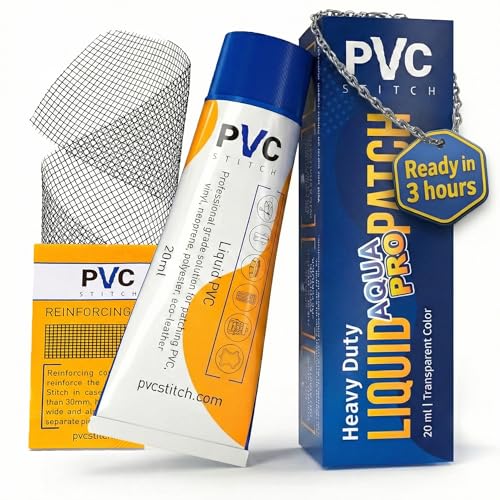
AquaPro uses a liquid patch rather than a separate stick-on patch for minor punctures and cuts, with reinforcing mesh for tears or split seams over 1.2 inches. The maker gives a 3-hour readiness time for minor repairs and 12 hours for full strength on high-pressure gear. This format suits a small repair where an adhesive-only seal is preferable to covering the area with a conventional patch. It is not the choice for every type of damage: larger tears need the included mesh, and full strength takes longer than the minor-repair readiness time.
Bottom line: Choose this for minor punctures when you want a liquid seal rather than a separate patch.
Choosing PVC boat repair glue by damage
Match repair format to damage size: liquid sealers suit minor punctures, while a tear or split seam may need patch material or reinforcing mesh. A PVC inflatable is airtight because its coated fabric and bonded seams hold pressure; a repair has to restore both the barrier and enough flexible coverage to move with the hull. For a small pinhole, a liquid seal can avoid a separate patch. For a tear longer than 1.2 inches, the mesh-based approach in AquaPro Liquid Patch is the format specifically described for that threshold; a patch kit such as Heavy Duty PVC Repair Kit supplies a larger PVC cover. Keep the damaged area deflated while preparing the repair, and do not inflate or launch until the adhesive has fully cured.
Preparing a PVC inflatable repair surface
A clean, dry, deflated surface helps an adhesive bond evenly; water, dirt and trapped air can interfere with contact. Remove loose grime and let the repair zone dry fully before applying cement or liquid patch, and keep the patch centered with a margin beyond the damaged edge. For a tear, a cover that extends past the split spreads stress beyond the damaged line instead of concentrating it at the edge. Do not treat underwater application as permission to skip surface preparation: even when a cement maker says it can be applied underwater, the surrounding material still needs a sound bond. Follow each adhesive’s cure time before exposing the repair to pressure or water.
Repair adhesives versus patch kits
Adhesive-only cement and patch kits solve different repair problems: cement bonds materials, while patch kits provide a cover to reinforce a damaged area. Liquid patch can seal minor cuts, but mesh is needed for larger tears under the product’s threshold. Use this format guide to narrow the choice before you start:
| Damage or need | Format to consider |
|---|---|
| Small puncture or minor cut | Liquid patch |
| Tear or seam split needing added coverage | PVC patch kit or reinforcing mesh |
| Bonding vinyl without a separate patch | Vinyl cement |
Check that the repair material is intended for PVC or vinyl, not simply a generic household glue. If the damaged boat fabric is not PVC, use a repair adhesive made for that material instead.
Curing and safe return to the water
Wait for full cure before pressurizing or launching an inflatable boat; a surface that feels dry may not have reached its working strength. AquaPro gives 3 hours for minor repairs to be ready and 12 hours for full strength on high-pressure gear, so the shorter interval should not be treated as its full-cure time. Pressure can enlarge an incompletely bonded puncture, and an unverified repair can fail on the water. Make repairs ashore, keep the boat deflated during the cure period, and inspect the area for lifting edges before reinflating. For a large tear or damaged seam, use a repair format that includes reinforcement rather than relying on a thin liquid film alone.
Frequently Asked Questions
Can PVC boat glue be applied underwater?
Some vinyl cement is described by its maker as applicable underwater, but that does not mean every adhesive works in submerged conditions. A dry, prepared surface is the safer default, and full curing still matters before loading the repair.
How long should inflatable boat glue cure?
Cure time depends on the repair format and product. AquaPro gives 3 hours for minor-repair readiness and 12 hours for full strength on high-pressure gear, so wait for the full-strength period before stressing that repair.
Can I use vinyl cement without a patch?
Yes, vinyl cement can bond PVC or vinyl surfaces without a separate patch when the damage is suitable for an adhesive-only repair. For a larger tear, use added patch material or mesh so the damaged area has coverage beyond the split.
What size tear needs reinforcing mesh?
AquaPro specifies reinforcing mesh for tears or split seams over 1.2 inches. Smaller minor punctures and cuts are the use case described for its liquid patch without a separate stick-on patch.
Should an inflatable boat be inflated while glue cures?
Keep the boat deflated during adhesive curing so pressure does not pull at the fresh bond. Reinflate only after the full cure period, not merely when the repair surface feels dry.