
Pyrex Glass Coffee Percolator Options Compared by Fit

No Pyrex-branded percolator appears among these options, but two are glass stovetop percolators; the 8-cup model with a heat diffuser is the clearest capacity match. Choose a different option if you specifically need Pyrex branding, since borosilicate glass alone does not establish that brand.
A percolator cycles hot water through coffee grounds, while a transparent glass pot lets you watch the brewing process.
We earn a commission if you buy through links on this page. As an Amazon Associate I earn from qualifying purchases. Products are compared on manufacturer specifications, not hands-on testing.
- Best overall: Café Brew 8-Cup Glass Percolator – The 8-cup, 40-ounce glass model names gas, ceramic, and electric stovetops as compatible and includes a heat diffuser.
- Best for plastic-free materials: NONNA 2.0 Glass Percolator – Its brewing materials are glass, stainless steel, and silicone, with no plastic.
- Best for an 8-cup steel pot: Farberware Yosemite 8-Cup Percolator – This stainless steel alternative has a permanent filter basket and a clear glass knob.
| Product | Best for | Material | Capacity | Stovetop compatibility | Shop |
|---|---|---|---|---|---|
| Café Brew 8-Cup Glass Percolator | Eight-cup glass brewing | Borosilicate glass, polypropylene parts | 8 cups / 40 oz | Gas, ceramic, electric | Check Price on Amazon |
| NONNA 2.0 Glass Percolator | Plastic-free materials | Borosilicate glass, stainless steel, silicone | Medium | Stovetop | Check Price on Amazon |
| Farberware Yosemite 8-Cup Percolator | Eight-cup steel pot | Stainless steel, glass knob | 8 cups | Stovetop | Check Price on Amazon |
| Farberware Yosemite 12-Cup Percolator | Larger steel batches | Stainless steel, glass knob | 12 cups | Stovetop | Check Price on Amazon |
Glass Coffee Percolators and Alternatives
Compare the glass models with related stainless steel alternatives by capacity, materials, and stated stovetop compatibility.
Café Brew 8-Cup Glass Percolator

The clearest capacity choice here, this glass percolator brews up to 8 cups, or 40 ounces, and includes a heat diffuser. Its body uses SCHOTT DURAN borosilicate glass; the basket, stem, and stand are BPA-free polypropylene, so it is not a plastic-free design. The maker says it works on gas, ceramic, and electric stovetops and is dishwasher safe. Choose it if you want a transparent glass pot with a 8-cup capacity. The polypropylene components matter if avoiding plastic is a priority.
Bottom line: Choose this if you want an 8-cup glass pot and use one of its named stovetop types.
NONNA 2.0 Glass Percolator
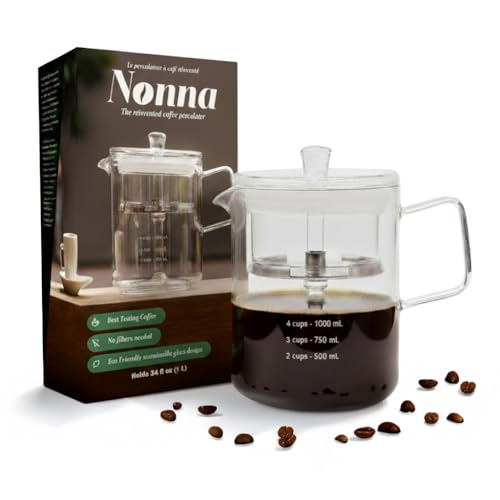
The NONNA 2.0 is the only option here whose brewing materials are explicitly described as plastic-free: borosilicate glass, stainless steel, and silicone. The maker presents it as a successor to an earlier model and says the design addresses flaws in the prior versions. Its dimensions are 7.9 inches high, 5.1 inches long, and 5.9 inches wide. This suits buyers prioritizing those materials over a cup capacity. The product is labeled medium rather than by cups, so confirm the capacity you need before choosing it.
Bottom line: Pick this if avoiding plastic matters more than having a cup count.
Farberware Yosemite 8-Cup Percolator

The Farberware Yosemite differs from the glass-bodied options: it is a stainless steel percolator with a clear glass knob. Its permanent filter basket is reusable, and the maker says the pot is dishwasher safe and fully immersible. The 8-cup size makes it a related option if you are flexible about the pot material but want a glass element to observe percolation. It is not a glass coffee percolator, so skip it if a transparent brewing chamber is essential.
Bottom line: Choose this if you want an 8-cup stainless steel pot rather than a glass body.
Farberware Yosemite 12-Cup Percolator
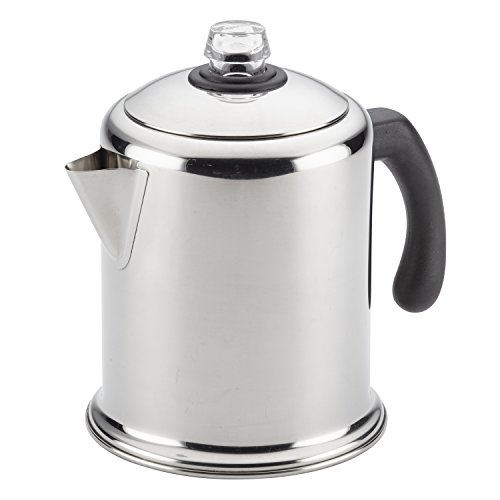
The 12-cup Yosemite is the largest capacity among the percolators here, but its body is stainless steel, not glass; only the knob is glass. The maker describes a permanent filter basket and says the pot is dishwasher safe and fully immersible. This model is a related choice for someone willing to trade a see-through body for a larger stated batch size. Its 12-cup capacity is not directly comparable to the 8-cup glass option if serving sizes differ.
Bottom line: Pick this for a larger stated batch when a glass pot body is not required.
How a Glass Percolator Brews Coffee
A stovetop percolator repeatedly sends heated water up a stem and over grounds in a basket, then returns brewed coffee to the pot. This repeated circulation differs from a drip maker, which passes water through the grounds once. On a glass model, the transparent body makes the brewing cycle visible, but color alone is not a precise measure of strength. Use a coarse, even grind to reduce fine particles passing through the basket, and keep heat gentle once percolation begins; vigorous boiling can make extraction harsher. Percolator timing depends on heat, coffee dose, and desired strength, so avoid treating a single fixed time as universal. Never heat an empty pot, and avoid sudden temperature changes that can stress glass.
Choosing Glass, Pyrex, or a Stainless Alternative
Choose by pot material first: a glass body provides a view of brewing, while stainless steel hides the coffee inside but may suit buyers who do not require visibility. Pyrex is a brand name, not a synonym that proves a pot’s manufacturer; borosilicate describes a type of glass, and these product names do not identify a Pyrex-branded pot. For glass, decide whether plastic components are acceptable: one option combines glass, stainless steel, and silicone, while the 8-cup glass model uses polypropylene parts. A measurable decision rule is simple: if a transparent brewing chamber is mandatory, exclude both stainless bodies even though their knobs are glass. The word “cup” can represent a serving smaller than a household mug, so choose by ounces when available.
Matching Capacity to Your Coffee Routine
Capacity labels make the glass models easier to compare than the medium-size label alone: one states 8 cups and 40 ounces, while the other gives no cup count. The two stainless alternatives state 8 and 12 cups. Coffee-maker cup labels do not necessarily equal an 8-ounce mug, so estimate the servings you want from the ounces when a volume is provided. For a group that drinks large mugs, a nominal 8-cup pot may yield fewer mug servings than expected. If the capacity is central to your choice, confirm the actual volume before ordering the model that gives only a size label. Do not assume that similarly named “cup” capacities use the same serving volume across brands.
Using and Caring for a Stovetop Percolator
Use a burner size and heat level appropriate to the pot, and keep the brew from boiling aggressively once coffee begins cycling. Glass cookware can crack from thermal shock, so avoid moving a hot pot onto a cold, wet surface or pouring cold water into it; let it cool before washing. The 8-cup glass model names gas, ceramic, and electric stovetops and is dishwasher safe, while both Farberware models are described as fully immersible and dishwasher safe. Those statements do not establish that every part of every glass pot belongs in a dishwasher, so check component care before machine washing the NONNA model. Clean the basket and stem after brewing, since trapped grounds can interfere with the next cycle.
Frequently Asked Questions
How much coffee does an 8-cup percolator make?
The Café Brew model states a maximum of 40 ounces for its 8-cup capacity. A coffee-maker cup may be smaller than an 8-ounce mug, so use the ounce figure to estimate servings.
Why should I use coarse coffee in a percolator?
Coarse, evenly ground coffee is less likely than fine grounds to slip through a percolator basket. If the finished cup contains sediment, try a coarser grind and check that the basket is seated correctly.
Can a glass percolator go on an electric stove?
The Café Brew model names electric, ceramic, and gas stovetops as compatible. Glass can crack from sudden temperature changes, so avoid rapid heating or setting a hot pot on a cold surface.
How do I keep percolator coffee from tasting bitter?
Use moderate heat rather than letting the pot boil vigorously, and avoid an overly fine grind. The right brewing duration varies with coffee dose and heat, so adjust those factors gradually.