
R134a Self-Sealing Can Tap: 5 Options Compared

For most buyers, OMT R134a Self-Sealing Can Tap is the direct choice because it taps self-sealing cans and includes a 1/4-inch female-to-1/2-inch male adapter. Choose a kit such as Boltigen R134A Can Tap Kit or Lu-Hawk R134A Adapter Kit instead if you also need a puncture-style tap or core tool.
A can tap connects a refrigerant can to compatible charging equipment; matching the can, hose, and gauge-set fittings matters more than the number of pieces.
We earn a commission if you buy through links on this page. As an Amazon Associate I earn from qualifying purchases. Products are compared on manufacturer specifications, not hands-on testing.
- Best overall: OMT R134a Self-Sealing Can Tap – A self-sealing tap comes with a 1/4-inch female-to-1/2-inch male adapter.
- Best for two tap styles: Boltigen R134A Can Tap Kit – Includes both self-sealing and puncture-style taps plus adapters and a core tool.
- Best for a compact kit: Lu-Hawk R134A Adapter Kit – Pairs two tap styles and service adapters with a valve core tool.
| Product | Best for | Tap styles | Adapter connections | Included tools | Shop |
|---|---|---|---|---|---|
| OMT R134a Self-Sealing Can Tap | Single-tap setup | Self-sealing | 1/4-in female to 1/2-in male | — | Check Price on Amazon |
| Boltigen R134A Can Tap Kit | Multiple connections | Self-sealing and puncture | 1/4-in flare to 1/2-in male | Core remover | Check Price on Amazon |
| R134a Self-Sealing Tap with Tank Adapter | Brass adapter set | Self-sealing | 1/4-in SAE female to 1/2-in ACME male | — | Check Price on Amazon |
| Lu-Hawk R134A Adapter Kit | Tap-style flexibility | Self-sealing and single-puncture | 1/4-in flare and 1/2-in ACME | Valve core tool | Check Price on Amazon |
| R134a Self-Sealing and Puncture Tap Kit | Seal-ring kit | Self-sealing and puncture | 1/4-in female to 1/2-in male | Valve core tool | Check Price on Amazon |
R134a Self-Sealing Can Taps
Compare the tap style and included connections against the can and charging equipment you plan to use.
OMT R134a Self-Sealing Can Tap

OMT R134a Self-Sealing Can Tap is the straightforward single-tap option: it is made for standard self-sealing R134a cans and includes a 1/4-inch female-to-1/2-inch male hose adapter. The maker says the brass tap and adapter use heat-treated brass, with a fixing nut, precision threading, and O-rings intended to reduce leakage. This suits a buyer who already has compatible charging equipment and needs a self-sealing-can connection. The limitation is its narrower kit: it does not include a second puncture-style tap or a core tool, so buyers needing those should consider a multi-piece kit.
Bottom line: Choose this for a self-sealing can and a compatible 1/4-inch hose connection.
Boltigen R134A Can Tap Kit
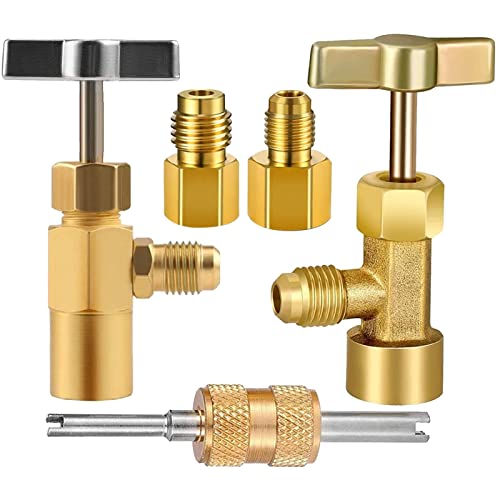
Boltigen R134A Can Tap Kit stands out for combining two can tap styles with two adapters and a valve core remover in a five-piece kit. Its contents include a self-sealing tap, a non-self-sealing tap, a vacuum-pump adapter, and an R134a tank adapter. The maker identifies brass construction, a T-handle, and thick seals on the taps. This suits someone who needs to connect more than one compatible can or equipment fitting. The tradeoff is that multiple fittings add matching decisions: verify the connection at each end before assembling the setup.
Bottom line: Pick this when you need both tap styles and several adapter connections.
R134a Self-Sealing Tap with Tank Adapter

R134a Self-Sealing Tap with Tank Adapter pairs a self-sealing can tap with a tank adapter and describes a screw-on design, safety check valve, and durable brass-alloy construction. Its adapter connection is 1/4-inch SAE female to 1/2-inch ACME male, which makes it useful when those are the fittings your manifold setup needs. The product also mentions other thread connections, so do not assume every fitting described works with every hose or system. This is a tap-and-adapter choice rather than a broad kit; buyers who need a puncture tap or core tool should select another option.
Bottom line: Choose this when its SAE-to-ACME adapter matches your equipment.
Lu-Hawk R134A Adapter Kit

Lu-Hawk R134A Adapter Kit is organized around choosing between self-sealing and single-puncture can taps, and includes two adapters and a valve core tool. The maker specifies 1/4-inch flare and 1/2-inch ACME connections and advises matching fittings to the can, hose, gauge set, or vacuum pump. That makes this a useful option for a buyer who needs both tap styles and compatible service connections in one kit. The limitation is that the kit does not include refrigerant, hoses, or gauges, so it is not a complete charging setup.
Bottom line: Choose this if you need both tap styles and already have the other service equipment.
R134a Self-Sealing and Puncture Tap Kit

R134a Self-Sealing and Puncture Tap Kit combines self-sealing and puncture-style taps with a tank adapter and valve core removal tool. The maker says the taps fit R134a cans with a 1/2-inch ACME right-hand thread and describes green sealing rings in the tap and adapter. This suits buyers who want two tap styles plus the named adapter and tool. The kit’s compatibility depends on the can having the specified thread; check that connection and the adapter’s fit to your hose before starting. It is not simply a single self-sealing valve.
Bottom line: Pick this when your can has a 1/2-inch ACME right-hand thread and you want two tap styles.
How to Choose an R134a Can Tap
Choose a tap by matching its can-side connection and hose-side adapter to the equipment in your setup. R134a can taps commonly use a 1/2-inch ACME can connection, while hose or manifold connections may use 1/4-inch SAE flare fittings; those are different interfaces, so an adapter may be needed. Self-sealing cans need a self-sealing tap, while older puncture-style cans require a puncture tap. With only one can style on hand, choose the matching tap rather than paying attention to extra pieces. Before assembly, identify the thread and gender at both ends; a fitting that starts to thread is not necessarily the correct match.
In this comparison, kits with both styles offer flexibility, but each connection still has to match the can and service gear.
| Need | Choose |
|---|---|
| Self-sealing can only | Single self-sealing tap |
| Self-sealing and puncture cans | Kit with both tap styles |
| Multiple equipment connections | Kit with adapters matching your fittings |
Self-Sealing and Puncture Taps
A self-sealing tap opens a can designed with a self-sealing valve; a puncture tap pierces a can designed for that style. The two mechanisms are not interchangeable: using the wrong tap can fail to open the can or make a poor connection. Look at the can valve and compare it with the tap type before connecting the hose. A kit containing both styles can cover both can types, but it does not make either tap universal for every refrigerant or fitting.
R134a can threads and adapter threads should be treated as separate checks. A common 1/2-inch ACME can connection does not establish that the other end fits a particular manifold, hose, or vehicle service port. Confirm those interfaces before beginning. Do not force mismatched threads; stop if the fitting does not engage smoothly.
Fitting Adapters to Hoses and Equipment
Adapters translate between named connection types, not between all possible fittings. For example, 1/4-inch SAE flare and 1/2-inch ACME designate different thread interfaces; verify both the size and whether each end is male or female. Compare those details against the tap, hose, manifold gauge set, and any vacuum-pump connection you intend to use. A kit can contain several adapters, but the piece count alone does not confirm compatibility with your equipment.
Before use, make a connection map: can to tap, tap to adapter, and adapter to hose or gauge. Check each thread for damage and ensure seals are seated as intended. If any connection standard is uncertain, confirm the fitting type before assembling; do not rely on thread appearance alone.
Refrigerant Handling and Can Tap Safety
R134a is a pressurized refrigerant, and escaping liquid can cause cold burns or frostbite. Wear eye protection and gloves suitable for refrigerant handling, keep skin away from the outlet, and work with ventilation. Never vent refrigerant intentionally; U.S. EPA rules prohibit venting ozone-depleting refrigerants during servicing. Automotive A/C work also involves pressure, so do not open a pressurized connection or remove a tap while refrigerant is flowing.
Use the tap only on a compatible can and keep the assembly upright and controlled as applicable to the equipment. A leaking connection is a stop condition, not a reason to tighten fittings while pressurized. If the system needs diagnosis or refrigerant recovery, use appropriate service equipment and qualified help rather than releasing refrigerant into the air.
Frequently Asked Questions
What thread does an R134a can tap usually use?
Many automotive R134a cans use a 1/2-inch ACME thread, but confirm the can’s valve style and thread before choosing a tap. A hose-side adapter may use a different connection such as 1/4-inch SAE flare.
Can a self-sealing tap open a puncture-style can?
No; the tap mechanism should match the can valve. Use a puncture-style tap for a can designed to be pierced and a self-sealing tap for a self-sealing can.
Why does an R134a tap kit include adapters?
Adapters connect different fitting interfaces, such as a can-side ACME connection and a hose-side flare connection. Check the size and male-or-female ends at both sides before assembling.
Is it safe to handle R134a without eye protection?
No; escaping liquid refrigerant can cause cold burns or frostbite. Wear eye protection and suitable gloves, and avoid contact with the outlet or escaping refrigerant.
Can automotive R134a refrigerant be released into the air?
No; U.S. EPA rules prohibit intentional venting of ozone-depleting refrigerants during servicing. Use appropriate recovery equipment and qualified help when refrigerant must be removed.