
Ramps for Robot Vacuums: 3 Models Compared

For a Roborock vacuum facing a threshold up to 2.8 cm high, Roborock Threshold Strip is the closest fit because it is made for Roborock models and specifies that crossing height. Choose a different ramp if your vacuum is another brand, your threshold is wider than the strip, or the rise exceeds the product’s limit.
A robot vacuum threshold ramp bridges a floor-height change with a sloped surface; matching its rise and width to the doorway matters more than choosing by appearance.
We earn a commission if you buy through links on this page. As an Amazon Associate I earn from qualifying purchases. Products are compared on manufacturer specifications, not hands-on testing.
- Best overall: Roborock Threshold Strip – Designed for Roborock robot vacuums and specified for thresholds up to 2.8 cm high.
- Best for modular width: Modular 15-Degree Rubber Ramp – Four connectable modules let you adjust the strip width for the doorway.
- Best for 2-inch rises: GANSNAY 2-Inch-Rise Ramp – The ramp is sized for a 2-inch-rise and says it accommodates robot cleaners.
| Product | Best for | Height | Length | Width | Shop |
|---|---|---|---|---|---|
| Roborock Threshold Strip | Roborock vacuums | 0.71 in | 27.17 in | 3.74 in | Check Price on Amazon |
| Modular 15-Degree Rubber Ramp | Adjustable width | 0.59 in | 27.08 in | 1.96 in | Check Price on Amazon |
| GANSNAY 2-Inch-Rise Ramp | Higher door sills | 2 in | 31.5 in | 8.7 in | Check Price on Amazon |
Ramps for Robot Vacuums
Compare the ramp heights and dimensions with your threshold before choosing a transition.
Roborock Threshold Strip
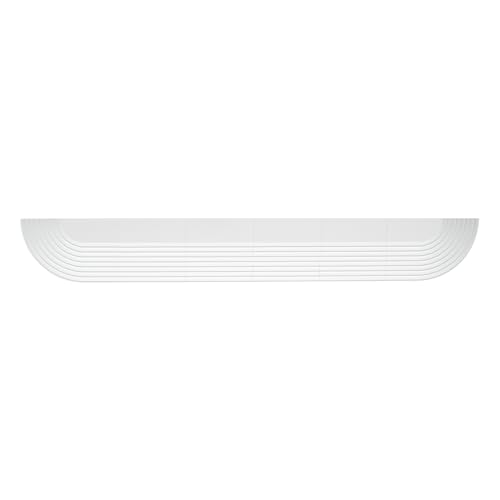
Roborock Threshold Strip is the Roborock-specific option here, with a crossing capability of 2.8 cm (about 1.10 in). The strip measures 27.17 inches long, 3.74 inches wide and 0.71 inches high. The maker says it is compatible with all Roborock robot vacuums and supports up to 150 kg. It suits a Roborock owner whose threshold is within that crossing limit and wider than 10 cm. The maker cautions that dark, recessed or multi-level thresholds can affect passage, so this is not a sure fit for every threshold shape.
Bottom line: Choose it for a Roborock vacuum and a straightforward threshold within its crossing limit.
Modular 15-Degree Rubber Ramp

Modular 15-Degree Rubber Ramp differs from the fixed strip by using four separate, connectable modules to adjust the width for a doorway. Its dimensions are 27.08 inches long, 1.96 inches wide and 0.59 inches high, and its grooved surface is designed for traction. The maker says it helps robot vacuums cross height differences up to 0.6 inch (1.55 cm), making it a fit for lower transitions rather than tall sills. Its rise is less than Roborock Threshold Strip’s crossing capability, so measure the floor-height difference before choosing it.
Bottom line: Choose it when a low threshold and adjustable modular width are the priorities.
GANSNAY 2-Inch-Rise Ramp
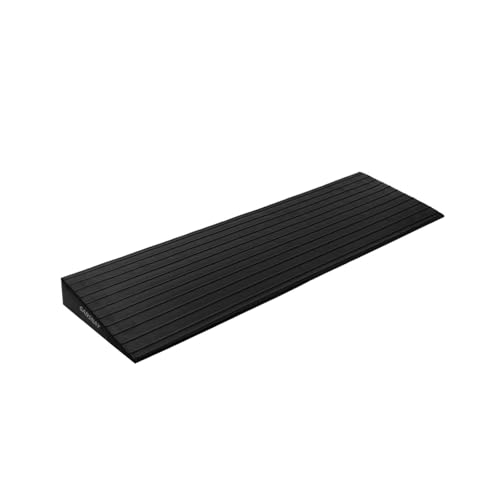
GANSNAY 2-Inch-Rise Ramp has the tallest rise among these robot-vacuum options: 2 inches, across a 31.5-inch length and 8.7-inch width. The maker gives it a 12.7-degree slope and says it accommodates robot cleaners, along with wheelchairs, strollers and other wheeled equipment. Its broad footprint and higher rise suit a doorway with a substantial sill, but the rise alone does not guarantee a particular vacuum can climb it. Confirm that your vacuum can manage the threshold and ramp approach before selecting this taller transition.
Bottom line: Choose it for a 2-inch doorway rise, provided your vacuum can handle that transition.
How to measure a robot vacuum threshold
Measure the vertical rise and the usable doorway width before picking a ramp. Put a ruler or tape measure at the lower floor and measure straight up to the higher floor; do not measure along the sloped face of an existing transition. Then measure the clear width where the ramp can sit, accounting for trim and door swing. A ramp must bridge the rise without blocking the door or leaving an exposed edge that catches the vacuum. Compare the measured rise with the ramp’s crossing height, not just its physical height. When the rise is close to the product’s limit, a vacuum’s wheels, underside clearance and approach angle can affect whether it crosses smoothly.
Ramp slope and rise for robot vacuums
A gentler slope needs more horizontal run for the same rise: a 15-degree ramp rises about 0.27 inch for each inch of horizontal run, while a 12.7-degree ramp rises about 0.23 inch per inch. These figures come from the slope angle, so they describe geometry rather than a guarantee of vacuum performance. For a threshold under 0.6 inch, a low-profile strip may be enough if its limit covers the measured rise. For a rise near or above 2 inches, choose a longer transition only if the robot maker’s clearance and climbing guidance allows it. Avoid judging fit by ramp height alone; approach angle and the shape of the threshold also matter.
Choose a robot vacuum ramp by doorway fit
Measure first, then match the rise, width and layout to the doorway. A fixed strip keeps the setup simple when its dimensions suit the opening; a modular strip can adapt when the needed width changes. A wide ramp can cover a broader threshold but may interfere with a door or nearby flooring, so check the full footprint. Use this table as a screening rule; the vacuum’s climbing limit still decides whether a ramp works.
| Measured doorway condition | What to prioritize | Fit check |
|---|---|---|
| Rise up to 0.6 in | Low-profile ramp | Ramp’s crossing limit covers the measured rise |
| Rise up to about 1.1 in | Ramp with a higher stated crossing limit | Vacuum can manage the ramp approach |
| Rise near 2 in | Longer, sloped transition | Vacuum maker’s guidance allows that rise |
| Width varies across doorway | Adjustable or modular design | Installed span clears trim and door swing |
Common robot vacuum ramp fit mistakes
The most common mistake is matching the ramp’s physical height to the threshold while overlooking the vacuum’s climbing ability. A ramp that reaches the upper floor can still be too steep or too narrow for the robot to approach cleanly. Measure the narrowest usable doorway width and check whether the ramp can sit flat on both floor surfaces; uneven or recessed thresholds can create gaps. Also check door clearance before installing a broad ramp, and keep the ramp surface free of loose debris that could reduce wheel traction. If the vacuum struggles at a smaller rise, do not assume a taller ramp will solve the problem; verify its maximum obstacle height and clearance guidance first.
Frequently Asked Questions
How high a threshold can a robot vacuum cross?
Many robot vacuums can cross obstacles around 0.6 to 0.8 inch high, but the exact limit depends on wheel design and approach conditions. Use the vacuum maker’s obstacle height when comparing it with a threshold.
How do I measure a doorway threshold rise?
Measure vertically from the lower floor surface to the upper floor surface at the threshold. Check more than one point if the sill is uneven, and use the greatest rise for the fit decision.
Does a robot vacuum ramp need to span the full doorway?
The ramp’s usable width should cover the path the vacuum takes, with enough clearance that it does not catch trim or an edge. Measure the narrowest clear opening and account for any door swing before settling on a width.
Can a robot vacuum climb a 2-inch ramp?
Some ramps are designed for a 2-inch-rise, but that does not mean every robot vacuum can climb one. Check the vacuum’s maximum obstacle guidance and the ramp’s slope, then avoid assuming ramp height alone predicts successful passage.
Will a ramp work on a recessed threshold?
A recessed or uneven threshold can leave a gap beneath a ramp or change how the wheels meet the slope. Measure the height and shape at the deepest point; the Roborock strip maker specifically cautions that recessed and multi-level thresholds can affect passage.