
Range Technology RA003B AFM DFM Disabler Compared

The Range Technology RA003B is the direct match for this search, with fit for select 2007–2022 GM vehicles and an OBD-II plug-in connection. Choose another option if your vehicle is among the newer 2021–2026 5.3L or 6.2L V8 models named for the RA007; verify your exact year, model, and engine before ordering.
We earn a commission if you buy through links on this page. As an Amazon Associate I earn from qualifying purchases. Products are compared on manufacturer specifications, not hands-on testing.
- Best overall: Range Technology RA003B Blue – The RA003B directly matches the search and names a broad set of 2007–2022 GM vehicle applications.
- Best for newer V8s: Range Technology RA007 DFM Disabler – The RA007 names 2021–2026 GM vehicles with 5.3L or 6.2L V8 engines.
- Best for broad GM fit: OBDDFM AFM/DFM Disabler – The OBDDFM device says it supports GM active or dynamic fuel-management vehicles with V6 or V8 motors.
| Product | Best for | Vehicle / engine fit | Connection | System | Shop |
|---|---|---|---|---|---|
| Range Technology RA003B Blue | Named RA003B fit | Select 2007–2022 GM models | OBD-II port | AFM/DFM | Check Price on Amazon |
| Range Technology RA007 DFM Disabler | Newer GM V8s | 2021–2026 GM, 5.3L/6.2L V8 | Vehicle OBD port | DFM | Check Price on Amazon |
| OBDDFM AFM/DFM Disabler | V6 or V8 GM | GM V6/V8 active or dynamic fuel management | OBD-II port | AFM/DFM | Check Price on Amazon |
| Range Technology Corded Electric AFM Device | GM AFM vehicles | GM Active Fuel Management vehicles | Diagnostic port | AFM | Check Price on Amazon |
| BOOST AFM Disabler | V6/V8 mode | GM V6/V8 AFM/DFM vehicles | Plug-in | AFM/DFM | Check Price on Amazon |
Range Technology RA003B AFM DFM Disablers
Compare the vehicle applications and connection type to identify the closest fit for your GM vehicle.
Range Technology RA003B Blue

The RA003B is the direct match for the named Range Technology model, with vehicle applications spanning several GM cars, trucks, and SUVs. It plugs into the onboard OBD-II port, and Range says it keeps the vehicle in full-power mode and can be unplugged to return to factory settings. The applications include Corvette, Express, Impala, Silverado 1500, Suburban, Tahoe, Traverse, Avalanche, Acadia, Canyon, Sierra 1500, and Yukon. Its key limitation is fit specificity: the model-year span alone does not establish compatibility with every trim or engine.
Bottom line: Pick this if your exact GM vehicle and powertrain are within its fitment.
Range Technology RA007 DFM Disabler

The RA007 differs from the RA003B by targeting newer GM vehicles with 5.3L or 6.2L V8 engines. Range says it maintains full-cylinder operation without reprogramming the factory ECU and claims smoother, more responsive power delivery. Its applications include Silverado and Sierra 1500, Escalade, Suburban, Tahoe, and Yukon. This is a DFM-specific alternative, not a general substitute for the RA003B: buyers with another engine size or an earlier vehicle need to match the device to their exact application.
Bottom line: Choose this for a newer GM 5.3L or 6.2L V8.
OBDDFM AFM/DFM Disabler

The OBDDFM option describes a broad GM V6 and V8 fit rather than the RA003B’s named model-year and vehicle list. It connects directly to the OBD-II port, needs no tools for installation, and the maker says unplugging it restores factory settings without changing ECU programming. The range covers GM cars, trucks, and SUVs with active or dynamic fuel management. That broad wording does not confirm an individual vehicle application, so check exact year, model, and engine compatibility before choosing it over the more specifically identified Range models.
Bottom line: Consider it when you need a broad GM V6/V8 fit claim.
Range Technology Corded Electric AFM Device
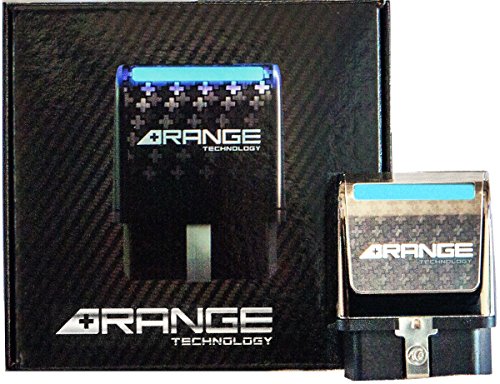
The corded Range device is described for GM Active Fuel Management vehicles and is distinct from the RA003B’s named AFM/DFM vehicle range. It plugs into the diagnostic port without tools, and Range says it disables four-cylinder mode without reprogramming the factory ECU. The maker also claims more consistent power delivery. Its scope is AFM, so a buyer with a DFM-equipped vehicle should not assume this corded model is interchangeable with the RA003B or RA007; confirm the system and exact vehicle fit first.
Bottom line: Pick it only when your GM vehicle uses the AFM system.
BOOST AFM Disabler
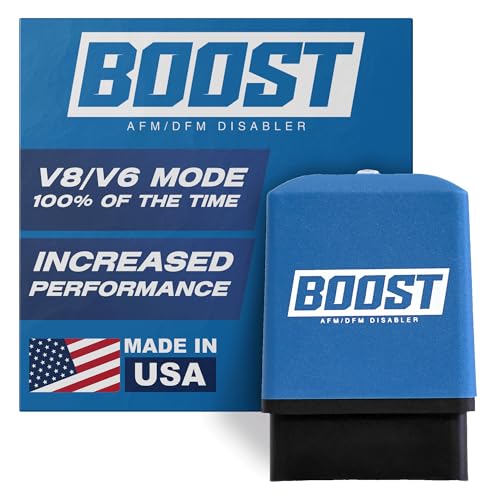
The BOOST device is a non-Range alternative that says it supports GM V6 and V8 vehicles and keeps them in V8 or V6 mode. Its maker claims reduced hesitation and specifies a 0.71 mA low-power draw. Those are maker claims, not a guarantee of fuel savings, reliability, or a result for every vehicle. Unlike the RA003B, the product name does not identify a Range model or a detailed vehicle-year list, so buyers who need a defined application should verify their exact vehicle compatibility before selecting it.
Bottom line: Consider it if its GM system fit matches your vehicle.
How to choose an AFM or DFM disabler
Match the device to the vehicle’s fuel-management system, engine, and model year before considering convenience features. AFM and DFM refer to GM cylinder-deactivation systems; the labels are not proof that devices for one system fit every vehicle using the other. The RA003B names a 2007–2022 range of GM applications, while the RA007 specifies 2021–2026 vehicles with 5.3L or 6.2L V8 engines. Those ranges may overlap by calendar year but differ in stated application and engine conditions. A practical decision rule is to select a device only when the vehicle year, model, engine, and system all align with its fitment. OBD-II plug-in operation is common among these devices, but the connector alone does not establish compatibility. Check exact fit before ordering.
What an OBD-II plug-in device does
An OBD-II disabler connects through the vehicle’s diagnostic connector, usually found below the dashboard near the driver. These products describe changing cylinder-deactivation behavior without reprogramming the factory ECU; the devices in this comparison say they can be unplugged to restore factory behavior. That is different from an engine-control tune or a mechanical AFM/DFM delete, which can involve software changes or hardware work. Do not treat a plug-in device as a repair for an existing engine fault: a warning light, misfire, or abnormal noise needs diagnosis rather than a disabler. Also distinguish the claimed operating mode from fuel economy. Keeping more cylinders active can change fuel use, so do not assume a device will improve mileage under every driving condition.
RA003B and RA007 fitment differences
The RA003B and RA007 serve different stated application groups, even though their advertised model-year periods can meet at 2021–2022. The RA003B names select GM cars, trucks, and SUVs across 2007–2022, whereas the RA007 specifically identifies newer 5.3L and 6.2L V8 vehicles. Use this comparison as a screening aid, not a substitute for matching the exact vehicle application.
| Need | Relevant choice |
|---|---|
| Named RA003B for listed 2007–2022 vehicles | RA003B |
| 2021–2026 vehicle with 5.3L or 6.2L V8 | RA007 |
| GM V6/V8 with broader stated AFM/DFM wording | OBDDFM option |
| GM vehicle specified for AFM | Corded Range AFM device |
Trim and engine variations matter, so an overlapping year does not make the two Range models interchangeable. A specific year, model, and engine match is the deciding condition.
Fuel economy and driving trade-offs
Cylinder deactivation is designed to let an engine run on fewer cylinders in some operating conditions, so disabling it removes that mode of operation. A device’s claims about smoother response or full power do not establish a fuel-economy benefit; fuel use depends on engine, route, speed, load, and driving style. If mileage is the main priority, weigh that trade-off against the desired operating behavior rather than assuming deactivation is always a drawback. Towing or frequent acceleration may change how often a vehicle would otherwise enter a reduced-cylinder mode, but the product facts here do not quantify those effects. Compare the manufacturer’s function with your driving needs, and verify local emissions requirements before modifying how an engine operates.
Frequently Asked Questions
Where is the OBD-II port usually located?
The OBD-II port is usually beneath the dashboard on the driver’s side, often near the steering column. The connector is standardized, but its presence does not prove that a particular disabler fits a specific year, engine, or fuel-management system.
Will disabling cylinder deactivation improve fuel economy?
There is no guaranteed fuel-economy improvement from disabling cylinder deactivation. Because the engine may run on more cylinders rather than switching to a reduced-cylinder mode, actual fuel use can vary with the vehicle, route, speed, and load.
Can an OBD-II disabler fix a misfire?
An OBD-II disabler is not a repair for a misfire or an engine warning light. A misfire can have multiple causes, so diagnose the fault before changing cylinder-deactivation behavior.
Can a disabler be used while towing?
The RA007 maker says its device is intended to keep all cylinders active during towing and other driving, but that does not establish compatibility with every tow vehicle. Match the exact engine and vehicle application first, and observe the vehicle’s rated towing limits.
Does unplugging a disabler restore factory settings?
The Range RA003B and the OBDDFM device say unplugging restores factory behavior. That reversible plug-in feature does not mean the device will clear an existing diagnostic fault or repair a mechanical problem.