
RC Electric Motor Cooling Fans: 3 Options Compared

For a 540/550 setup that needs a heatsink and 30 mm fan, 30 mm 540/550 Heatsink Fan is the closest match, with a maker-rated speed of up to 28,000 RPM and 24 mm mounting-hole compatibility. Choose Dantenron 25 mm Fan for a 25 mm fan, or Surpass Hobby 30 mm Fan for a 3650–3670 motor and brackets with 3 mm mounting holes.
RC electric motor cooling fans move air across a motor or heatsink; match the size and mount to your chassis. Verify the operating voltage before powering a fan without a voltage range.
We earn a commission if you buy through links on this page. As an Amazon Associate I earn from qualifying purchases. Products are compared on manufacturer specifications, not hands-on testing.
- Best overall: 30 mm 540/550 Heatsink Fan – Combines a 30 mm fan and heatsink with 540/550 compatibility and 24 mm mounting-hole fit.
- Best for 25 mm fit: Dantenron 25 mm Fan – The 25 mm version has a 6–8.5 V operating range and JST male plug.
- Best for 3650–3670 motors: Surpass Hobby 30 mm Fan – Designed for 3650–3670 motors and brackets with 3 mm mounting holes.
| Product | Best for | Fan size | Motor fit | Mounting / power | Shop |
|---|---|---|---|---|---|
| 30 mm 540/550 Heatsink Fan | 540/550 motors | 30 mm | 540/550 brushless | 24 mm holes; voltage — | Check Price on Amazon |
| Dantenron 25 mm Fan | 25 mm clearance | 25 mm | 540/550 brushed or brushless | JST male; 6–8.5 V | Check Price on Amazon |
| Surpass Hobby 30 mm Fan | 3650–3670 motors | 30 mm | 3650–3670 brushless | 3 mm holes; voltage — | Check Price on Amazon |
RC electric motor cooling fans compared
Compare motor compatibility, fan dimensions, and installation details before choosing a cooling fan.
30 mm 540/550 Heatsink Fan
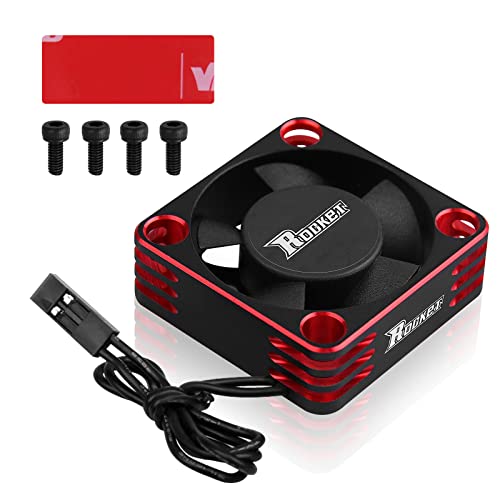
Unlike the bare fan options, this unit pairs a 30 mm fan with a heatsink for 540/550 brushless motors. The maker gives a maximum speed of 28,000 RPM and says the fan fits brackets with 24 mm mounting holes. Its black heatsink has red accents, and the plug is described as having no positive or negative polarity requirement. This option suits an RC car whose motor and bracket match those dimensions. The tradeoff is that the maker does not establish a voltage range, so confirm the electrical match before powering it.
Bottom line: Choose this if your 540/550 motor and 24 mm-hole bracket fit the combined heatsink and fan.
Dantenron 25 mm Fan

The 25 mm size and stated voltage range distinguish this fan from the 30 mm choices. It uses a JST male plug and is described as compatible with 6–8.5 V power from a receiver or ESC. The maker also gives a maximum speed of 28,000 RPM and lists compatibility with 540/550 brushed or brushless motors in several RC vehicle types. Choose this version when a 25 mm fan fits the available space and the power source is within range. Its smaller fan size may not suit a mount designed for a 30 mm unit.
Bottom line: Pick this when you need a 25 mm fan and can supply it within the voltage range.
Surpass Hobby 30 mm Fan

This is the only option specifically designed for 3650–3670 brushless motors, whose motor diameter is given as 36 mm. The 30 mm fan is supplied without a motor heatsink; the maker rates its speed up to 27,000 RPM and says it fits brackets with 3 mm mounting holes. A carbon fan cover is compatible, and the fan uses reverse-polarity protection according to the maker. It suits a setup with the matching motor and bracket. Buyers wanting a combined heatsink assembly should choose a different style, and the power specifications require confirmation.
Bottom line: Choose this for a 3650–3670 motor when a bare fan and 3 mm-hole bracket suit the installation.
How to choose an RC motor cooling fan
Match motor type, fan size, mounting, and electrical supply before comparing speed ratings. A fan that reaches 28,000 RPM is not automatically a better fit than one rated at 27,000 RPM: these figures do not establish airflow or cooling performance across different fan designs. Start with the mounting pattern and clearance, then check whether the fan includes a heatsink or is a bare unit. For these options, the motor fits range from 540/550 to 3650–3670, while fan sizes are 25 mm and 30 mm. Use the maker’s voltage range only when one is provided; confirm voltage and current compatibility for the other units before connecting power. Avoid choosing by RPM alone.
Fan size and bracket fit
Measure the mounting points and available space rather than relying only on the motor label. A 30 mm fan needs more room across its frame than a 25 mm fan, and a heatsink can add bulk around the motor. The mounting information here uses two different measurements: one unit fits 24 mm mounting holes, while another fits brackets with 3 mm holes. Those numbers describe different aspects of fit, so do not treat them as interchangeable. A practical decision rule is to select a fan only when its frame clears nearby chassis parts and its mounting pattern matches the bracket exactly. If the bracket dimensions or fan footprint are uncertain, measure both before ordering.
| Setup need | Match to check |
|---|---|
| Smaller fan footprint | 25 mm fan and available clearance |
| 540/550 brushless with heatsink | 30 mm fan assembly and 24 mm mounting holes |
| 3650–3670 brushless, bare fan | 30 mm fan and bracket with 3 mm holes |
Power and connector compatibility
Check the fan’s voltage range, plug type, and power-source capability before wiring it to an RC receiver or ESC. The 25 mm option specifies 6–8.5 V and a JST male plug; the other two options do not provide an operating-voltage range in their specifications. A connector that physically fits is not proof that the voltage is safe, and polarity protection on one unit does not establish protection on another. Use the fan’s specified range and the receiver or ESC output rating as the electrical limits. If either side lacks a needed rating, verify compatibility before connecting power. Never infer voltage from a fan’s size or RPM rating.
Heatsinks, airflow, and safe use
A heatsink spreads heat across more metal surface, while a fan moves air over the motor or heatsink; the combination works only when the fan has room to draw and discharge air. Keep wires, body panels, and debris clear of the spinning blades, and disconnect the battery before handling or repositioning a fan. Brushless and brushed motors can generate heat under heavy loads, but these products’ stated compatibility differs, so match the fan to the motor type named for the unit. RPM is a rotational speed, not a temperature rating or a guarantee of a particular temperature drop. Check the motor manufacturer’s temperature limits and stop running if the motor or wiring becomes excessively hot.
Frequently Asked Questions
Does a higher fan RPM always cool an RC motor better?
No; RPM alone does not show airflow or the temperature change a fan can achieve. These options have maker-rated maxima of 27,000 or 28,000 RPM, but frame fit and air path also matter.
Can I power an RC cooling fan from my ESC?
Only if the fan’s voltage and current needs match the ESC’s fan output. The 25 mm option specifies 6–8.5 V and a JST male plug; verify the other fans’ electrical requirements before connecting them.
How do I measure an RC fan mounting pattern?
Measure the bracket’s mounting points and compare them with the fan’s fit. A 24 mm hole spacing and a 3 mm hole diameter are different measurements, so identify which dimension the bracket uses.
Should an RC motor fan include a heatsink?
A heatsink adds a metal surface for heat transfer, while a bare fan relies on airflow across the motor or an existing heatsink. Choose a combined assembly only if it clears the chassis and matches the motor and mount.
Can these fans fit both brushed and brushless motors?
The 25 mm option is described for 540/550 brushed or brushless motors, while the other two specify brushless motor fits. Match the motor type and size to the particular fan rather than assuming compatibility.