
Reading Glasses for Large Heads: 5 Wide Fits Compared

For most people seeking reading glasses for large heads, V.W.E. Extra Large Metal Reader is the clearest fit because its 152 mm frame is the widest measured option here. Choose OLOMEE Blue-Light Large Readers or OLOMEE Large Spring-Hinge Readers instead if you want four pairs or a large-sized plastic frame; confirm frame width before ordering if your current glasses already fit closely.
We earn a commission if you buy through links on this page. As an Amazon Associate I earn from qualifying purchases. Products are compared on manufacturer specifications, not hands-on testing.
- Best overall: V.W.E. Extra Large Metal Reader – Its 152 mm frame width is the widest measured option in this group.
- Best for blue-light coating: OLOMEE Blue-Light Large Readers – Its maker specifies a blue-light-blocking and scratch-resistant coating.
- Best for spring hinges: OLOMEE Large Spring-Hinge Readers – Its maker specifies spring-hinge construction and four pairs.
| Product | Best for | Frame width | Magnification | Pairs | Shop |
|---|---|---|---|---|---|
| V.W.E. Extra Large Metal Reader | Widest measured fit | 152 mm | +1.50 | 1 pair | Check Price on Amazon |
| OLOMEE Blue-Light Large Readers | Coated computer readers | — | +1.50 | 4 pairs | Check Price on Amazon |
| OLOMEE Large Spring-Hinge Readers | Spring-hinge multipack | — | +1.50 | 4 pairs | Check Price on Amazon |
| OLOMEE Wide Black +2.00 Readers | Four-pair +2.00 set | — | +2.00 | 4 pairs | Check Price on Amazon |
| HEEYYOK XXL 1.75 Readers | Measured 1.75 strength | 150 mm | +1.75 | 4 pairs | Check Price on Amazon |
Reading glasses for large heads compared
Compare frame measurements, magnification and pack size before choosing a wide reader.
V.W.E. Extra Large Metal Reader

At 152 mm wide, this V.W.E. frame is the widest measured option in this group, with 58 mm lenses, a 40 mm lens height, a 20 mm bridge and 145 mm temples. Its metal frame has plastic temples and spring hinges; the maker describes the frame as lightweight and anti-allergen. The +1.50 readers come with a cleaning cloth and storage case. This is a useful choice if a known wide frame measurement matters more than getting several pairs. Its single-pair package offers less convenience for keeping readers in multiple rooms than the four-pair sets.
Bottom line: Pick this if your priority is a measured 152 mm frame rather than a multi-pair set.
OLOMEE Blue-Light Large Readers
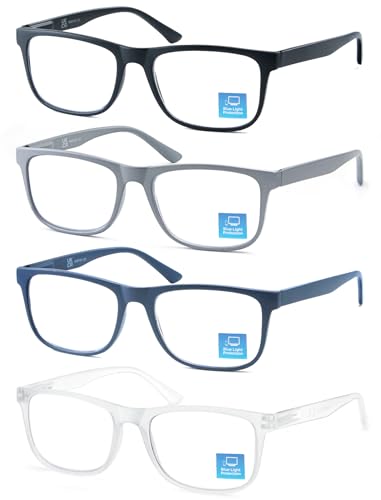
Unlike the other options, these OLOMEE readers specifically feature blue-light-blocking and scratch-resistant coatings. The four frames come in matte black, gray, blue and frosted clear, and the size is marked Large. The maker positions them for computer and phone use, with lightweight frames for extended wear. Choose them if coating and having a spare pair in several locations matter more than a published frame measurement.
Bottom line: Choose these for a four-color set with the specified lens coatings.
OLOMEE Large Spring-Hinge Readers

These OLOMEE readers distinguish themselves with spring hinges and a four-pair set in matte black, blue, gray and frosted clear. The frames are plastic, and the maker says the resin lenses are intended for reading; the size is marked Large. A multi-room set suits someone who wants readers near a desk, bed or bag. The pack shares the +1.50 strength with V.W.E. Extra Large Metal Reader and OLOMEE Blue-Light Large Readers, so it does not offer a different magnification choice among those options. Its frame width is not provided in the specifications, making direct measurement comparison difficult.
Bottom line: Pick these if spring hinges and several matching-strength pairs are your priorities.
OLOMEE Wide Black +2.00 Readers

OLOMEE Wide Black +2.00 Readers differs from the +1.50 readers by offering +2.00 magnification in a four-pair set. The frames are described as large, wide, black and square, with lightweight plastic construction and resin lenses. The maker also specifies spring hinges, making this an option for readers who want a stronger listed power than the other OLOMEE sets here.
Bottom line: Choose this set if +2.00 is the magnification you need.
HEEYYOK XXL 1.75 Readers
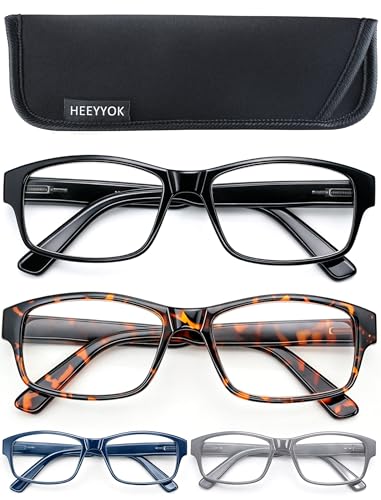
With a 150 mm frame width, these HEEYYOK readers offer a measured wide fit and +1.75 magnification, unlike the +1.50 and +2.00 choices elsewhere in this group. The plastic frame has 53 mm lenses, 42 mm lens height, an 18 mm bridge and 144 mm temples; the set contains four pairs in black, blue, gray and tortoiseshell. This combination suits someone who knows +1.75 is the right power and wants spare pairs. The maker’s age-based strength suggestions should not replace an eye exam or a prescription.
Bottom line: Pick these if +1.75 is appropriate and you want a measured 150 mm frame.
How to choose wide reading glasses
Start with magnification, then compare the frame width and temple length of glasses that already fit. Reading glasses commonly use powers from about +1.00 to +3.50 diopters, increasing in 0.25-diopter steps; the right power depends on near vision and working distance, not head size. For a large head, a frame width around 150 mm is a useful measured point of comparison, but overall comfort also depends on bridge shape and temple length. If you need a prescription, have unequal correction between eyes, or notice persistent blur or headaches, nonprescription readers may not suit you.
Frame measurements here are available for only two options, so compare the fit of the others in person or against a pair you own. Large and XXL labels are not standardized size measurements.
Frame width and fit measurements
A frame’s total width is the most direct measurement for checking whether wide glasses may sit comfortably across the face. Compare it with your current frame’s outside width, and check temple length and bridge fit as well; an overly short temple can press behind the ear even when the front is wide enough. The two measured frames here are 150 mm and 152 mm wide, with temples of 144 mm and 145 mm respectively. These small differences can matter at the edges, but fit also depends on frame shape and how the bridge rests.
Use this measurement guide when comparing readers:
| Fit check | What to compare | Why it matters |
|---|---|---|
| Front width | Outside frame width in mm | Checks room across the face |
| Temples | Temple length in mm | Checks reach behind the ears |
| Bridge | Bridge width and shape | Checks how the frame sits on the nose |
If your comfortable glasses measure under 150 mm across, try not to assume a wider frame will necessarily feel better; balance width with bridge and temple fit.
Reader strength and working distance
Reader power is measured in diopters, and stronger positive numbers provide more magnification for near tasks. Common over-the-counter powers run roughly from +1.00 to +3.50 D, often in quarter-diopter increments. A shorter reading distance can require a different power than reading with a book held farther away, so use the power that keeps print clear at your usual distance rather than choosing by age alone. The options here span +1.50, +1.75 and +2.00.
Reading glasses do not correct every vision issue: people with astigmatism, different prescriptions for each eye or difficulty seeing at distance should get professional guidance. Stop using readers that cause persistent eyestrain or headaches, and arrange an eye exam if symptoms continue.
When blue-light coating matters
Only OLOMEE Blue-Light Large Readers specifies blue-light-blocking and scratch-resistant lens coatings in its specifications. A coating is a lens treatment, not a change to the frame’s fit or the reader’s magnification. Screen users can also reduce near-work strain with the 20-20-20 habit: every 20 minutes, look about 20 feet away for 20 seconds. This simple break does not replace correct magnification or an eye exam.
Do not assume that blue-light wording means the glasses prevent headaches, improve sleep or eliminate eye fatigue. Compare the power and fit first, then treat the coating as a preference if you want that feature.
Frequently Asked Questions
How wide should reading glasses be for a large head?
Compare frame width with glasses that already fit comfortably; 150–152 mm is a useful measured reference in these choices. A wide frame can still pinch if the bridge or temples do not suit your face.
What is the difference between +1.50 and +2.00 readers?
The +2.00 power is stronger than +1.50 and provides more near magnification. Choose based on clear, comfortable print at your normal reading distance, not the size of your head.
Can I wear reading glasses while using a computer?
You can use readers for a computer if their power gives you clear, comfortable vision at the screen distance. Computer distance is often farther than book-reading distance, so the same power may not suit both tasks.
Are spring hinges useful on wide reading glasses?
Spring hinges allow the temples to flex outward beyond their resting position, which can ease pressure when putting frames on. They do not guarantee a fit; frame width and temple length still matter.
How often should I replace nonprescription readers?
There is no fixed replacement interval; replace them when scratched lenses, loose hinges or a changed near-vision need makes reading unclear. Adults should also get routine eye exams, since a change in vision can warrant professional assessment.