
RecPro RV Air Conditioner: 4 Models Compared

For most buyers, RecPro 15K Heat Pump is the most versatile RecPro RV air conditioner because it pairs 15,000 BTU of cooling with a built-in heat pump and supports ducted or non-ducted setups. Choose a cooling only model if you do not need heat, or a ducted model if your RV distributes air through ceiling ducts.
Rooftop RV air conditioners cool the cabin through either a direct ceiling assembly or existing ducts. Confirm your roof opening and electrical compatibility before ordering.
We earn a commission if you buy through links on this page. As an Amazon Associate I earn from qualifying purchases. Products are compared on manufacturer specifications, not hands-on testing.
- Best overall: RecPro 15K Heat Pump – Combines 15,000 BTU cooling, a built-in heat pump, and ducted or non-ducted compatibility.
- Best for cooling only: RecPro 13.5K Non-Ducted Cooling Only, White – Provides 13,500 BTU cooling in a non-ducted, white unit.
- Best for ducted setups: RecPro 15K Ducted Heat Pump, Black – Pairs 15,000 BTU cooling with a heat pump in a black ducted model.
- Best for black finish: RecPro 13.5K Non-Ducted Cooling Only, Black – Offers 13,500 BTU cooling in a black, non-ducted model.
| Product | Best for | Cooling capacity | Heating / ducting | Color | Shop |
|---|---|---|---|---|---|
| RecPro 15K Heat Pump | Versatile climate control | 15,000 BTU | Heat pump; ducted or non-ducted | White | Check Price on Amazon |
| RecPro 13.5K Non-Ducted Cooling Only, White | Direct cabin cooling | 13,500 BTU | Cooling only; non-ducted | White | Check Price on Amazon |
| RecPro 15K Ducted Heat Pump, Black | Ducted black finish | 15,000 BTU | Heat pump; ducted | Black | Check Price on Amazon |
| RecPro 13.5K Non-Ducted Cooling Only, Black | Black cooling only unit | 13,500 BTU | Cooling only; non-ducted | Black | Check Price on Amazon |
RecPro RV Air Conditioners Compared
Compare cooling capacity, heat pump function, duct compatibility, and color to find a unit that matches your RV.
RecPro 15K Heat Pump

For a mix of cooling and supplemental heat, this 15,000-BTU unit adds a built-in heat pump and supports ducted or non-ducted configurations. RecPro says it has 55.4 dB operation, low amp draw, and UV-resistant plastic construction. Remote and onboard LED touch controls offer cool, dry, fan, sleep, and timer modes without thermostat wiring. The white rooftop housing measures 39.5 by 25.5 by 13.5 inches and weighs 112 pounds.
Bottom line: Pick this if you want both cooling and a heat pump option with flexible ducting.
RecPro 13.5K Non-Ducted Cooling Only, White

For a non-ducted installation with cooling but no heat pump, this white model provides 13,500 BTU. RecPro says the unit runs at 59.7 dB and uses a low-amp design, with UV-resistant plastic intended for rooftop travel. A wireless remote is included, and its dimensions are 39.5 by 25.5 by 13.5 inches; it weighs 112 pounds. This model suits an RV where air is delivered directly through the ceiling assembly rather than existing ducts. Its cooling capacity is lower than the 15,000-BTU options, so consider the larger capacity if that difference fits your RV’s cooling needs.
Bottom line: Choose this for white, direct-to-cabin cooling without a heat pump feature.
RecPro 15K Ducted Heat Pump, Black
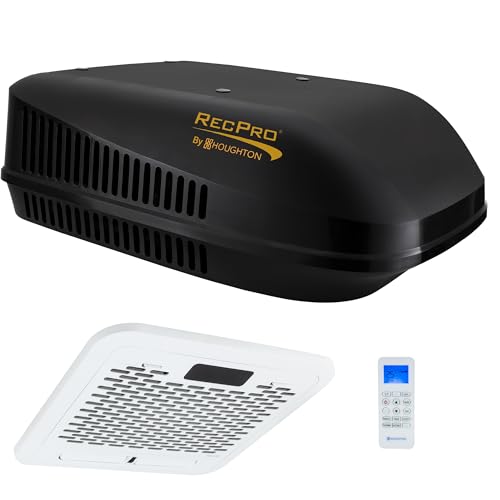
This black 15,000-BTU model is specifically identified as ducted and includes a built-in heat pump, unlike the cooling only choices. RecPro says it operates at 55.4 dB and uses low amp draw and UV-resistant plastic. The rooftop unit measures 39.5 by 25.5 by 13.5 inches and weighs 112 pounds. Choose it when your RV uses ceiling ducts and you prefer a black exterior; the controls include a remote, while the product name does not promise the broader ducting flexibility of RecPro 15K Heat Pump. Confirm that your RV’s duct arrangement and rooftop opening match before choosing a ducted unit.
Bottom line: Pick this for a ducted RV that needs a black 15,000-BTU heat pump unit.
RecPro 13.5K Non-Ducted Cooling Only, Black

This black, non-ducted model is a cooling only option at 13,500 BTU, matching RecPro 13.5K Non-Ducted Cooling Only, White in capacity and installation style while changing the exterior color. RecPro says its operation is 59.7 dB and describes a low-amp design and UV-resistant plastic construction. The remote and LED digital display provide control, and the unit measures 39.5 by 25.5 by 13.5 inches at 112 pounds. It suits RV owners who want direct ceiling delivery and a black rooftop housing. Because it does not include a heat pump, choose a heat pump model if you want the air conditioner to provide supplemental heating.
Bottom line: Choose this for black, non-ducted cooling without a heat pump feature.
How to Choose a RecPro RV Air Conditioner
Start with the air-delivery setup and whether you need heat, then compare cooling capacity and color. A ducted unit connects to ceiling channels that distribute air among vents; a non-ducted unit delivers air through a ceiling assembly in the living space. A heat pump can provide supplemental heating by moving heat rather than generating it with a resistance element, but it is not a substitute for a furnace in very cold conditions. The four choices here span 13,500 and 15,000 BTU, cooling only and heat pump configurations, and white or black housings. If your RV has ducts, select a model specified for ducted use; if it does not, choose a non-ducted model or one that explicitly supports either configuration.
Check Roof Opening and Clearance
Most RV rooftop air conditioners use a 14-by-14-inch roof opening, but the opening, roof thickness, and ceiling assembly must match the installation requirements. Measure the cutout rather than assuming all RVs use the same opening, and check the roof’s load capacity because a rooftop unit weighs 112 pounds before installation hardware or other roof equipment. These RecPro units share a 39.5-by-25.5-inch footprint and stand 13.5 inches high, so measure roof clearance around vents, solar panels, and storage equipment. Confirm your opening and electrical compatibility before ordering; a matching capacity or color does not establish a fit.
Cooling Capacity and Heat Pump Differences
BTU per hour describes cooling capacity; a 15,000-BTU unit has 1,500 more BTU per hour of rated capacity than a 13,500-BTU unit. Capacity alone does not determine comfort: cabin size, insulation, sun exposure, humidity, and occupancy all affect cooling demand. A heat pump adds a heating mode, while a cooling only unit does not provide that function. Neither capacity number guarantees a particular interior temperature in every climate. Use this comparison to narrow the choice by features, then match the unit to your RV’s installation setup and electrical system.
The table separates the configurations by the practical decision that matters most:
| Need | Choose | Key distinction |
|---|---|---|
| Cooling without heat | 13,500-BTU non-ducted | Direct ceiling delivery |
| Heat pump option and flexible ducting | 15,000-BTU ducted/non-ducted | Supports either setup |
| Heat pump for ducted RV | 15,000-BTU ducted | Ducted configuration |
Power and Safe Installation Considerations
RV rooftop air conditioners operate on shore power or a generator, and startup demand can be higher than running demand. Rooftop installation also involves lifting a 112-pound unit and sealing a roof opening, so use suitable lifting help and protect the roof membrane from damage. Water intrusion around a poorly sealed opening can damage the roof structure. Have a qualified RV technician handle the installation if you cannot safely lift and seal the unit.
Frequently Asked Questions
What size roof opening does an RV air conditioner use?
Most RV rooftop air conditioners use a 14-by-14-inch opening. Measure the actual cutout and check roof thickness and ceiling assembly compatibility before selecting a unit.
Does an RV heat pump work in freezing weather?
An RV heat pump provides supplemental heat most effectively in mild conditions, and heating output drops as outdoor temperatures fall. Keep the RV furnace available for cold weather rather than relying on the heat pump alone.
How much generator power does an RV air conditioner need?
Check the unit’s electrical specifications and leave capacity for other appliances that will run at the same time.
Can a ducted RV air conditioner replace a non-ducted unit?
Only if the RV has compatible ceiling ducts and the unit’s installation requirements match the roof opening and interior assembly. A non-ducted system delivers air through the ceiling assembly instead of distributing it through ducts.
How heavy is a rooftop RV air conditioner?
Each of these RecPro units weighs 112 pounds. Account for the added load when checking roof capacity, and use safe lifting help during installation.