
Red Grease for Wheel Bearings: 4 Options Compared

For red grease for wheel bearings, the Timken-brand premium grease is the clearest choice because it is specifically formulated for disc and drum bearings. Choose a different formula if you need a tacky multipurpose grease, a multi-tube pack, or a specified operating temperature range.
Wheel-bearing grease lubricates the rolling surfaces inside a hub; compatibility with the vehicle and bearing service procedure matters more than grease color alone.
We earn a commission if you buy through links on this page. As an Amazon Associate I earn from qualifying purchases. Products are compared on manufacturer specifications, not hands-on testing.
- Best overall: Allstar Timken Premium Red Bearing Grease – Specifically formulated for disc and drum bearing applications.
- Best for stated temperature range: Wolf’s Head NLGI #2 Red Grease, 10-Pack – The maker gives a continuous operating range of −10°F to 375°F.
- Best for two-tube pack: AtomLube Ultra Heavy Duty Red Grease, 2-Pack – Includes two 14-ounce tubes of NLGI #2 lithium grease.
| Product | Best for | Application | NLGI grade | Package size | Shop |
|---|---|---|---|---|---|
| Allstar Timken Premium Red Bearing Grease | Disc or drum bearings | Disc and drum bearings | — | 16 oz tub | Check Price on Amazon |
| Wolf’s Head NLGI #2 Red Grease, 10-Pack | Temperature range | Wheel bearings and chassis | NLGI #2 | 14 oz tubes, 10-pack | Check Price on Amazon |
| AtomLube Ultra Heavy Duty Red Grease, 2-Pack | Two-tube pack | Wheel bearings and chassis | NLGI #2 | 14 oz tubes, 2-pack | Check Price on Amazon |
| Lucas Oil Red ’N’ Tacky Grease | Water resistance | — | — | 16 oz | Check Price on Amazon |
Red Grease for Wheel Bearings
Compare each formula’s bearing use and package format before matching it to your service needs.
Allstar Timken Premium Red Bearing Grease
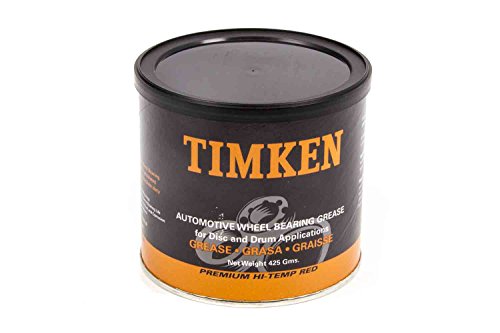
Among these options, the Timken-brand grease is the one explicitly formulated for both disc and drum wheel-bearing applications. The 16-ounce tub contains a red, high-temperature grease with corrosion inhibitors and anti-wear and water-resistant additives, according to the maker. It is a direct fit for shoppers seeking a bearing-specific red grease rather than a general-purpose chassis product. Its limitation is the tub format: buyers who need a cartridge for a grease gun should choose a tube-pack option instead.
Bottom line: Choose this for a red grease specifically intended for disc or drum wheel bearings.
Wolf’s Head NLGI #2 Red Grease, 10-Pack

The Wolf’s Head option stands out for its temperature limits and multipurpose range: the maker gives continuous operation from −10°F to 375°F and a dropping point above 500°F. It is a lithium-complex NLGI #2 grease intended for wheel bearings, chassis components, U-joints, and fifth wheels, supplied as ten 14-ounce tubes. That broad application and pack size suit buyers servicing multiple points or machines. The tradeoff is that it is not presented as specifically for disc and drum bearings; verify the vehicle’s required grease specification before using it.
Bottom line: Pick this when its temperature range and ten-tube format match your maintenance needs.
AtomLube Ultra Heavy Duty Red Grease, 2-Pack
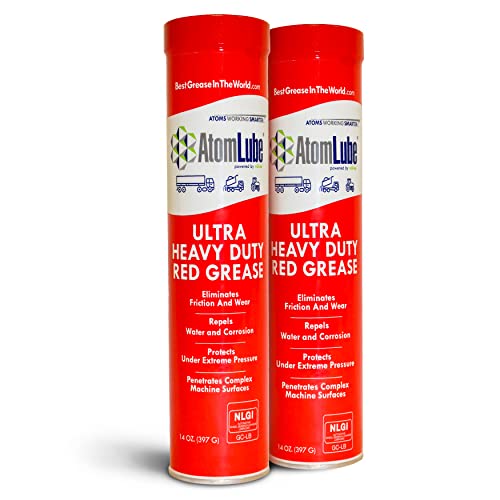
AtomLube differentiates itself with a two-tube package and a waterproof, high-adhesion formula. Its red lithium NLGI #2 grease is positioned for wheel bearings, chassis, trucks, trailers, and agricultural equipment; the maker also highlights resistance to oxidation and washout. The two 14-ounce tubes suit someone servicing a smaller number of grease points than the ten-pack alternative. Its uses are broad rather than specific to disc or drum bearings, so confirm the required grease type for the hub before applying it.
Bottom line: Choose this for a two-tube multipurpose red grease when its broad applications fit.
Lucas Oil Red ’N’ Tacky Grease

Lucas Oil Red ’N’ Tacky is the simplest package option here: one 16-ounce container of red grease, with water resistance and rust and oxidation inhibitors among its features. That makes it a consideration for buyers seeking a general red grease with those properties, but the product facts do not identify a wheel-bearing application or an NLGI grade. It is therefore less directly matched to bearing service than the Timken-branded option. Confirm the grease specification required for the bearing before choosing it for a wheel hub.
Bottom line: Consider this only if its general-purpose features align with the bearing specification you need.
How to choose red grease for wheel bearings
Choose grease by the bearing maker’s required specification, not by red color. NLGI #2 is a common consistency for automotive chassis and wheel-bearing greases, but the grade alone does not establish suitability for every hub. Disc and drum bearing applications can differ in heat exposure, and a grease’s temperature range or high-temperature rating can help narrow options. Look for explicit bearing use and compatibility with the vehicle’s service requirements. If a product gives only broad chassis or multipurpose uses, confirm the required specification before applying it to a wheel bearing.
For routine service on a disc or drum hub, favor a product explicitly intended for that application. Choose a broader multipurpose grease only when its specification matches the bearing requirement.
Red grease types and package formats
Red bearing grease and red multipurpose grease can share a color while serving different stated uses. A bearing-specific formula is the clearest match for hubs; multipurpose formulas may also be intended for chassis parts, U-joints, or equipment. NLGI #2 describes consistency, not the grease’s complete performance or compatibility.
This comparison table separates intended use from package format so you can narrow the type before checking your vehicle’s required specification.
| Type | Typical stated use | Best fit |
|---|---|---|
| Bearing-specific | Disc or drum wheel bearings | Hub service when the specification matches |
| Multipurpose NLGI #2 | Bearings plus chassis or equipment | Multiple grease points with matching requirements |
| General red grease | Broad lubrication features | Only where bearing compatibility is confirmed |
Package count also matters: tubes suit a grease gun, while tubs are suited to manual handling or a compatible service tool.
Wheel-bearing grease service and safety
Wheel bearings need clean grease and correct adjustment; dirt introduced during repacking can abrade bearing surfaces. Keep tools and grease clean, and remove old contaminated grease rather than mixing unknown products. Never overfill a hub or substitute grease solely because its color matches another product. Excess grease in some hubs can interfere with sealing or heat dissipation, while inadequate lubrication can damage the bearing.
Follow the vehicle’s specified bearing service procedure and torque settings. If the hub uses a sealed, non-serviceable bearing, do not open it to add grease. For serviceable bearings, inspect races and rollers for pitting or discoloration; damaged bearing parts call for replacement, not a fresh grease pack.
Common mistakes when selecting bearing grease
The most common mistake is treating “red” or “high temperature” as a complete compatibility specification. Color is a dye, and products with the same color may have different base oils, thickeners, and intended applications. NLGI #2 is also only a consistency grade, so match the lubricant to the vehicle or bearing maker’s requirement.
A second mistake is choosing package quantity without considering the job: a multi-tube pack makes sense for repeated service, while a tub may suit a single job only if it works with the service method. Do not mix different grease chemistries unless their compatibility is confirmed. When the required specification is unclear, verify it before servicing rather than guessing from color or package wording.
Frequently Asked Questions
Does red grease work for every wheel bearing?
No; red color does not establish compatibility. Match the grease to the vehicle or bearing maker’s specification and confirm the product explicitly suits that application.
What does NLGI #2 mean for bearing grease?
NLGI #2 identifies grease consistency, not a full performance rating. It is common for automotive grease, but bearing compatibility still depends on the required specification and application.
Can I use chassis grease on wheel bearings?
Only when the grease is approved for the specific bearing application. A grease marketed for chassis parts may not meet a hub’s requirements, even when it is NLGI #2.
How often should wheel-bearing grease be replaced?
There is no universal interval: serviceable hubs follow the vehicle’s maintenance schedule, while sealed bearings are not repacked. Inspect serviceable bearings during the specified service and replace damaged components rather than relying on new grease.
Can different wheel-bearing greases be mixed?
Avoid mixing them unless compatibility is confirmed. Different thickener systems may not work well together, so clean out old grease during a change when the service procedure calls for it.