
Red Light Therapy Neck Devices Compared by Fit

For a neck-focused device with neck-and-shoulder coverage, choose Neck and Shoulder LED Pad for its 132 LEDs and adjustable timing. Choose Viconor Neck and Chest Device instead for a flexible neck-and-chest design; Wearable Red Light Therapy Belt is a wearable belt for buyers who want to target different body areas.
Red light therapy devices use red and/or near-infrared LEDs, but wavelength alone does not establish the dose delivered. Before choosing, compare coverage, controls and the device’s irradiance and power requirements.
We earn a commission if you buy through links on this page. As an Amazon Associate I earn from qualifying purchases. Products are compared on manufacturer specifications, not hands-on testing.
- Best overall: Neck and Shoulder LED Pad – It covers the neck and shoulders with 132 LEDs and offers adjustable 10–30-minute timing.
- Best for neck and chest: Viconor Neck and Chest Device – Its flexible, hands-free design is made for neck-and-chest coverage.
- Best for multiple body areas: Wearable Red Light Therapy Belt – The wearable belt is intended to wrap around the neck as well as other body parts.
| Product | Best for | Coverage | Wavelengths | Controls | Shop |
|---|---|---|---|---|---|
| Neck and Shoulder LED Pad | Neck and shoulders | Neck and shoulders | 660 nm red; 850 nm near-infrared | 6 light modes; 3 pulse modes | Check Price on Amazon |
| Viconor Neck and Chest Device | Neck and chest | Neck and chest | 660 nm red; 850 nm near-infrared | Flexible, hands-free design | Check Price on Amazon |
| Wearable Red Light Therapy Belt | Multi-area wrapping | Neck and multiple body areas | Near-infrared; wavelength unspecified | 15 W; timer | Check Price on Amazon |
Red Light Therapy Neck Devices
Compare each device’s coverage and controls to find a format that suits how you plan to position it.
Neck and Shoulder LED Pad

Neck and Shoulder LED Pad is the most specifically shaped option here for the neck and shoulders, with a pad design rather than a belt or flexible neck-and-chest device. It has 132 LED beads, combines 660 nm red light with 850 nm near-infrared light in a 2:1 ratio, and includes six lighting modes, three pulse modes and adjustable 10–30-minute timing. The 5,000 mAh battery is another distinguishing feature. The neck-and-shoulder coverage suits buyers who want a dedicated upper-body fit; it is less suited to someone seeking a wrap for many body areas or chest coverage.
Bottom line: Choose this if you want a neck-and-shoulder pad with multiple light and pulse settings.
Viconor Neck and Chest Device
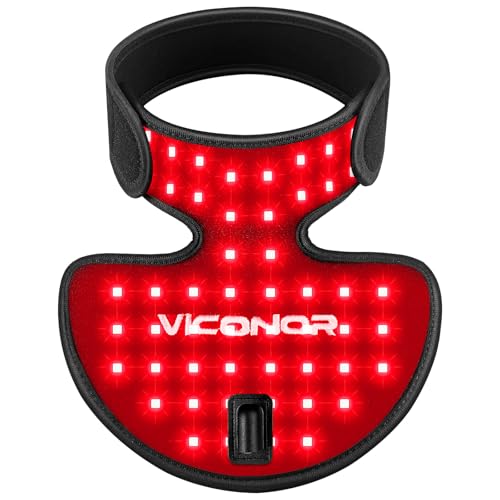
Viconor Neck and Chest Device focuses on neck-and-chest coverage with a flexible, hands-free design, unlike the shoulder pad or multipurpose belt. Its 56 lights each pair one 660 nm red LED with two 850 nm near-infrared LEDs. The maker says the device can be used while sitting, lying down or walking when connected to a mobile power source. That flexibility may suit someone who wants to keep the device in place while changing posture. The product’s described coverage is narrower than a wrap intended for multiple body areas, and using it while walking depends on having a mobile power source.
Bottom line: Choose this for a flexible, hands-free neck-and-chest format.
Wearable Red Light Therapy Belt

Wearable Red Light Therapy Belt differs from the shaped neck devices by using a belt format intended for the neck and a range of other body areas, including hands, wrists and knees. Its name gives a 15 W rating, and the product includes a timer. The broad wrap-style purpose suits buyers who want one wearable format for more than the neck alone. Its neck use is less specialized than a dedicated neck-and-shoulder pad or neck-and-chest design, so buyers seeking a close fit around those specific areas may prefer one of the other formats. Confirm the belt’s fit and power requirements before choosing.
Bottom line: Choose this if you want a wearable belt for the neck and other body areas.
How to Choose a Red Light Therapy Neck Device
Start with the area you want the device to cover: neck only, neck and shoulders, or neck and chest. A shaped pad or flexible panel can target a smaller area, while a belt format may serve several body parts. Compare wavelength, irradiance and treatment area together; wavelength by itself does not tell you how much light reaches the skin. Irradiance is measured in milliwatts per square centimeter (mW/cm²), and fluence is measured in joules per square centimeter (J/cm²). If the maker provides both, the basic relationship is fluence = irradiance × time, with time in seconds. With these three products, compare the coverage and controls, and confirm the power source and irradiance before ordering.
| Need | Format to consider | Trade-off |
|---|---|---|
| Neck and shoulders | Shaped pad | More targeted coverage |
| Neck and chest | Flexible panel | Coverage is focused on those areas |
| Neck and other body areas | Wearable belt | Less specialized neck shaping |
What 660 nm and 850 nm Mean
660 nm is visible red light, while 850 nm is near-infrared and not visible to the eye. Those labels identify wavelengths, not treatment strength or dose. Devices can differ in irradiance, distance from skin, treatment area and session duration, so two products with the same wavelengths may not deliver the same exposure. A useful buying rule is to compare irradiance measured at the intended treatment distance, not just the number of LEDs or the wavelength pair. Do not stare into operating LEDs; use eye protection if the device maker calls for it. Near-infrared’s invisibility does not mean the light is off.
How to Compare Neck Device Controls
Timer length and mode selection determine how much adjustment a device offers during a session, but they do not show the dose without irradiance. A 10-minute setting is 600 seconds, and a 30-minute setting is 1,800 seconds; at the same irradiance, the longer session delivers three times the exposure. Pulse modes change how light is emitted, so do not assume that a pulse setting is stronger than a steady setting unless the maker gives comparable output measurements. Match the controls to a routine you can follow, and avoid extending a session simply because a device has a longer timer. Check that the power arrangement suits where you plan to use the device.
Safe Fit and Use for Red Light Neck Wraps
Fit the device to the intended area without forcing the neck into an uncomfortable position. A wrap or pad should sit securely and evenly; a loose or angled position can change the distance between the LEDs and skin, which affects exposure. Keep the LEDs away from direct eye exposure and follow the device’s safety guidance, especially if you have a condition or take medication that increases light sensitivity. Stop use if the device becomes uncomfortably hot or causes irritation, and do not use it on broken skin unless a qualified clinician advises otherwise. Avoid treating the neck as a substitute for medical evaluation of persistent pain or a new lump.
Frequently Asked Questions
What is the difference between 660 nm and 850 nm light?
660 nm is visible red light, while 850 nm near-infrared light is invisible to the eye. Wavelength does not by itself tell you a device’s irradiance or dose.
How long should a red light neck session last?
Use the session duration given for the specific device rather than choosing a universal time. A 10-minute session is 600 seconds, and dose also depends on irradiance at the treatment distance.
Can I use a red light neck device while walking?
Only use a device while walking if its design and power setup allow it. One flexible neck-and-chest format is described for walking when connected to a mobile power source; keep the device secure and avoid restricting movement.
Should red light therapy devices be used near the eyes?
Do not stare into operating LEDs, and use eye protection if the device maker directs it. Near-infrared light is invisible, so lack of visible brightness is not a cue that the LEDs are off.
Does a higher LED count mean stronger treatment?
No, LED count alone does not establish irradiance or dose at the skin. Compare output in mW/cm² at the intended distance and the session duration.