
Red Light Under Eyes: 5 Devices Compared by Fit

For most people, Mario Badescu Red Light + EMS Patches is the best fit because it combines red light with EMS in a 10-minute hands-free session and includes reusable conductive gel pads. Choose another device if you prefer vibration and warmth, a shorter stated treatment time, or a model that gives specific wavelengths.
These consumer devices use light and, in some cases, massage or microcurrent around the eyes; their features differ, and results are not guaranteed. Before using any device near your eyes, confirm its eye-safety guidance and intended use.
We earn a commission if you buy through links on this page. As an Amazon Associate I earn from qualifying purchases. Products are compared on manufacturer specifications, not hands-on testing.
- Best overall: Mario Badescu Red Light + EMS Patches – Red light, EMS and five pairs of reusable conductive gel pads in a 10-minute session.
- Best for warmth and vibration: USB-C Red Light Eye Massager – Combines warming massage with gentle vibration and offers four modes and three intensity levels.
- Best for a short session: Amifiy 4-in-1 Red Light Eye Mask – Uses a programmed 3-minute treatment with automatic shutoff.
- Best for wavelength specifics: 630 nm / 850 nm Under-Eye Device – Specifies 630 nm red and 850 nm infrared light.
| Product | Best for | Session time | Light wavelengths | Other treatment features | Shop |
|---|---|---|---|---|---|
| Mario Badescu Red Light + EMS Patches | Red light and EMS | 10 minutes | — | EMS microcurrent | Check Price on Amazon |
| USB-C Red Light Eye Massager | Warmth and vibration | 10 minutes | — | 4 modes; 3 intensities | Check Price on Amazon |
| Amifiy 4-in-1 Red Light Eye Mask | Short treatment sessions | 3 minutes | — | 4-in-1; auto shutoff | Check Price on Amazon |
| 650 nm Red Light Therapy Glasses | 650 nm red light | 10 minutes | 650 nm | Microcurrent massage | Check Price on Amazon |
| 630 nm / 850 nm Under-Eye Device | Two wavelengths | 10 minutes | 630 nm; 850 nm | Hands-free glasses | Check Price on Amazon |
Red light under-eye devices compared
Compare the session times and treatment features, then prioritize a fit that matches your routine and eye-safety needs.
Mario Badescu Red Light + EMS Patches
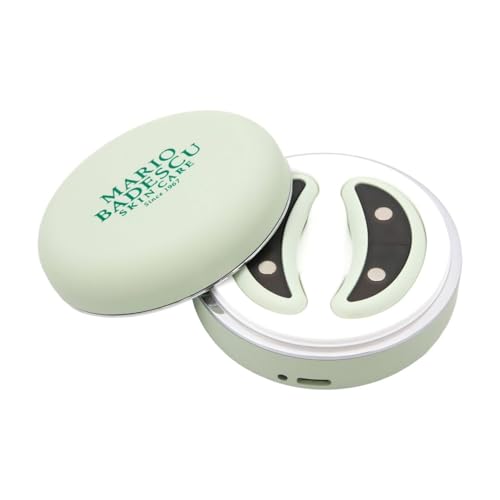
Reusable patches and EMS distinguish this device from the massage-focused options. It pairs red LED light with a subtle microcurrent sensation and is designed for hands-free use; the package includes five pairs of reusable conductive gel pads. The maker says a session takes 10 minutes and is intended to help improve the appearance of puffiness and fine lines. This suits someone who wants both light and microcurrent rather than vibration or warming. The feature set does not give a wavelength, so choose another option if that figure is central to your decision.
Bottom line: Pick this if reusable patches and EMS matter more than a wavelength.
USB-C Red Light Eye Massager

Warming massage and vibration set this tool apart from patch-style light devices. Its flexible frame is designed to fit most face shapes, and it offers four massage modes with three intensity levels; the maker says the device automatically powers off after a 10-minute cycle. It weighs 1.6 ounces and recharges through USB-C, which may suit a portable routine. The combination of heat, vibration and light may not suit someone seeking light alone or who needs a device with a specified wavelength. Do not use warmth around the eyes without checking the device’s safety guidance.
Bottom line: Choose this for adjustable massage, warmth and USB-C charging.
Amifiy 4-in-1 Red Light Eye Mask

A 3-minute programmed session makes this eye mask the shortest-timed option among the products with a session length. The maker describes it as a 4-in-1 eye treatment and says it shuts off automatically when the session ends. That short cycle may fit a routine where a 10-minute session is inconvenient. The maker also makes appearance-related claims about smoother, brighter-looking skin, but the features do not establish a wavelength or explain the four functions. Buyers who want measurable light specifications should compare those factors before choosing.
Bottom line: Pick this when a short, programmed session is the main priority.
650 nm Red Light Therapy Glasses
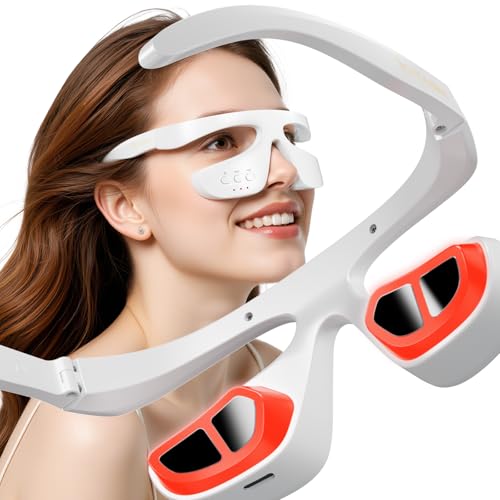
Its 3D contour design combines red light with microcurrent massage, and the maker recommends 10 minutes of daily use. This may suit buyers comparing devices by wavelength who also want hands-free stimulation. Confirm the manufacturer’s use and eye-safety guidance before placing any light-emitting device near the eyes.
Bottom line: Choose this if a 650 nm wavelength and microcurrent are priorities.
630 nm / 850 nm Under-Eye Device

Two stated wavelengths—630 nm red and 850 nm infrared—make this glasses-style device distinct from the single-wavelength option. The maker describes a 10-minute daily routine and hands-free use with serum or conductive gel, so it may suit someone comparing red and near-infrared specifications. The maker also claims suitability for sensitive skin, but individual tolerance can vary, particularly with skincare products used underneath.
Bottom line: Pick this to compare a device with red and infrared wavelengths.
How to compare red light under-eye devices
Start with the treatment features you want, then compare session time and wavelength rather than broad claims about results. These five options span 3- and 10-minute sessions; only two give specific wavelengths, 650 nm and 630 nm plus 850 nm. Red and near-infrared wavelengths are not interchangeable specifications, so check which bands a device actually names if wavelength is a deciding factor. Massage, warmth and EMS are separate functions, not proof that a device will change skin. A practical rule: if you cannot comfortably set aside 10 minutes, favor the device whose cycle fits your routine. Compare these categories before choosing:
| Need | Feature to prioritize |
|---|---|
| Short routine | 3-minute stated session |
| Wavelength comparison | Named nm values |
| Massage sensation | Vibration, warmth or EMS |
Use appearance-related claims as the maker’s intended benefits, not a guarantee of a particular outcome.
Fit and comfort around the eye area
Fit matters because an eye-area device must sit securely without pressing uncomfortably on the eyelids or eyes. One option uses reusable under-eye patches, while other products use glasses or a flexible frame; contour design alone does not guarantee a fit on every face. Clean skin and the right conductive medium can also affect comfort when a device uses pads or microcurrent. Check whether the device’s contact points line up below the eye rather than across the eyelid. If you wear contact lenses, have an eye condition, or recently had an eye procedure, ask a qualified clinician whether use near your eyes is appropriate. Do not assume a beauty device is an eye-protection device.
Eye safety and skincare precautions
Keep bright LEDs out of direct view and use a device near the eyes only as its safety guidance permits. Red and near-infrared light can be bright even when it does not feel hot, so do not treat a closed-eye position as guaranteed protection. Never add a serum or conductive gel unless the device is designed for that use; skincare ingredients can irritate the delicate under-eye area. Stop if use causes eye discomfort, unusual skin irritation or persistent redness. A decision rule: if eye-protection instructions are unclear, do not use the device until you confirm the safe positioning and use guidance with its maker. People with photosensitivity or light-sensitive medication should ask a clinician before trying light-based devices.
Frequently Asked Questions
How long should an under-eye red light session last?
Use the session length designed for the particular device; these products specify either 3 or 10 minutes. Do not extend the cycle to try to accelerate results.
What do 630 nm and 850 nm mean?
Nanometers describe a light wavelength, not treatment strength. The 630 nm value is in the red light range, while 850 nm is near-infrared; a wavelength alone does not establish a device’s safety or effectiveness.
Can I use eye cream with these devices?
Only use cream or conductive gel if the device is designed for it. Products that direct users to apply skincare still require following their specific eye-area safety guidance, since some ingredients can irritate delicate skin.
Should I look at the LEDs during treatment?
No; avoid looking directly at bright LEDs, especially at close range. Use only the positioning and eye-protection approach the device maker specifies, and stop if you experience eye discomfort.
Can red light devices irritate sensitive under-eye skin?
Yes, irritation is possible even when a device is marketed for sensitive skin. Start only as directed, avoid combining it with irritating skincare, and stop if redness or discomfort persists.