
Red Lotus Special Flour: Thai Flour Options Compared

For Red Lotus special flour, choose Premium Red Lotus Special Flour for a flour positioned for steamed buns, cakes, cookies, and biscuits; Red Lotus Flour for Steamed Cakes is another option with wheat flour as its ingredient and a broader stated range of uses. Bakers seeking gluten-free rice flour should choose a different type, such as Thairaya Thai White Rice Flour.
We earn a commission if you buy through links on this page. As an Amazon Associate I earn from qualifying purchases. Products are compared on manufacturer specifications, not hands-on testing.
- Best overall: Premium Red Lotus Special Flour – Its name positions it for steamed buns, cakes, cookies, and biscuits.
- Best for Thai recipes: Red Lotus Flour for Steamed Cakes – It identifies wheat flour and names salapao and puifai among its uses.
- Best for gluten-free baking: Thairaya Thai White Rice Flour – It is white rice flour and is labeled gluten-free and vegan.
| Product | Best for | Package weight | Package dimensions | Stated use | Shop |
|---|---|---|---|---|---|
| Premium Red Lotus Special Flour | Baking variety | — | 5.71 × 2.32 × 11.02 in | Buns, cakes, cookies, biscuits | Check Price on Amazon |
| Red Lotus Flour for Steamed Cakes | Thai steamed cakes | 2.2 lb | 7.09 × 5.12 × 5.12 in | Steamed buns, cakes, cookies, biscuits | Check Price on Amazon |
| Thairaya Thai White Rice Flour | Gluten-free recipes | 1 lb | — | Cooking, baking, sourdough | Check Price on Amazon |
Red Lotus Special Flour and Alternatives
Compare the two Red Lotus wheat-flour options with a Thai rice flour alternative by package and recipe fit.
Premium Red Lotus Special Flour

Premium Red Lotus Special Flour is the Red Lotus option whose name expressly spans steamed buns, cakes, cookies, and biscuits. That broad range makes it a practical match for a household that rotates among baked and steamed recipes. The package dimensions are 5.71 × 2.32 × 11.02 inches. The name’s use claims do not identify a specific ingredient or recipe ratio, so use the flour called for in the recipe rather than assuming a one-for-one swap in a formula designed for another flour type.
Bottom line: Choose this if you want one Red Lotus flour positioned for several kinds of baking and steamed recipes.
Red Lotus Flour for Steamed Cakes

Red Lotus Flour for Steamed Cakes distinguishes itself by identifying wheat flour as its ingredient and naming Thai preparations such as salapao and puifai. The 2.2-pound pack also gives its package weight, unlike the other Red Lotus option here. Its uses extend to cookies, biscuits, jam rolls, and sponge cakes, making it relevant for more than steaming. Because it is wheat flour, it is not the choice for a gluten-free recipe; wheat flour contains gluten, which helps give many baked goods structure.
Bottom line: Choose this for Thai steamed-cake recipes or when you want its ingredient identified as wheat flour.
Thairaya Thai White Rice Flour
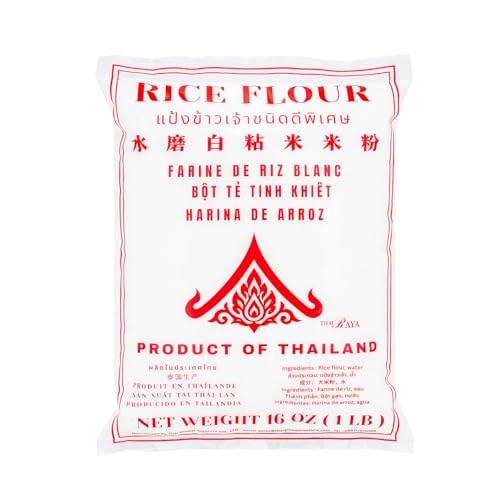
Thairaya Thai White Rice Flour is a Thai white rice flour, not Red Lotus special wheat flour, so it is a different type for a different recipe need. The 1-pound package is labeled gluten-free and vegan, and its uses include cooking, baking, and sourdough bread. Rice flour does not contain wheat gluten, so it will not behave like wheat flour in recipes that rely on gluten for elasticity and structure. Choose it when the recipe is formulated for rice flour or when avoiding gluten is the priority, rather than substituting it blindly in a wheat-flour cake recipe.
Bottom line: Choose this when a recipe calls for rice flour or needs a gluten-free flour.
How to choose Red Lotus special flour
Start with the recipe’s flour type and preparation method: wheat flour and rice flour do not behave interchangeably. Wheat flour contains gluten, which forms an elastic network when mixed with water; rice flour has no wheat gluten and generally needs a recipe designed around its different structure. For steamed buns or cakes, choose a flour expressly positioned for steaming; for a gluten-free recipe, use a gluten-free flour such as rice flour rather than assuming a wheat flour will work.
Use this guide to match the recipe need to the flour type. A product’s named uses can help narrow the choice, but the recipe’s own ingredient specification should decide substitutions.
| Recipe need | Flour type to choose |
|---|---|
| Wheat-based buns or cakes | Wheat flour suited to steaming |
| Gluten-free baking | Rice flour in a gluten-free recipe |
| Cookies or biscuits | Use the type named in the recipe |
Measuring flour for cakes and buns
For repeatable results, weigh flour when a recipe gives a weight; measuring by volume can vary depending on how much the flour is packed into the cup. If using cups, fluff the flour, spoon it into the measuring cup, and level the top rather than scooping and compressing it. That keeps the amount closer to a lightly filled cup and helps prevent dense cakes or buns.
Wheat and rice flours should not be swapped cup for cup unless the recipe gives that substitution. For example, a dough that depends on gluten for stretch will not get that same structure from rice flour. Use a recipe developed for the flour type and preparation method, particularly for steamed buns where dough texture affects shaping and rise.
Steaming buns and cakes safely
Keep the steamer stable and use a lid that fits; hot steam can burn skin even when the water is not visibly boiling over. Leave space between portions so expanding dough does not crowd neighboring buns, and avoid lifting the lid repeatedly because the escaping steam interrupts steady cooking heat.
Use a heat-safe steamer basket or rack above the water rather than placing food directly in the water. Keep hands and face away from the lid opening when checking doneness, and use a towel or mitt to handle hot cookware. The exact cooking time depends on the recipe and portion size, so use its doneness cue rather than relying on flour type alone.
Storing flour between recipes
Keep flour in a tightly closed, food-safe container in a cool, dry cupboard; moisture can cause clumping and encourage spoilage. Store the container away from heat, sunlight, and strong-smelling foods, since dry flour can absorb odors. Clean and dry the container before refilling it rather than topping new flour onto old residue.
For a package that will take a long time to use, freezing flour in a sealed container can help protect it from pantry pests; let the sealed container come back to room temperature before opening to limit condensation on the flour. Discard flour that smells rancid or shows signs of dampness or pests instead of trying to sift those problems away.
Frequently Asked Questions
Can I substitute rice flour for wheat flour in steamed buns?
Not as a direct one-for-one swap in a standard wheat-flour bun recipe. Rice flour contains no wheat gluten, so choose a bun recipe formulated for rice flour if you need a gluten-free result.
How should I measure flour for steamed cakes?
Weigh flour when the recipe provides a weight for the most consistent measurement. If measuring by volume, fluff it first, spoon it into the cup, and level it rather than packing it down.
Why are my steamed buns dense instead of fluffy?
A common cause is too much flour from compacted cup measures, which makes dough too stiff. Spoon flour lightly into the cup and follow the recipe’s proofing and steaming cues.
Can I use Red Lotus flour for cookies?
The Red Lotus options here are positioned for cookies as well as steamed or other baked goods. For a specific cookie recipe, match the flour type and ingredient proportions the recipe calls for rather than changing flour types without adjustment.
How do I keep flour fresh after opening?
Store flour sealed in a cool, dry cupboard, away from heat and strong odors. A dry, clean container also helps prevent moisture and pantry pests from contaminating it.