
Renter Friendly Floor Tiles: 4 Peel-and-Stick Picks

For a renter-friendly floor tile update, choose FloorPops Bonneville Oxblood if you want 12-by-12-inch peel-and-stick vinyl tiles advertised for reuse; surface condition and adhesive removal matter most. FloorPops x Chris Loves Julia Bonneville Grey and FloorPops Biscotto are also 12-inch choices, while MORCART Black-and-White Vinyl Tiles comes in a smaller format and claims trace-free removal, so choose a different option if its fit or removal approach suits your space better.
We earn a commission if you buy through links on this page. As an Amazon Associate I earn from qualifying purchases. Products are compared on manufacturer specifications, not hands-on testing.
- Best overall: FloorPops Bonneville Oxblood – Its 12-by-12-inch vinyl tiles are described as reusable from one space to the next.
- Best for smaller tile format: MORCART Black-and-White Vinyl Tiles – Each tile measures 7.87 inches square, smaller than the 12-inch alternatives.
- Best for marble look: FloorPops x Chris Loves Julia Bonneville Grey – The grey-and-white marble design brings a different pattern from the geometric choices.
| Product | Best for | Tile size | Material | Package count | Shop |
|---|---|---|---|---|---|
| FloorPops Bonneville Oxblood | Reusable vinyl tile | 12 × 12 in | Virgin vinyl | 10 tiles | Check Price on Amazon |
| FloorPops x Chris Loves Julia Bonneville Grey | Grey marble pattern | 12 × 12 in | — | 10 tiles | Check Price on Amazon |
| MORCART Black-and-White Vinyl Tiles | Smaller tile format | 7.87 × 7.87 in | Vinyl and PP | 40 tiles | Check Price on Amazon |
| FloorPops Biscotto | Geometric floral pattern | 12 × 12 in | Virgin vinyl | 10 tiles | Check Price on Amazon |
Renter Friendly Floor Tiles Compared
Compare tile dimensions, material and adhesive claims before choosing an option for a smooth, clean floor.
FloorPops Bonneville Oxblood

FloorPops Bonneville Oxblood stands apart for its reuse from one space to the next, a useful distinction for renters who may rearrange rooms or move. The red-and-white marble pattern comes in 12-by-12-inch virgin vinyl tiles with a textured low-luster finish and permanent adhesive. The maker says the tiles are water resistant and washable, and application needs no grout or special tools. The permanent adhesive makes removal worth considering before committing; test suitability for your flooring and lease, especially if preserving the original surface is essential.
Bottom line: Choose this if reuse between spaces matters more than a removable-adhesive claim.
FloorPops x Chris Loves Julia Bonneville Grey

FloorPops x Chris Loves Julia Bonneville Grey differs with a grey-and-white marble design from the Chris Loves Julia collaboration. Each of the 10 tiles is 12 inches square and 0.06 inch thick; installation is peel-and-stick with no paste or water. The maker describes the surface as water resistant and washable and suggests indoor rooms such as kitchens, bathrooms, laundry rooms and entryways. Smooth, clean, flat surfaces are the application target, so this is not the pick for uneven flooring or a surface that cannot be prepared. The material is not identified, so compare only its known size and design with alternatives.
Bottom line: Choose this for the grey marble pattern and a flat, prepared indoor surface.
MORCART Black-and-White Vinyl Tiles

MORCART Black-and-White Vinyl Tiles uses the smallest tile format here: 7.87-inch squares, with 40 pieces in a pack. The black-and-white design is made from vinyl and PP, and the maker says the tiles can be cut with scissors or a knife and ruler and removed without a trace. It also claims waterproof, oil-proof, heat-resistant and non-slip qualities. Those removal and performance claims are the maker’s, not a guarantee for every floor; renters should test a discreet area first and confirm that the underlying surface accepts adhesive. Smaller squares mean more seams than 12-inch tiles across the same area.
Bottom line: Choose this when smaller, cuttable squares and a removal claim fit your floor.
FloorPops Biscotto
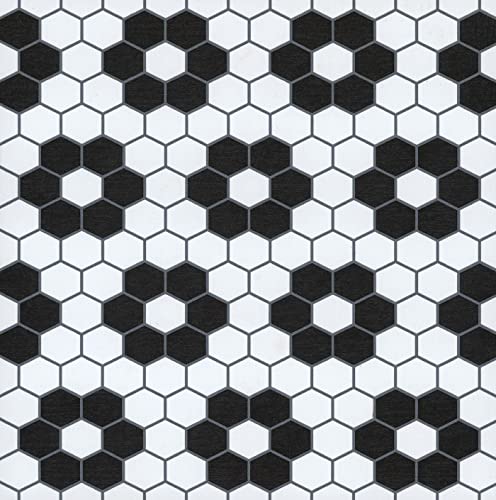
FloorPops Biscotto offers a black-and-white geometric floral pattern rather than marble. The 10 virgin-vinyl tiles measure 12 inches square and 0.06 inch thick, with a textured low-luster finish and permanent adhesive. The maker describes them as water resistant and washable, and says no grout or special tools are needed for installation. The permanent adhesive is a meaningful caveat for renters: a peel-and-stick installation is not automatically residue-free or safe for every existing floor. Check that the floor is clean, smooth and flat before applying, and consider the lease or surface owner’s rules.
Bottom line: Choose this for the geometric floral look if permanent adhesive is acceptable.
How to choose renter friendly floor tiles
Start with the existing floor, because peel-and-stick tiles need a clean, dry, smooth surface for reliable contact. Floor tiles commonly come in 12-inch squares, while smaller formats such as 7.87-inch squares create more seams across the same area. Measure the floor in both directions and include a few spare tiles for cuts around edges and obstacles. For a room with under 2 inches of clearance at a doorway, check that the added tile thickness will not obstruct the door; these options are about 0.04 to 0.1 inch thick. Prioritize an explicit removal claim if preserving the floor matters, but test first in a discreet area.
Peel-and-stick tile size and layout
Tile size changes layout and cutting: a 12-inch tile covers 1 square foot, while a 7.87-inch square covers about 0.43 square foot. Snap or mark a straight reference line from the room’s most visible edge, then dry-fit a row before removing any backing. A simple area estimate is room square footage divided by tile coverage, rounded up; add roughly 10% for cutting waste in a rectangular room, and more for complex edges or diagonal layouts. Keep seams aligned and avoid narrow slivers at doorways by shifting the starting line. Flooring beneath must be flat enough for full tile contact; bumps telegraph through thin vinyl.
Adhesive and removal for rental floors
Peel-and-stick describes installation, not guaranteed damage-free removal. A permanent adhesive and a claim that tiles can be removed without a trace are materially different: neither substitutes for checking compatibility with the underlying flooring. Vinyl can react poorly to aggressive adhesives or solvents, and heat used to soften adhesive may damage some finishes. Test a single tile in a hidden area and inspect after removal before covering a large room. If the lease requires approval for floor changes, get that approval first. A removable underlayment or floating floor may suit a strict no-adhesive rule better than applying adhesive-backed tiles directly.
Water, heat and floor tile care
Water-resistant tiles tolerate incidental moisture better than untreated surfaces, but water can still travel through seams and reach the subfloor. Dry standing water promptly, particularly near sinks, tubs and entry doors; avoid assuming a washable surface makes the whole floor waterproof. Vinyl tiles can soften or distort under concentrated heat, so keep hot cookware, heaters and fireplace embers away from them. Use a damp cloth or mild cleaner unless the maker permits stronger products; abrasive scrubbers can dull a low-luster finish. Before placing tiles near a stove, fireplace or heated floor, verify the temperature limits for the adhesive and tile.
Frequently Asked Questions
How many floor tiles should I buy for a room?
Divide the room’s square footage by the coverage of one tile, then round up. Add about 10% for cuts in a straightforward rectangular layout, and more for diagonal patterns or many obstacles.
Can peel-and-stick floor tiles damage a rental floor?
Yes, adhesive can leave residue or pull up a finish, especially on delicate or poorly bonded flooring. Test one tile in a hidden spot and inspect the floor after removal before covering a larger area.
Can peel-and-stick tiles go in a bathroom?
They can suit a bathroom floor only when the substrate is clean, flat and dry during installation and the seams are kept from prolonged standing water. Water-resistant tile faces do not seal the joints or subfloor.
How do I cut peel-and-stick vinyl tiles?
Score a straight cut with a sharp utility knife against a ruler, then bend the tile along the score. For small-format tiles, scissors may also work; use a cutting mat and keep hands clear of the blade.
Can peel-and-stick tiles go over existing tile?
They can adhere over existing tile when the surface is smooth, clean, dry and firmly bonded. Deep grout lines can show through thin tiles, so fill or level them and test adhesion before covering the whole floor.