
Kitsch Shampoo Bar: 4 Formulas Compared by Hair Type

For a scalp that feels oily or has buildup, choose Kitsch Tea Tree & Mint Clarifying Bar for its tea tree and mint clarifying formula; the other Kitsch bars target fine, curly, or damaged hair instead. Shampoo bars are solid cleansers, and the right formula depends on your hair and scalp needs.
We earn a commission if you buy through links on this page. As an Amazon Associate I earn from qualifying purchases. Products are compared on manufacturer specifications, not hands-on testing.
- Best overall: Kitsch Tea Tree & Mint Clarifying Bar – Its tea tree and mint formula is made to address buildup and excess oil.
- Best for curls: Kitsch Coconut Oil Shampoo Bar – Coconut oil and its moisturizing focus suit dry, curly, kinky, and coily hair.
- Best for fine hair: Kitsch Rosemary & Biotin Shampoo Set – The rosemary and biotin set is formulated for fine or delicate hair.
| Product | Best for | Formula focus | Bar size | Set contents | Shop |
|---|---|---|---|---|---|
| Kitsch Tea Tree & Mint Clarifying Bar | Oily scalps | Clarifying; buildup and oil | 3.2 oz | 1 bar | Check Price on Amazon |
| Kitsch Coconut Oil Shampoo Bar | Curly hair | Moisturizing; curls and dryness | 3.5 oz | 1 bar | Check Price on Amazon |
| Kitsch Rosemary & Biotin Shampoo Set | Fine hair | Volumizing; fine and delicate hair | 5.9 oz | Shampoo + conditioner | Check Price on Amazon |
| Kitsch Argan Oil Shampoo & Conditioner Set | Damaged hair | Repairing; dry and damaged hair | 3.25 oz | Shampoo + conditioner | Check Price on Amazon |
Kitsch Shampoo Bars Compared
Compare each bar’s intended hair-care focus and format to narrow down the formula that fits your routine.
Kitsch Tea Tree & Mint Clarifying Bar
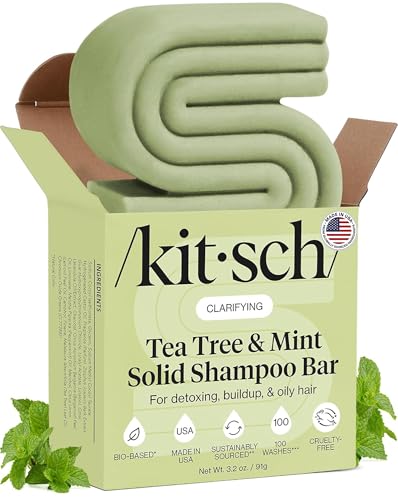
For buildup and excess oil, this tea tree and mint bar is the clearest match among these formulas. It is a 3.2-ounce solid shampoo made without parabens, sulfates, silicones, or artificial fragrance. The product says its formula includes clinically tested Dandrilys and may visibly reduce oiliness after four uses. That is a maker claim, not a guarantee for every scalp. Choose it when a clarifying wash is the priority; it is less directly suited than the coconut oil bar to dry, textured hair seeking extra moisture.
Bottom line: Choose this bar when scalp oil and residue are your main concerns.
Kitsch Coconut Oil Shampoo Bar
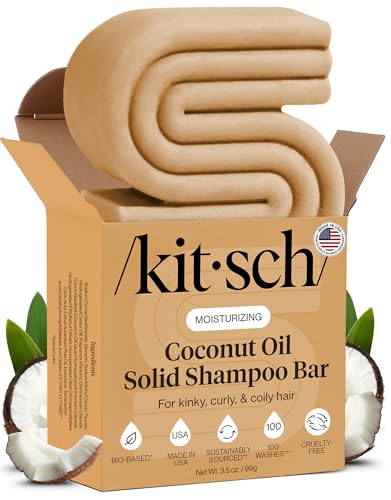
Dry, curly, kinky, or coily hair is the intended match for this 3.5-ounce coconut oil bar, which emphasizes moisture and softness rather than scalp clarification. Its maker describes the formula as pH-balanced and color-safe, and says it helps smooth knots and tangles. That can make it a better fit for textured hair than a bar centered on oil control. The tradeoff is its moisturizing focus: buyers looking chiefly to remove buildup or manage an oily scalp may prefer a clarifying formula.
Bottom line: Pick this when dry curls need a moisturizing shampoo bar.
Kitsch Rosemary & Biotin Shampoo Set

Fine or delicate hair is the focus of this rosemary and biotin shampoo-and-conditioner set, distinguishing it from the single-purpose clarifying and coconut oil bars. The set includes two solid products and is described as sulfate-, paraben-, and silicone-free. Its maker says amaranth protein, rosemary, and biotin help improve the look of fullness and add volume. The main limitation is format: this is a two-piece routine, not a single shampoo bar, so it may not suit someone seeking only a cleanser.
Bottom line: Choose the set if fine hair and a fuller-looking finish are priorities.
Kitsch Argan Oil Shampoo & Conditioner Set

For dry or damaged hair, this argan oil set takes a repairing approach rather than the fine-hair volume focus of the rosemary and biotin set. It pairs a shampoo bar with a conditioner bar, and the product features describe argan oil and Everbond Technology. The maker says the formula helps reduce breakage and improve elasticity; those benefits are claims, not assured outcomes. Its set format matters: choose it for a coordinated shampoo-and-conditioner routine, not if you want a single shampoo bar.
Bottom line: Pick this set when your priority is a repairing routine for damaged strands.
How to choose a Kitsch shampoo bar
Choose by your main hair or scalp concern, not by the word “bar”: the formulas here separate into clarifying, moisturizing, volumizing, and repairing aims. A clarifying wash is intended to remove oil and residue; a moisturizing formula is aimed at dry strands, while a conditioner bar is a separate step rather than a shampoo substitute. Check whether you want one cleanser or a shampoo-and-conditioner pair before choosing. For a decision rule, if your main concern is excess scalp oil or buildup, start with a clarifying formula; if your hair is dry and curly, prioritize a moisturizing one. These descriptions are intended focuses, not promises of a particular result.
Shampoo bar use and storage
Keep a shampoo bar dry between washes: a draining soap dish or ventilated holder lets water escape and helps prevent the bar from sitting in a puddle. Wet hair thoroughly, then either work the bar between wet hands or glide it lightly over the scalp; use fingertips to lather rather than scraping the bar repeatedly across hair. Rinse the scalp and lengths well, especially around the nape and behind the ears, where residue can remain. A bar that stays wet softens and wears down faster. Conditioner bars are used separately on lengths, not as a replacement for cleansing the scalp.
Shampoo bars versus liquid shampoo
Solid shampoo bars and liquid shampoo differ mainly in format and handling; a bar still needs to lather, rinse cleanly, and suit your scalp. Some solid cleansers are syndet bars made with synthetic surfactants, while traditional soap bars use saponified oils and can be more alkaline; “bar” alone does not tell you which kind you have. Read the ingredient label if you are avoiding a particular cleanser type or have a strong pH preference. Keep the bar dry during storage and travel, since an enclosed wet bar can soften. Do not assume a shampoo bar is interchangeable with body soap or that every bar will feel the same on your hair.
| Need | Formula direction | Format consideration |
|---|---|---|
| Scalp oil or buildup | Clarifying | Single shampoo bar |
| Dry curls | Moisturizing | Single shampoo bar |
| Fine hair | Volumizing | Shampoo and conditioner set |
| Damaged strands | Repairing | Shampoo and conditioner set |
Common shampoo bar mistakes
Using too much pressure is a common mistake: rubbing a hard bar over the same section repeatedly can create tangles, especially in long or textured hair. Build lather with wet hands or apply lightly to the scalp, then distribute suds as you rinse. Another mistake is leaving the bar in standing water, which softens it and makes it harder to handle. Avoid choosing by one ingredient alone; hair needs, such as excess oil versus dryness, determine which formula focus makes sense. If you color your hair, confirm the formula’s color-safe claim on the packaging before relying on it, since only some products here make that claim.
Frequently Asked Questions
How long does a shampoo bar usually last?
A shampoo bar commonly lasts about 50 to wash-days, depending on bar size, hair length, how often you wash, and whether it dries between uses. Store it out of standing water to reduce softening and waste.
Can a shampoo bar work on color-treated hair?
Some bars are formulated as color-safe, but that claim should be confirmed for the specific formula before use. Washing frequency and the type of color treatment also affect how long color looks fresh.
Should I rub a shampoo bar directly on my hair?
You can lather it between wet hands or apply it lightly to thoroughly wet hair, focusing on the scalp. For long or textured hair, avoid repeated hard rubbing, which can contribute to tangling.
Are all shampoo bars made from soap?
No; some solid shampoos use syndet surfactants, while traditional soap bars are made from saponified oils. The word “bar” does not identify the cleanser type, so check the ingredient label if that distinction matters.