
Rodent Proof Dryer Vent Covers Compared by Fit

For a standard 4-inch dryer duct, No-Pest Vent Dual Door, 4-inch is the clearest match because its dual doors close against pests without a lint screen. Choose Deflecto Bird Guard, 3–4-inch if you need a guard that fits 3-inch as well as 4-inch vents; choose 4-inch Galvanized Steel Hood Vent if a hooded metal cover and cleanable mesh suit the installation.
Dryer vent covers are exterior terminations that let exhaust escape while limiting entry by pests and outdoor air. Match the cover to the duct and preserve an unobstructed exhaust path.
We earn a commission if you buy through links on this page. As an Amazon Associate I earn from qualifying purchases. Products are compared on manufacturer specifications, not hands-on testing.
- Best overall: No-Pest Vent Dual Door, 4-inch – Its self-closing dual doors block pests without adding a lint-catching screen.
- Best for 3-inch ducts: Deflecto Bird Guard, 3–4-inch – It fits standard 3-inch and 4-inch vent hoods and has a removable guard.
- Best for a hooded metal cover: 4-inch Galvanized Steel Hood Vent – Its galvanized-steel hood includes an openable screen and spring-loaded damper.
| Product | Best for | Duct fit | Material | Closure or guard | Shop |
|---|---|---|---|---|---|
| No-Pest Vent Dual Door, 4-inch | Screen-free closure | 4 in | Polypropylene | Dual self-closing doors | Check Price on Amazon |
| Deflecto Bird Guard, 3–4-inch | Flexible duct fit | 3–4 in | Plastic | Open-grid guard | Check Price on Amazon |
| 4-inch Galvanized Steel Hood Vent | Hooded metal cover | 4 in | Galvanized steel | Screen and spring damper | Check Price on Amazon |
Rodent Proof Dryer Vent Covers
Choose by duct diameter first, then decide whether a screen or a self-closing door better fits your vent and cleaning routine.
No-Pest Vent Dual Door, 4-inch

The screen-free dual door design sets this cover apart from mesh guards: the manufacturer says its doors open during exhaust and close afterward to keep birds, rodents, and insects out. The white polypropylene cover fits a standard 4-inch round dryer pipe, has no collar, and mounts with pre-drilled perimeter holes. That makes it a fit for buyers who want a pest barrier without a lint screen at the outlet. It is not the choice for a 3-inch duct or for anyone who specifically needs a removable screen.
Bottom line: Pick this if your dryer has a 4-inch duct and you want a screen-free closure.
Deflecto Bird Guard, 3–4-inch
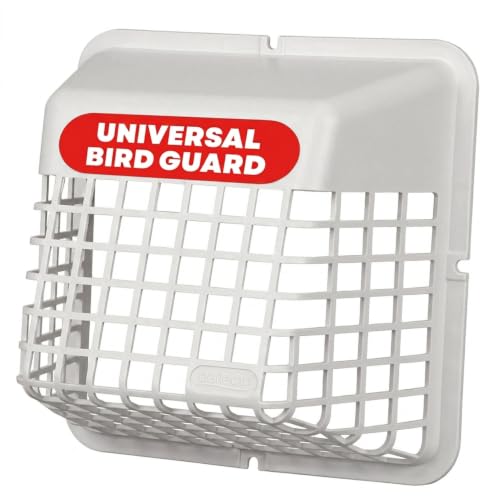
The 3-inch-to-4-inch fit is the key distinction here: this white plastic guard accommodates either common duct size, unlike the 4-inch-only options. The manufacturer describes its open grid as a barrier against nesting birds, rodents, and debris while letting exhaust air and stray lint pass; the existing vent hood can still open and close. Its removable guard supports periodic cleaning. The grid is a limitation for dryer users who want to avoid a screen at the termination, so consider a screen-free door design instead.
Bottom line: Pick this when the duct is 3 inches or 4 inches and a removable grid is useful.
4-inch Galvanized Steel Hood Vent
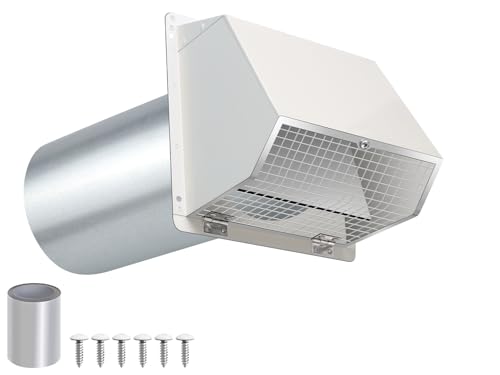
A hooded galvanized-steel body distinguishes this cover from the plastic guards and dual door option. It connects to a 4-inch outside dryer pipe and includes an 8¼-inch vent pipe for wall mounting; its openable mesh is intended to keep pests out and can be cleaned. A spring-loaded damper allows exhaust out and limits backflow when closed, according to the manufacturer. The mesh needs regular lint attention, so this option is less suitable for buyers prioritizing a screen-free dryer termination.
Bottom line: Pick this for a 4-inch wall outlet where a hood, metal body, and cleanable mesh are desired.
How to choose a rodent proof dryer vent cover
Start by matching the outlet diameter: residential dryer exhaust ducts commonly use a 4-inch round connection, while these options include one guard that also fits 3-inch ducts. Then compare the barrier mechanism. A door or damper closes over the opening when the dryer is idle; a grid physically obstructs entry but adds a surface where lint can collect. Dryer exhaust needs an unobstructed route, so avoid covers that impede the moving outlet flap or reduce the duct opening. If the existing pipe is not clearly 4 inches across, measure its inside diameter before choosing; a cover that does not mate with the pipe can leave gaps or restrict airflow.
Use the table to narrow the choice by the duct and guard type.
| Need | Choice | Key distinction |
|---|---|---|
| 4-inch duct, no screen | No-Pest Vent Dual Door, 4-inch | Dual self-closing doors |
| 3-inch or 4-inch duct | Deflecto Bird Guard, 3–4-inch | Removable open-grid guard |
| 4-inch duct, hooded metal | 4-inch Galvanized Steel Hood Vent | Cleanable mesh and spring damper |
Why dryer vent screens need special care
Dryer exhaust outlets should not be capped with a fine insect screen: lint can build up on the mesh and restrict exhaust flow. The International Residential Code’s dryer-termination rule calls for a backdraft damper and prohibits screens, though local code adoption and amendments vary. A coarse pest guard is still a screen, so check local requirements before installing one on a dryer rather than a bathroom fan. Remove lint buildup promptly and inspect the outlet and duct when drying takes longer or the vent flap does not move freely. Never run a dryer with a visibly blocked exhaust path; restricted airflow can increase overheating and fire risk.
How to fit an exterior dryer vent cover
A proper fit starts with the duct diameter and the cover’s connection style, not the outside face dimensions. Measure the round duct opening, then confirm that the cover can attach to the pipe or wall as intended; a 4-inch duct is not interchangeable with a 3-inch outlet. Exterior clearance matters too: leave the damper and any doors free to swing, and keep snow, plants, and stored items from obstructing the outlet. Dryer duct runs also have length limits that depend on the dryer and the number of elbows, so a cover cannot compensate for an overly long or sharply bent run. Check the appliance installation manual for the permitted duct layout.
How often to clean a dryer vent cover
Inspect the exterior termination at least every few months and clean it whenever lint, nests, or debris appear; lint accumulation can obstruct exhaust before the cover looks fully blocked. A removable guard or openable screen makes access easier, but it also needs checking after cleaning. Confirm the damper or doors move freely once the dryer is off, and remove debris without pushing it farther into the duct. For a full duct, clean at least once a year as a common maintenance interval, more often with heavy laundry use or long runs. Disconnect power before servicing the appliance end, and do not dismantle a wall termination unless you can restore its weather-tight seal.
Frequently Asked Questions
Can a dryer vent cover have a screen?
A fine screen is a poor choice for a dryer exhaust because lint can collect on it and restrict airflow. Dryer termination rules generally call for a backdraft damper and prohibit screens; check the local code before fitting a mesh guard.
How do I measure a dryer vent opening?
Measure the inside diameter of the round duct, not the cover’s outer face. A standard residential dryer duct is commonly 4 inches across, and a cover must match the duct size to avoid a loose or restrictive fit.
How often should I clean a dryer vent?
Inspect the outlet every few months and clean visible lint or debris promptly; a full dryer duct commonly needs cleaning at least once a year. Heavy use and long duct runs can call for more frequent attention.
Why should a dryer vent damper close?
A backdraft damper closes when exhaust stops to limit outside air and pest entry. Keep the flap or doors clear so they can open during a drying cycle; a stuck or obstructed closure can interfere with exhaust.