
Roof Top Cargo Bags: 5 Options Compared by Size

21-Cubic-Foot 840D Roof Bag suits most travelers who need a full-size roof top cargo bag, with 21 cubic feet of capacity and a 52-by-40-inch footprint. Choose FIVKLEMNZ 15-Cubic-Foot Roof Bag instead if a smaller 15-cubic-foot bag better matches your load, or RoofPax 23-Cubic-Foot Bag if you want the largest capacity at 23 cubic feet.
Soft cargo bags add enclosed luggage space above a vehicle, but the bag’s capacity does not set a safe roof load; check your vehicle’s roof limit and the carrier’s attachment requirements before packing.
We earn a commission if you buy through links on this page. As an Amazon Associate I earn from qualifying purchases. Products are compared on manufacturer specifications, not hands-on testing.
- Best overall: 21-Cubic-Foot 840D Roof Bag – Its 21-cubic-foot capacity and 52-by-40-inch dimensions suit a substantial trip load.
- Best for smaller loads: FIVKLEMNZ 15-Cubic-Foot Roof Bag – At 15 cubic feet and 46 by 34 inches, it is the smallest option here.
- Best for more capacity: RoofPax 23-Cubic-Foot Bag – It offers 23 cubic feet, the largest capacity among these bags.
| Product | Best for | Capacity | Dimensions | Weight | Shop |
|---|---|---|---|---|---|
| 21-Cubic-Foot 840D Roof Bag | Full-size trip loads | 21 cu ft | 52 × 40 × 18 in | 9.35 lb | Check Price on Amazon |
| MeeFar XBEEK 20-Cubic-Foot Roof Bag | Rack-free flexibility | 20 cu ft | 51 × 40 × 17 in | 8.60 lb | Check Price on Amazon |
| FIVKLEMNZ 15-Cubic-Foot Roof Bag | Compact cargo loads | 15 cu ft | 46 × 34 × 17 in | 6.60 lb | Check Price on Amazon |
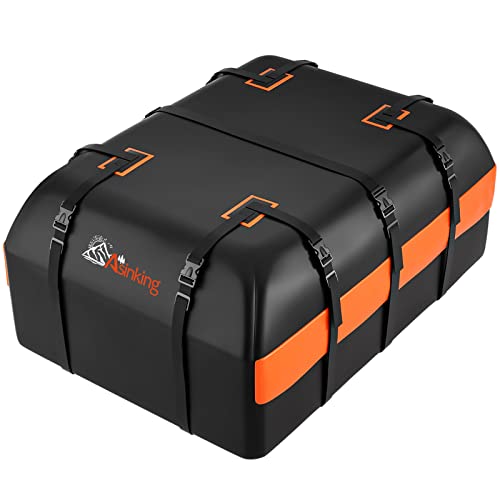
| Asinking 21-Cubic-Foot Roof Bag | Reinforced construction | 21 cu ft | 52 × 40 × 18 in | 9.48 lb | Check Price on Amazon |
| RoofPax 23-Cubic-Foot Bag | Maximum stated capacity | 23 cu ft | 49.2 × 36.62 × 22 in | 11.00 lb | Check Price on Amazon |
Roof Top Cargo Bags Compared
Compare the bags by capacity and footprint, then confirm your vehicle’s roof-load limit and attachment fit.
21-Cubic-Foot 840D Roof Bag
21-Cubic-Foot 840D Roof Bag pairs a 21-cubic-foot capacity with an 840D PVC construction and triple-reinforced welded seams, making it a full-size choice for travelers packing bulky soft luggage. Its footprint is 52 by 40 inches, and the package includes an anti-slip mat, door hooks, extra straps and a luggage lock. The maker says its waterproof zipper flap and seams protect cargo from rain. The broad footprint needs room on the roof, so measure the usable roof area and keep the load within the vehicle’s limit before choosing it.
Bottom line: Choose this for a roomy bag with a 840D fabric and reinforced seams.
MeeFar XBEEK 20-Cubic-Foot Roof Bag
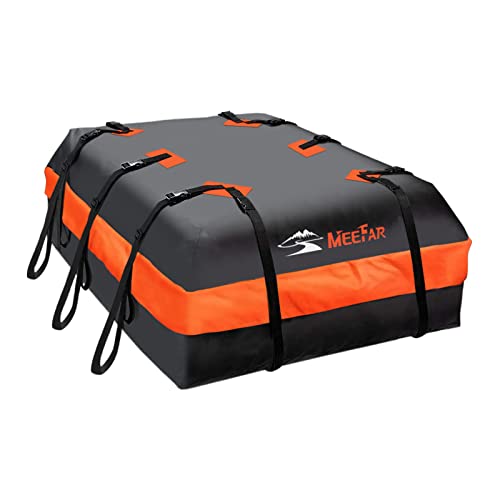
MeeFar XBEEK 20-Cubic-Foot Roof Bag is a 20-cubic-foot option with a slightly lower 17-inch height than the 21-cubic-foot alternatives, while retaining a 51-by-40-inch footprint. Its 700D PVC tarpaulin uses high-frequency welded construction, and the set includes an anti-slip mat, storage bag, lock and six security hooks. The maker says it can be used on cars with or without roof racks and folds into its storage bag between trips. Its capacity is a little below the largest choices, so it suits travelers who can pack within 20 cubic feet rather than needing maximum volume.
Bottom line: Pick this when you want a fold-away bag and a 20-cubic-foot capacity.
FIVKLEMNZ 15-Cubic-Foot Roof Bag

FIVKLEMNZ 15-Cubic-Foot Roof Bag is the smallest and lightest bag in this group, at 15 cubic feet, 46 by 34 inches and 6.6 pounds. The maker identifies its material as 840D PVC and says its high-frequency welded seams and double-layer cover are intended to keep luggage dry. Its more compact footprint can be useful when a larger bag would crowd the available roof area, but its lower capacity makes it a poor match for a high-volume family load.
Bottom line: Choose this for a smaller load or a more compact roof footprint.
Asinking 21-Cubic-Foot Roof Bag

Asinking 21-Cubic-Foot Roof Bag offers 21 cubic feet in a 52-by-40-by-18-inch shape, matching the capacity and footprint of 21-Cubic-Foot 840D Roof Bag while weighing slightly more at 9.48 pounds. Its maker describes 900D abrasion-resistant PVC, triple-reinforced heat-welded seams and a strong zipper, and says the bag is waterproof. That construction focus may appeal to buyers prioritizing reinforced seams. The size still requires a generously clear roof surface, and the bag’s capacity cannot override the vehicle roof limit; verify the allowable load before packing.
Bottom line: Select this if reinforced 900D construction is your priority.
RoofPax 23-Cubic-Foot Bag

RoofPax 23-Cubic-Foot Bag holds 23 cubic feet, the greatest volume here, in a narrower 36.62-inch width but taller 22-inch profile. The product specifies double weatherproof zippers, dual-seam construction and 10 heavy-duty tie-down straps; it also includes patented door-hook straps. The maker warns against routing straps through the cabin because of potential airbag interference. The taller profile and 11-pound bag weight are tradeoffs to consider, especially if garage clearance or rooftop height matters. Confirm clearance and vehicle load limits before filling it.
Bottom line: Choose this when the extra stated capacity matters more than a low profile.
How to Choose a Roof Top Cargo Bag
Start with the cargo volume you need, then check dimensions and attachment fit; cubic feet alone do not tell you whether a bag will sit properly on your roof. These options span 15 to 23 cubic feet and footprints from 46 by 34 inches to 52 by 40 inches. A wider bag can crowd roof space or overlap a hatch, while a taller bag can affect clearance. Measure the usable roof area with doors and hatch operating, and compare the packed load with the vehicle’s roof-load limit. That limit generally includes the carrier and cargo, so subtract the empty bag’s weight before deciding how much to pack. Choose a smaller bag if the required roof area or load limit is tight.
Roof Top Cargo Bag Size and Fit
Measure roof length and width between obstructions, and check that the hatch can open without contacting the carrier. A practical fit requires clearance from the windshield, antenna, sunroof and roof edges, not just a footprint smaller than the roof. Bags without a rack need secure attachment points; door-hook systems must fit the door frame without pinching weather seals or interfering with closure. Follow the carrier’s setup guidance and recheck strap tension after the first short drive. Keep luggage low and evenly distributed, with heavy items secured rather than stacked high. Never assume a universal-fit claim means every roof shape or door frame is compatible; confirm fit before travel.
Soft Roof Bags Compared by Capacity
Capacity is the clearest difference among these soft carriers, but shape can be just as important when a vehicle has limited roof space. A 15-cubic-foot bag is a sensible starting point for a compact load; 20 to 21 cubic feet suits more luggage if the roof dimensions allow it, while 23 cubic feet maximizes the volume. Height changes profile: the options range from 17 to 22 inches. Use the chart to narrow the size, then check the exact roof and load limits.
| Need | Capacity range | Fit consideration |
|---|---|---|
| Compact load | 15 cu ft | Smaller footprint |
| Full-size trip load | 20–21 cu ft | Wide 40-inch footprint on several options |
| Most stated volume | 23 cu ft | Tall 22-inch profile |
Use the smaller size when luggage can be compressed and roof dimensions or load capacity are constrained; select more volume only when those constraints leave room.
Secure Loading and Weather Protection
Pack soft bags with balanced weight and close every closure fully; water resistance depends on correct closure and secure installation. Place items that could leak inside sealed inner bags, because no soft carrier should be treated as a substitute for waterproof luggage. Keep straps snug and free of loose ends, and stop soon after departure to check movement. For highway travel, inspect the carrier at fuel stops and after strong wind or heavy rain. Do not route interior straps where they could cross an airbag deployment path; door-hook attachment can avoid that concern when the hooks fit correctly. Respect the vehicle’s roof-load limit, since excess weight can affect handling and stopping distance.
Frequently Asked Questions
How much weight can a roof top cargo bag hold?
The bag’s cubic-foot capacity is volume, not a weight rating. Use the vehicle’s roof-load limit and subtract the carrier’s empty weight; the examples here weigh 6.6 to 11 pounds.
Will a roof cargo bag fit a car without rails?
Some soft bags are designed for rack-free mounting, but fit depends on suitable door-frame attachment points. Check that hooks clear seals and do not prevent any door from closing securely.
Can I leave a roof bag on in the rain?
A closed soft bag can shed rain, but zipper flaps and seams must be fully secured for the design to work. Put moisture-sensitive items in sealed inner bags, especially for prolonged or wind-driven rain.
How should luggage be arranged inside a roof bag?
Distribute weight evenly and keep the load low rather than building a tall stack. Secure hard-edged items so they cannot shift, and keep the packed load within the vehicle’s roof limit.
How often should roof bag straps be checked?
Check strap tension before driving and again after a short initial drive, when settling may loosen the setup. Recheck at stops and after strong wind or heavy rain.