
Runfalcon 5 Running Shoes: Fit and Features

The men’s Runfalcon 5 with Cloudfoam cushioning and adjustable laces is the named model here, but its maker advises buying half a size larger because it runs small. Choose the women’s version for its women’s sizing, or the white men’s version if color is your priority.
Running shoes are built for repeated forward movement, so toe room and a secure heel matter as much as cushioning.
We earn a commission if you buy through links on this page. As an Amazon Associate I earn from qualifying purchases. Products are compared on manufacturer specifications, not hands-on testing.
- Best overall: adidas Men’s Runfalcon 5 – Its Cloudfoam midsole, adjustable laces and explicit half-size-up fit guidance make the selection criteria clear.
- Best for women’s sizing: adidas Women’s Runfalcon 5 – This women’s version combines Cloudfoam cushioning with an Adiwear outsole.
- Best for a white colorway: adidas Men’s Runfalcon 5 White – This men’s Runfalcon 5 has a white upper and lists a mesh upper and OrthoLite insole.
| Product | Best for | Fit guidance | Weight | Midsole drop | Shop |
|---|---|---|---|---|---|
| adidas Men’s Runfalcon 5 | Men needing fit guidance | Runs small; buy ½ size up | 304 g (US 9) | 10 mm | Check Price on Amazon |
| adidas Women’s Runfalcon 5 | Women’s everyday wear | Adjustable laces | 257 g (US 5.5) | 10 mm | Check Price on Amazon |
| adidas Men’s Runfalcon 5 White | White color preference | Regular fit; lace closure | — | — | Check Price on Amazon |
Runfalcon 5 Running Shoes Compared
These Runfalcon 5 options differ in fit guidance, color and the specifications available for comparison.
adidas Men’s Runfalcon 5
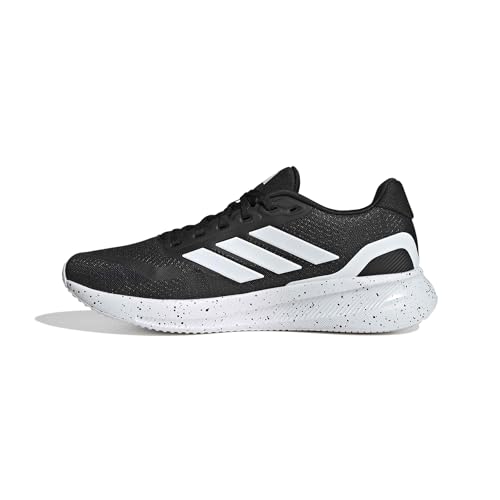
This men’s Runfalcon 5 is the only option here with explicit sizing guidance: the maker says it runs small and recommends buying half a size larger. Its Cloudfoam midsole, lace closure and OrthoLite sockliner suit everyday running and walking when step-in cushioning is a priority. The shoe weighs 304 g in US size 9 and has a 10 mm drop, with a 33 mm heel and 23 mm forefoot.
Bottom line: Pick this if you want the fit recommendation and a 10 mm drop.
adidas Women’s Runfalcon 5

This women’s Runfalcon 5 is the only women’s-specific option among the shoes, with Cloudfoam cushioning and an Adiwear outsole. Adjustable laces let the wearer tune the snugness, while the outsole is described for dependable wear at school or camp. Its 257 g weight applies to US size 5.5, and its 10 mm drop comes from a 32 mm heel and 22 mm forefoot. The weight is for a different size than the size 5 shown in the name, so it is not a direct size-for-size weight comparison with the other versions.
Bottom line: Choose this for the women’s version and its Adiwear outsole.
adidas Men’s Runfalcon 5 White

This white men’s Runfalcon 5 distinguishes itself with a mesh upper and listed OrthoLite insole, making it the clearest match if those construction details matter. It also has a Cloudfoam midsole and lace closure, with a regular fit. The size is US 9, but the specifications do not give a weight or drop for this version. That makes it harder to compare its geometry with the two versions that include drop measurements; consider another option if those figures are central to your choice.
Bottom line: Pick this if you want a white version with a mesh upper and OrthoLite insole.
How to choose a Runfalcon 5 running shoe
Start with fit, then compare cushioning and the shoe’s intended use. Leave about a thumb’s width, roughly ½ inch, between your longest toe and the front of the shoe; feet can swell during a run, and a close fit may press toes downhill or during faster movement. Try shoes later in the day with the socks you expect to wear, and check that the heel stays secure without lace pressure across the top of the foot. A secure midfoot with room at the toes is a practical fit target. Among these options, only one gives explicit half-size-up guidance, so use that recommendation for that version rather than assuming it applies to every Runfalcon 5.
What the 10 mm drop means
A 10 mm drop is the height difference between the heel and forefoot, not the total thickness of the sole. The two Runfalcon 5 options with figures pair a 10 mm drop with heel and forefoot measurements; compare those values only within the versions because model and size can affect measurements. A higher drop may feel familiar to runners used to more heel elevation, while a lower drop changes how the shoe feels underfoot; neither figure alone determines comfort. If you are changing to a substantially different drop, transition over several runs rather than switching abruptly, especially if your current shoes feel very different.
Runfalcon 5 materials and cushioning
Mesh uppers are made with an open textile structure that can allow more airflow than a solid synthetic panel, though fit and construction still affect comfort. One men’s option specifically lists a mesh upper and OrthoLite insole; the women’s option calls out an Adiwear outsole, while Cloudfoam appears on all three matching Runfalcon 5 choices. A cushioned midsole can soften step-in feel, but cushioning does not replace a stable fit or a suitable size. If you run in hot weather, try the shoe with your usual socks and check for rubbing at the heel and toes before relying on it for longer outings.
When to replace running shoes
Many runners use 300 to 500 miles as a rough replacement range, with body weight, running surface, gait and shoe construction shifting the timing. Watch for compressed midsole foam, uneven outsole wear, or new discomfort that appears consistently during runs; visible upper wear alone does not show how much cushioning remains. Rotate shoes if you already have another pair, allowing foam time to recover between sessions, and keep a simple mileage log to spot changes. A new pair should feel comfortable on a short outing before it becomes the only shoe used for longer runs.
Frequently Asked Questions
How much room should running shoes have at the toes?
Aim for about ½ inch between your longest toe and the front of the shoe. Check the fit while standing in your running socks, since toes need room to move as feet swell.
Does a 10 mm shoe drop suit new runners?
A 10 mm drop can suit a new runner if the shoe feels comfortable and secure; drop alone does not determine suitability. If it differs sharply from your current shoes, build up use over several runs.
How often should running shoes be replaced?
A common guideline is about 300 to 500 miles, adjusted for body weight, surface and wear. Replace sooner if the midsole looks compressed or discomfort repeatedly develops during runs.
Should I wear new running shoes on a long run?
Use a new pair on a short, easy outing first, then increase distance if there is no rubbing or pressure. A brief fit check can catch heel slip or toe crowding before a longer run.
How should running shoes fit around the heel?
The heel should stay seated without painful pressure or obvious slipping while walking or jogging. Adjust laces to secure the midfoot, but loosen them if they create pressure across the top of the foot.