
Running in Cold Weather Mask: 4 Styles Compared

For most runners, Fleece-Lined Mesh Balaclava is the strongest fit because it combines fleece lining, stretch fabric and breathable mesh panels. Choose WTACTFUL Vented Neck Gaiter instead if you want a half-face cover, or Toggle-Cinch Fleece Balaclava if adjustable full-face coverage matters more than a lighter design.
A running mask is a face covering intended to reduce exposure to cold air and wind, not respiratory protective equipment.
We earn a commission if you buy through links on this page. As an Amazon Associate I earn from qualifying purchases. Products are compared on manufacturer specifications, not hands-on testing.
- Best overall: Fleece-Lined Mesh Balaclava – Fleece lining and breathable mesh panels suit cold runs that call for warmth and airflow.
- Best for half-face coverage: WTACTFUL Vented Neck Gaiter – Its vented half-face design leaves more of the head uncovered.
- Best for adjustable coverage: Toggle-Cinch Fleece Balaclava – Toggle cinches let you change between full coverage, a half mask and a neck warmer.
| Product | Best for | Coverage | Breathing feature | Fit adjustment | Shop |
|---|---|---|---|---|---|
| Fleece-Lined Mesh Balaclava | Cold-weather runs | Full face, ears and neck | Breathable mesh panels | 4-way stretch | Check Price on Amazon |
| Fleece Half Ski Mask with Ear Slots | Secure half coverage | Face and neck | Mesh breathing panels | Ear slots | Check Price on Amazon |
| WTACTFUL Vented Neck Gaiter | Vented half coverage | Half face | Nose and mouth vents | Ergonomic fit | Check Price on Amazon |
| Toggle-Cinch Fleece Balaclava | Adjustable coverage | Full face, head and neck | Draw-tight toggles | Adjustable cinch | Check Price on Amazon |
Running in Cold Weather Masks
Compare coverage, airflow features and fit adjustments to match a face covering to your running conditions.
Fleece-Lined Mesh Balaclava

For runners who want broad coverage with airflow panels, Fleece-Lined Mesh Balaclava combines a fleece lining with 4-way stretch material. The maker says the breathable mesh paneling helps airflow and limits moisture buildup during high-intensity activities such as running. The extended neck can be worn in several configurations, including as a full face mask, open balaclava, half mask or neck gaiter. That versatility may suit runs with changing wind exposure. Its fuller coverage can feel like more material than a half-face gaiter, so runners who prefer an uncovered head and neck should look at a lighter-coverage option.
Bottom line: Choose it for a fleece-lined, adjustable balaclava with mesh panels.
Fleece Half Ski Mask with Ear Slots

For runners who want a half mask that can be lowered between efforts, Fleece Half Ski Mask with Ear Slots has mesh breathing panels and ear slots. The maker says its fleece lining wicks sweat and provides warmth down to 30°F. The ear slots are intended to help anchor the gaiter while covering the ears, and the mask can be worn up over the face or down around the neck. This makes it a practical choice for runs with pauses or changing exposure. The 30°F warmth claim is a maker claim, not a guarantee for every runner; choose fuller coverage when more of the head needs protection.
Bottom line: Choose it for fleece half-face coverage and ear-slot anchoring.
WTACTFUL Vented Neck Gaiter
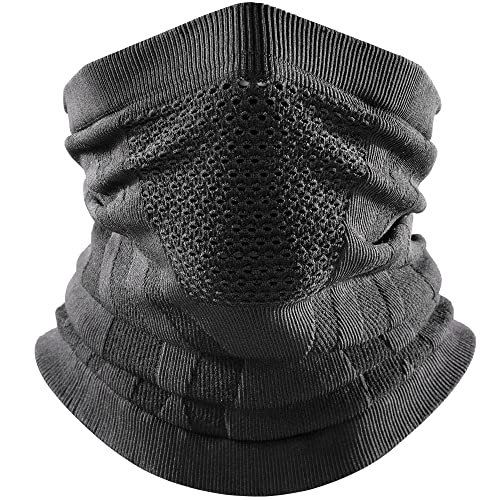
For runners who prefer a half-face cover over a full hood, WTACTFUL Vented Neck Gaiter has vents at the nose and mouth. The maker says the vents reduce moisture retention and help prevent fogging on glasses or goggles. Its one-size design is described as flexible and ergonomic, with a fit intended to stay in place during activity. The neck gaiter format also works for activities beyond running, including skiing, hiking and cycling. Unlike fleece-lined full balaclavas, this option does not claim extended head or ear coverage, so runners who need those areas covered should choose a fuller style.
Bottom line: Choose it for a vented half-face gaiter without full-head coverage.
Toggle-Cinch Fleece Balaclava

For runners who want to change coverage without carrying a second face covering, Toggle-Cinch Fleece Balaclava uses draw-tight toggles to cinch the fleece hood into a full snow mask or loosen it into a half mask or neck warmer. Its extra-long neck is designed to tuck into a jacket and reduce gaps where cold air can enter. The maker describes the fleece as heavyweight and intended for severe cold. That bulk may suit exposed, slow-paced outings better than runners who prioritize a minimal feel during harder efforts. The toggles add adjustability, but runners should set them comfortably rather than cinching tightly over the nose and mouth.
Bottom line: Choose it for adjustable fleece coverage and an extra-long neck.
How to Choose a Running Mask for Cold Weather
Choose a running mask by balancing coverage, airflow and moisture control. A half-face gaiter covers less area than a balaclava, while full-face styles can also cover the ears and neck. Mesh panels or vents are useful when hard efforts make a covered nose and mouth feel damp; fleece can add warmth but may feel heavier. A practical rule: choose a half mask for mild conditions or high-output runs when you want less coverage, and a full balaclava when wind exposure makes ear and neck coverage important. No face covering can guarantee comfort in every temperature, because pace, wind and individual heat production change how warm it feels.
| Run need | Style to consider | Trade-off |
|---|---|---|
| More airflow | Vented or mesh-panel mask | Less enclosed coverage |
| Face, ears and neck covered | Full balaclava | More material around the head |
| Change coverage mid-run | Toggle or convertible gaiter | Requires readjustment |
Coverage and Fit for Winter Running
Coverage should stay secure without restricting comfortable breathing or vision. A face covering that slips, bunches or blocks a runner’s view is a poor fit even if it covers more skin. Check that the nose and mouth area stays in place as you turn your head, and that any hood or gaiter does not interfere with glasses. Wind chill increases heat loss from exposed skin, so exposed ears and neck may need additional coverage during windy runs. For a close fit, adjust the garment before starting rather than pulling it tight while moving. If a mask feels damp or makes breathing uncomfortable, lower or remove it when conditions allow.
Breathability and Warmth in Running Face Covers
Breathability matters because exercise increases ventilation and a covered face can collect exhaled moisture. Mesh panels and nose-and-mouth vents provide openings for airflow, while a dense fleece lining prioritizes insulation. Neither feature alone determines comfort: a runner’s pace, humidity, wind and garment fit all affect heat and moisture buildup. Start with a lower-intensity warm-up and adjust coverage before increasing effort; a mask that feels comfortable while standing may feel too warm once running. Avoid treating a winter gaiter as a respirator or a substitute for respiratory protection. If breathing feels restricted, stop and adjust the covering rather than tightening it.
Safe Use and Care During Cold Runs
Cold-weather face coverings protect only the areas they cover, and exposed skin still needs attention in wind and freezing conditions. Frostbite risk rises as skin stays exposed to cold, especially when wind increases heat loss; cover ears and cheeks when conditions call for it. A damp face covering can feel colder after a stop, so carry a dry spare on longer outings if moisture is a concern. Wash and dry fabric masks regularly according to their care label, and check seams and elastic areas for wear before a run. Do not use a covering that obstructs vision, slips over the eyes or makes breathing uncomfortable.
Frequently Asked Questions
Does a running mask make cold air safer to breathe?
A fabric running mask can cover skin and alter the feel of inhaled air, but it is not a respirator or medical device. Choose one that allows comfortable breathing during your planned effort, and remove or adjust it if breathing feels restricted.
Should a running mask cover my ears?
Cover your ears when wind and freezing conditions leave them exposed for extended periods. A balaclava covers more of the head than a half-face gaiter, but fit and comfort still matter.
How tight should a winter running face mask fit?
A winter running mask should stay in place without pressing uncomfortably on the nose or mouth. Check that it does not shift over your eyes when you turn your head before starting to run.
Can I wear glasses with a cold-weather running mask?
You can wear glasses with a mask, but warm, moist exhaled air may fog lenses if it escapes near the nose. A vented design may help; check the fit and airflow while stationary before heading out.
When should I switch from a half mask to a balaclava?
Choose a balaclava when you want coverage for the head, ears and neck as well as the face. A half mask is a better match when you want less coverage or need to lower it easily during a run.