
Ryobi Universal Router Table: Fit and Alternatives

The RYOBI Universal Router Table A25RT03 is the direct match because it is the only Ryobi universal router table among these options. Choose an alternative if you need a specified work surface or a table explicitly described for another router brand; confirm the mounting fit before ordering.
We earn a commission if you buy through links on this page. As an Amazon Associate I earn from qualifying purchases. Products are compared on manufacturer specifications, not hands-on testing.
- Best overall: RYOBI Universal Router Table A25RT03 – It is the only table identified as a Ryobi universal router table.
- Best for SKIL routers: SKIL SRT1039 Benchtop Router Table – It names compatibility with SKIL RT1323-00 and RT1322-00 routers.
- Best for portable setup: BOSCH RA1141 Portable Jobsite Router Table – Folding legs support setup and storage, with a 26-by-16.5-inch laminated MDF top.
| Product | Best for | Router compatibility | Work surface | Table material | Shop |
|---|---|---|---|---|---|
| RYOBI Universal Router Table A25RT03 | Ryobi table match | Universal (model name) | — | — | Check Price on Amazon |
| SKIL SRT1039 Benchtop Router Table | SKIL router fit | SKIL RT1323-00, RT1322-00 | 26 × 16 in. | MDF | Check Price on Amazon |
| Leegol Electric Benchtop Router Table | Extended work support | Routers with base plates up to 6 in. | — | — | Check Price on Amazon |
| SawStop TGP2 27-Inch In-Line Router Table | Cast-iron surface | — | 27 × 16 in. | Cast iron | Check Price on Amazon |
| BOSCH RA1141 Portable Jobsite Router Table | Portable storage | — | 26 × 16.5 in. | Laminated MDF | Check Price on Amazon |
Ryobi Universal Router Table and Alternatives
Compare the direct Ryobi match with other router tables by compatibility and work-surface needs.
RYOBI Universal Router Table A25RT03
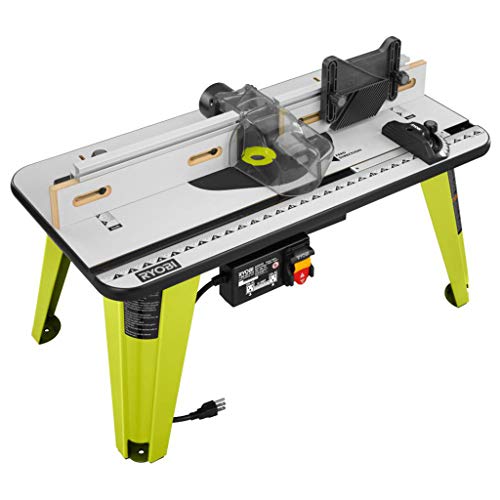
The RYOBI Universal Router Table A25RT03 is the direct match for a search for a Ryobi universal router table. Its name identifies it as universal, but it does not identify specific router models or a work-surface material. Router table fit depends on the router base or mounting plate, so confirm that the plate pattern and opening accept your router before buying. A fixed table lets you guide the workpiece past a stationary router bit, which can help with repeatable edge profiles. The limitation is that the maker does not establish its usable surface area, so it may be a poor choice when you need a particular support span.
Bottom line: Choose it when the Ryobi match matters most and you can verify your router’s mounting fit.
SKIL SRT1039 Benchtop Router Table
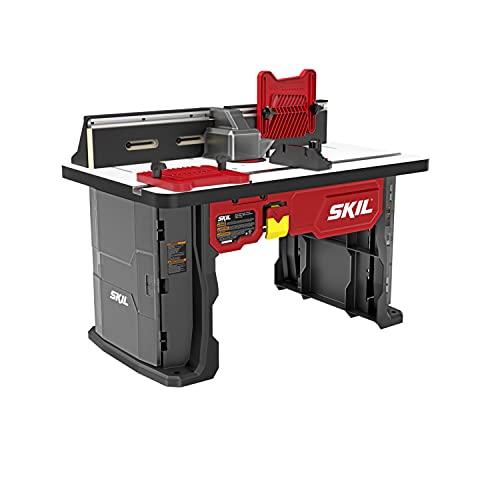
The SKIL SRT1039 is the only option here that names two compatible router models: the RT1323-00 and RT1322-00. It has a 26-by-16-inch MDF surface, a 24-inch fence, an aluminum miter-gauge slot, two adjustable featherboards, and above-table bit adjustment. The router is not included. Those features make this a practical alternative when you already own one of the named SKIL routers and want guided workpiece support. Its key limitation for Ryobi owners is that the compatibility is for SKIL models, not a specified Ryobi model; verify mounting fit rather than assuming brands share a pattern.
Bottom line: Pick it if you own one of the two named SKIL routers and want above-table adjustment.
Leegol Electric Benchtop Router Table
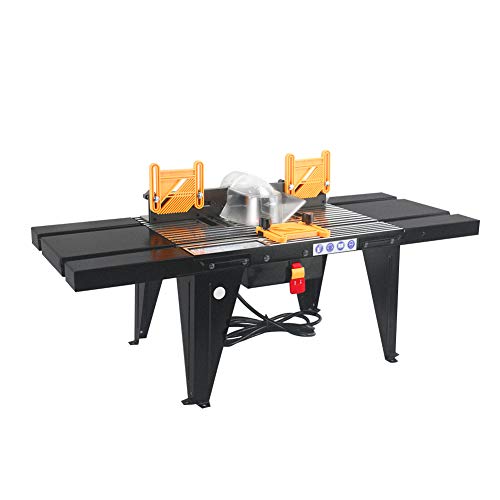
The Leegol benchtop table is distinguished by extension tables at both ends, each measuring 8 by 18 inches, and a maximum router base-plate diameter of 6 inches. Its fence can support work around the bit and combine with a jointing fence for vertical jointing; it also has a retractable transparent guard and miter gauge. The features suit woodworkers who need extra support at the ends of a benchtop setup. The 8-by-18-inch measurement applies to each extension, not necessarily the whole working area.
Bottom line: Choose it for the extension support if your router base fits within the limit.
SawStop TGP2 27-Inch In-Line Router Table

The SawStop TGP2 stands apart with a 27-by-16-inch cast-iron table and an in-line assembly that includes a 27-inch fence, power switch, and support legs. The router plate opening is 11 3/4 by 9 1/4 inches, and maximum fence travel is 5 1/2 inches. That makes it a distinct alternative for a fixed, heavier-duty installation rather than a portable benchtop setup. Its 83-pound weight makes moving it between work areas less convenient than lighter portable tables. The assembly dimensions and plate opening matter for installation, but they do not establish compatibility with a particular Ryobi router.
Bottom line: Pick it for a cast-iron in-line setup when its plate opening and installation suit your router.
BOSCH RA1141 Portable Jobsite Router Table

The BOSCH RA1141 is designed around portability: it has folding legs, onboard storage, and a preassembled format. Its laminated MDF top measures 26 by 16.5 inches, and the fence includes two adjustable featherboards; a starter pin and guard support curved-work routing. These features make it a reasonable alternative when storage and varied workpiece guidance matter. Router tables require a secure mounting fit, so verify the router plate pattern and opening before treating it as a Ryobi substitute.
Bottom line: Choose it when folding storage and the surface dimensions fit your shop needs.
How to choose a router table for Ryobi
Start with the router’s mounting fit, not the brand name on the table. Router tables secure a handheld router beneath a plate or tabletop opening, so the router base, fastener pattern, and available opening must all work together. A table described as universal still needs to accept the specific router safely. Compare the usable surface and fence length with the workpieces you expect to guide; longer stock needs more support on both sides of the bit. For narrow stock, featherboards or push blocks help keep the work controlled. If your router’s fit is uncertain, verify the mounting pattern before choosing a table rather than relying on a general compatibility label.
Router table surface sizes and materials
Portable router table surfaces commonly fall around 26 by 16 inches, while heavier in-line tables may use cast iron; the right size depends on workpiece length and storage needs. A larger surface gives more support for long or wide stock, but it also takes more bench or floor space. MDF is a common top material because it provides a flat working surface; laminated surfaces reduce friction as stock slides. Cast iron adds mass, which can help a fixed installation feel planted, but a heavy assembly is harder to reposition. Measure the space available and consider the fence length as well as tabletop dimensions. Surface size alone does not establish whether a router’s mounting plate will fit.
Safe routing on a table
Feed work across the front of a router table from right to left so the bit rotation works against the feed. Keep hands clear of the cutter and use push blocks or featherboards to control narrow pieces; a guard does not replace safe hand placement. Unplug the router before changing bits or adjusting the setup, and use a bit whose shank matches the router collet. For cuts deeper than about 1/4 inch, make multiple passes rather than removing the full depth at once. Secure the table and fence before starting, and do not force stock into the cutter. These habits matter especially with small workpieces, which can twist or catch if poorly supported.
Router table mistakes to avoid
The most common fit mistake is assuming a universal table accepts every router; check the plate opening and mounting pattern against the router base. Another mistake is selecting a tabletop by dimensions alone: stock longer than the supported area may need infeed and outfeed support. Match the bit shank to the collet—1/4-inch bits require a 1/4-inch collet, and 1/2-inch bits require a 1/2-inch collet. Never change a bit with the router plugged in, and avoid taking a deep cut in one pass. Before powering up, confirm that the fence, guard, and workpiece support are secure, then test the setup on scrap stock.
Frequently Asked Questions
How do I check whether a router fits a table?
Compare the router’s base or mounting plate hole pattern with the table plate and opening. A general-purpose label does not guarantee a fit; verify that the router can be secured without obstructing the bit or adjustment controls.
Which way should wood feed through a router table?
Feed the workpiece from right to left across the front of the table. This opposes the cutter’s rotation at the front edge and helps the bit pull the stock against the fence rather than carry it along.
How deep should each router table pass be?
For cuts deeper than about 1/4 inch, remove material in multiple passes. Smaller passes reduce strain on the bit and router and make it easier to keep the workpiece controlled.
Can I change a router bit while it is plugged in?
No. Unplug the router before changing a bit or adjusting the setup, and use a bit shank that matches the router collet. Keep hands clear of the cutter whenever the router is powered.
What support do long boards need at a router table?
Long boards need stable infeed and outfeed support in addition to the tabletop and fence. Add support when the board extends beyond the table enough to sag, tip, or pull away from the fence during a pass.