
Sailor Fude Fountain Pen: 3 Angles Compared

The Sailor Fude De Mannen 55-degree pen suits fine lettering, while its angled nib also lets you vary stroke width by changing the writing angle. Choose the 40-degree model for its lower nib angle, or the pearl pink option if body color matters most.
A fude fountain pen has a bent nib that changes line width with its orientation; the 55-degree and 40-degree versions offer different angles for controlling that effect.
We earn a commission if you buy through links on this page. As an Amazon Associate I earn from qualifying purchases. Products are compared on manufacturer specifications, not hands-on testing.
- Best overall: Sailor Fude De Mannen 55° Green – Its 55-degree nib is identified for fine lettering and allows varied strokes with a change in writing angle.
- Best for a lower nib angle: Sailor Fude De Mannen 40° Dark Blue – The 40-degree angle distinguishes it from the 55-degree options.
- Best for pearl pink: Sailor Fude De Mannen Pearl Pink – Its pearl pink body color sets it apart from the green and dark blue pens.
| Product | Best for | Nib angle | Body color | Shop |
|---|---|---|---|---|
| Sailor Fude De Mannen 55° Green | Fine lettering | 55° | Bamboo green | Check Price on Amazon |
| Sailor Fude De Mannen 40° Dark Blue | Lower nib angle | 40° | Dark blue | Check Price on Amazon |
| Sailor Fude De Mannen Pearl Pink | Pearl pink color | — | Pearl pink | Check Price on Amazon |
Sailor Fude Fountain Pens
Compare these Fude De Mannen options by nib angle and body color before choosing.
Sailor Fude De Mannen 55° Green
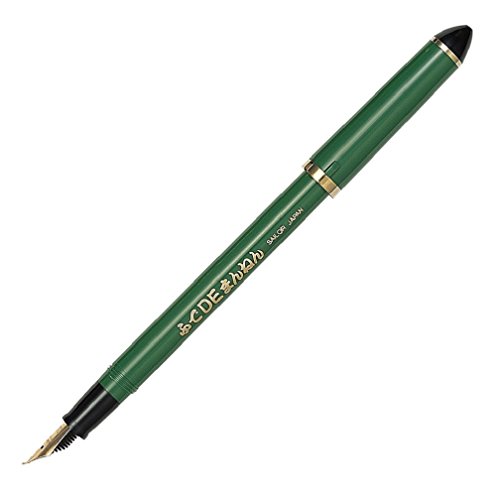
The 55-degree nib is the clearest fit for fine lettering among these options. Sailor says the angled nib can produce thick-to-fine writing as you change the writing angle, and describes this Wakatake nib as intended for fine lettering. The pen has a bamboo green body and comes as one pen. It suits someone who wants to practice calligraphy-style strokes with angle changes rather than a fixed-width line. The main limitation is that a 55-degree nib may feel less natural if you prefer the lower 40-degree angle.
Bottom line: Choose this if fine lettering and a 55-degree nib are your priorities.
Sailor Fude De Mannen 40° Dark Blue

The 40-degree nib is the lower-angle alternative to the 55-degree Sailor options. Its dark blue body distinguishes it visually, and the pen is supplied as one piece. The feature set identifies calligraphy and fine details as intended uses, with an angled nib and consistent ink flow. This option may suit a writer who wants to compare a less steep bend when varying line character.
Bottom line: Pick it if you want the 40-degree angle and dark blue finish.
Sailor Fude De Mannen Pearl Pink

The pearl pink finish makes this option the color-led choice in the group. Its features describe a special fountain-pen nib for calligraphy and say that changing the writing angle moves from fine to thick writing. The package contains one pen. It fits writers who want an angle-responsive fude nib but prefer a pearl pink body.
Bottom line: Choose it for the pearl pink finish if a specified nib angle is not essential.
How to choose a Sailor Fude fountain pen
Start with nib angle if you want to control line width through hand position: these options include a 40-degree and a 55-degree nib, while the pearl pink option does not give an angle. A fude nib is bent upward at the tip, so rotating or tilting the pen changes how much of the nib touches the paper and can change stroke width. Writers often use a more upright position for finer marks and a lower angle for broader marks, but the exact feel depends on the nib bend and grip. If an angle is a must-have, choose between the two angle-specific models rather than assuming the pearl pink pen matches either one.
Nib angle and stroke width
A fude nib changes line character as the nib’s contact area changes with writing angle. With under 1 inch of practice paper available, use a small test sheet first so you can adjust grip without running out of room. Try a few deliberate strokes at different pen tilts before writing a full line; pressure alone is not a reliable way to vary width and can make writing less controlled. The 40-degree and 55-degree bends are useful comparison points, not a guarantee that every hand will produce the same line widths. Paper texture, ink flow, and the angle of the hand all affect the result.
Fude fountain pens versus brush pens
A fude fountain pen uses a bent metal nib, while a brush pen uses flexible bristles or a brush-like tip; both can vary stroke width with movement, but the contact mechanics differ. This group is specifically described as fountain pens, including one product with a special calligraphy nib. A brush pen can flex more readily under pressure, while a fude nib’s broader or finer line comes chiefly from how the bent tip meets the page. For controlled lettering practice, start with light pressure and change the pen angle in small increments. A scratchy feel or hard starts can come from an unsuitable paper surface or dried ink, so keep the nib clean and cap the pen between sessions.
Care and safe fountain-pen use
Rinse a fountain-pen nib and feed with cool water when changing ink colors or when flow becomes inconsistent; avoid hot water, which can damage plastic parts. Let flushed parts dry fully before reassembly, and do not press hard to force a broader line because the bent nib is not a flexible brush. Fountain-pen ink is intended for fountain pens, not dip-pen or India ink, which can clog the feed. Keep ink and pens away from small children and protect clothing and work surfaces from stains. For longer pauses, clean the pen before storage rather than leaving ink to dry in the feed.
Frequently Asked Questions
How does a fude nib change line width?
A bent fude nib changes its contact with the paper as you tilt the pen, producing different stroke widths. Small angle changes are easier to control than pressing harder.
What is the difference between 40 and 55 degree nibs?
The 40-degree model has a lower nib angle than the 55-degree model. The 55-degree Sailor option is identified for fine lettering, while the 40-degree pen is described for calligraphy and fine details.
Can a Sailor Fude pen write ordinary notes?
Yes, a fountain pen can be used for ordinary writing, though the angled nib can make line width vary with hand position. A steady grip and light pressure help keep everyday letters consistent.
What paper works well with fountain pens?
Smooth, fountain-pen-friendly paper generally gives more even strokes than rough or highly absorbent paper. Try a small sample first, since paper texture can affect starts, line spread, and ink drying.
How should I clean a fude fountain pen?
Flush the nib and feed with cool water when changing ink or when flow becomes inconsistent. Avoid hot water and forceful pressure, and let parts dry before reassembly.