
Sand for Basketball Hoop: 4 Ballast Options Compared

For a portable basketball hoop, choose GoSports Sand Gel 16 oz if you want a 16-ounce polymer pouch that the maker says can replace up to 400 pounds of sand; it needs water rather than loose sand.
We earn a commission if you buy through links on this page. As an Amazon Associate I earn from qualifying purchases. Products are compared on manufacturer specifications, not hands-on testing.
- Best overall: GoSports Sand Gel 16 oz – Its 16-ounce pouch is claimed to replace up to 400 pounds of sand for most standard driveway hoops.
- Best for larger bases: H2OLD BaseGel Pro 18 oz – Its 18-ounce formula is claimed to replace up to 500 pounds of sand.
| Product | Best for | Pack size | Maker-stated sand replacement | Shop |
|---|---|---|---|---|
| GoSports Sand Gel 16 oz | Standard hoop bases | 16 oz | Up to 400 lb | Check Price on Amazon |
| H2OLD BaseGel 16 oz | Freeze-thaw climates | 16 oz | Up to 400x water absorption | Check Price on Amazon |
| AnchorGel 16 oz | Timed filling steps | 16 oz | — | Check Price on Amazon |
| H2OLD BaseGel Pro 18 oz | Heavier applications | 18 oz | Up to 500 lb | Check Price on Amazon |
Sand for Basketball Hoop Ballast Options
The main choice is between water-activated polymer gel and a removable bag that holds pre-sealed weights.
GoSports Sand Gel 16 oz

GoSports Sand Gel 16 oz is the standard-size option in this group, with a 16-ounce pouch that the maker says can replace up to 400 pounds of sand. Add water to the super-absorbent polymer to form a gel intended to reduce sloshing and mess compared with loose fill. The maker says one pouch is enough for most standard driveway hoops, along with several other base types. The pouch is useful when hauling bulk sand is impractical, but buyers with a larger or unusually shaped reservoir should confirm the required fill amount and fit before ordering.
Bottom line: Choose this for a standard driveway hoop when you want water-activated gel instead of loose sand.
H2OLD BaseGel 16 oz

H2OLD BaseGel 16 oz is a 16-ounce polymer alternative that the maker says absorbs up to 400 times its weight in water and forms a stable gel. Its distinguishing claim is freeze-thaw durability, relevant for an outdoor hoop that remains filled through seasonal temperature changes. The powder is mixed with water in a base rather than carried as ready-made ballast, and the maker also identifies sign bases, umbrella stands, and other supports as uses. This package does not give a sand-equivalent weight, so it is harder to compare directly with products that state pounds of replacement capacity.
Bottom line: Choose this if freeze-thaw durability is a priority and the absorption figure suits your decision.
AnchorGel 16 oz
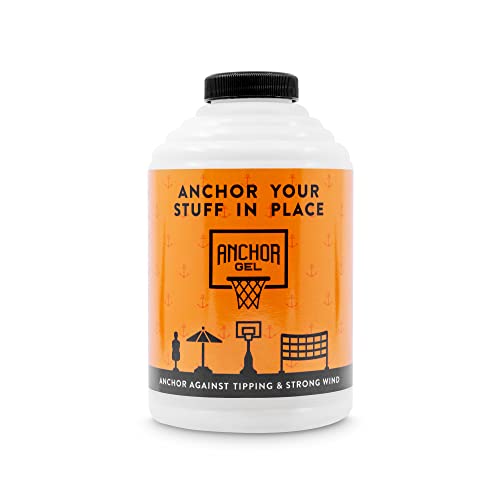
AnchorGel 16 oz gives a timed fill procedure rather than a sand-equivalent capacity: pour in the polymer, fill the base to 75% with water, wait 7–10 minutes, then top up while leaving air space. The maker says the gel resists freezing and leaks, which may matter for outdoor bases exposed to cold weather. Its uses include portable basketball hoops and other equipment with a ballast base.
Bottom line: Choose this if you prefer a specific staged water-filling process.
H2OLD BaseGel Pro 18 oz

H2OLD BaseGel Pro 18 oz is the largest pack here at 18 ounces, and its maker says it replaces up to 500 pounds of sand while absorbing up to 500 times its weight in water. It is positioned for larger and heavier applications, including basketball hoops and oversized umbrella stands. The maker also claims repeated freeze-thaw durability. This is a useful option when a standard 16-ounce formula may not match the intended application, but the maximum is not a universal amount for every base; check the base’s capacity and manufacturer guidance before filling it.
Bottom line: Choose this for a larger application when its capacity aligns with the base.
How to choose sand for a basketball hoop
Start with the hoop base: a reservoir designed for water or sand can take a water-activated polymer, while an external bag needs room around the base and sealed weights. Polymer gels absorb water and expand into a gel; their capacity is a maker claim, not a guarantee that every base needs that much. Compare the maker’s pack capacity with the base’s fill instructions, and do not exceed its marked fill line. A bag is a different setup: it holds sealed sand or gravel packets instead of filling the reservoir. For an unusually large base, match the base guidance first rather than assuming more ballast is always suitable.
Gel filler versus a hoop weight bag
Gel filler is added to the base reservoir with water, while a weight bag sits externally and holds pre-sealed ballast. The choice depends on how you want to load, adjust, and remove weight. A gel can avoid hauling bulk sand, but removing or changing the ballast may involve emptying the base. A bag opens with a zipper for adjustment, but needs sealed bags and enough room to fit over or against the base. The comparison table separates these methods and their fit requirements.
| Method | What goes in | Best fit |
|---|---|---|
| Polymer gel | Polymer plus water | Base reservoir with compatible fill opening |
| Weight bag | Pre-sealed sand or gravel packets | External space around the hoop base |
With under 4 inches of clearance around the base, check the bag’s dimensions before choosing an external weight bag.
How to fill a basketball hoop base safely
Use the base’s fill opening and marked capacity, and keep the hoop stable while adding ballast. Water-activated polymer expands as it absorbs water, so avoid pouring dry polymer into a filled reservoir or exceeding the intended capacity. For the staged formula with a 75% initial fill, wait 7–10 minutes before topping up and leave the specified air space. Keep polymer powder out of children’s reach and avoid contact with eyes; clean spills before they become slippery. A full portable hoop is heavy and can tip during movement, so do not attempt to relocate it while filled without following the hoop maker’s handling guidance.
What to check before adding ballast
Confirm that the hoop base is designed for the chosen fill method and that the fill opening can accommodate the material. Most portable bases are molded plastic reservoirs, but openings and capacities differ by model; use the capacity rather than a generic sand-weight target. Outdoor exposure matters too: water can freeze and expand, potentially stressing a plastic base, while gel makers claim freeze resistance for some formulas. Do not assume every polymer product has the same freeze-thaw rating. If using a fabric bag, check its footprint and height against the base, and use sealed weights so loose fill does not spill through the zipper.
Frequently Asked Questions
Can I use play sand in a portable basketball hoop base?
Yes, if the hoop maker allows sand and the reservoir can be filled through its opening. Dry sand is heavy and can be difficult to remove, so use the base’s capacity rather than packing it beyond its intended fill.
How much sand does a basketball hoop base need?
The required amount depends on the base capacity and the hoop maker’s instructions. A product claim that gel replaces hundreds of pounds of sand is not a universal fill target for every hoop.
Does polymer gel keep a hoop stable in winter?
Some polymer makers claim freeze-thaw durability, but that claim applies to the specific formula, not all fillers. Check the hoop’s cold-weather guidance because freezing water can expand and stress a plastic reservoir.
Can a filled portable hoop be moved?
A filled hoop can be difficult to move because the ballast adds substantial weight and may affect balance. Empty or reduce the ballast before relocation unless the hoop maker gives a safe moving procedure.
Should I put loose sand in a hoop weight bag?
Use pre-sealed sand or gravel packets in a weight bag designed for that purpose. The sealed inner bags make removal and adjustment easier and help keep loose material from escaping through the zipper.