
Satin Black Car Paint: 4 Finishes Compared

For broad automotive refinishing, Speedokote SMR-207/211 Hot Rod Black is the most versatile pick here because it is a 2K urethane single-stage kit with a 4:1 mix ratio. Choose Hycote Satin Black Spray Paint for aerosol convenience or Custom Shop Boulevard Black Urethane Kit for a quart-size low-sheen urethane kit; those formats suit different project scales.
We earn a commission if you buy through links on this page. As an Amazon Associate I earn from qualifying purchases. Products are compared on manufacturer specifications, not hands-on testing.
- Best overall: Speedokote SMR-207/211 Hot Rod Black – A 2K single-stage urethane kit with a 4:1 mix ratio suits larger refinishing jobs.
- Best for aerosol use: Hycote Satin Black Spray Paint – The 13.5-ounce acrylic spray can is ready to apply without mixing paint components.
- Best for quart-size projects: Custom Shop Boulevard Black Urethane Kit – The low-sheen urethane kit includes paint, hardener, strainers and mixing sticks.
| Product | Best for | Format | Coating system | Package size | Shop |
|---|---|---|---|---|---|
| Speedokote SMR-207/211 Hot Rod Black | Larger refinishing jobs | Single-stage kit | 2K urethane, 4:1 | 1 gallon | Check Price on Amazon |
| Hycote Satin Black Spray Paint | Aerosol projects | Aerosol spray | Acrylic | 13.5 oz | Check Price on Amazon |
| Custom Shop Boulevard Black Urethane Kit | Quart-size refinishing | Quart kit | Acrylic urethane, 4:1 | 40 fl oz | Check Price on Amazon |
| SEM Products 15243 Satin Black Color Coat | Color coat applications | Spray cans | Color coat | 48 oz total | Check Price on Amazon |
Satin Black Car Paint Options
Match the paint format and coating system to the size and surface of your project.
Speedokote SMR-207/211 Hot Rod Black
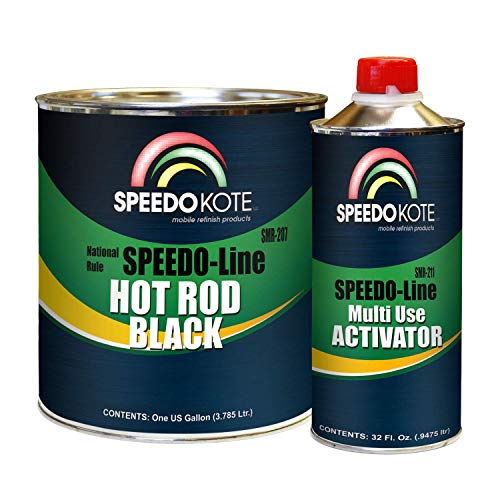
For larger automotive refinishing jobs, this gallon kit provides a 2K single-stage urethane system rather than a small aerosol. The package includes activator, and the paint mixes at 4:1. Speedokote says the finish has UV, chemical and rub resistance and dries quickly. That combination may suit an exterior project where a mixed coating system is appropriate. The limitation is the scale and preparation involved: a gallon kit is excessive for a small trim touch-up, and 2K urethane requires suitable professional-grade spray controls and respiratory protection. The product name also directs buyers in California, Delaware or Maryland to order SMR-456 instead.
Bottom line: Choose this for larger refinishing work when a mixed 2K urethane system fits the job.
Hycote Satin Black Spray Paint

For a small job that favors aerosol application, this 13.5-ounce can avoids measuring and mixing separate paint components. The acrylic formula is intended for automotive and DIY work, including metal and primed plastic. Hycote says it dries quickly and resists weather, UV exposure, chipping and fading. The can format is convenient for limited areas, but it provides much less material than either kit, so it is a poor fit for painting an entire vehicle. Surface preparation still matters: clean, dry, sound substrate and compatible primer help prevent adhesion problems.
Bottom line: Pick this for limited-area work when an aerosol format is more useful than a kit.
Custom Shop Boulevard Black Urethane Kit

For a smaller mixed-coating project, this quart kit has a low-sheen satin finish and includes hardener, strainers and mixing sticks. The acrylic urethane paint uses a 4:1 ratio; the package provides over a quart of sprayable material, listed as 40 fluid ounces. Its no-clearcoat single-stage system is intended for overall automotive refinishing, not merely a tiny scuff repair. The limitation is that the flat-matte wording can be confusing if you expect a glossier satin; compare a cured sample under the same lighting as the surrounding finish before committing to a visible panel.
Bottom line: Choose this for a quart-scale project where a low-sheen single-stage system fits.
SEM Products 15243 Satin Black Color Coat

For buyers seeking SEM’s satin black color coat, this package contains four 12-ounce units, for 48 ounces total. Its main distinction is the color coat format rather than a gallon or quart mixed urethane kit. The product name identifies it as satin black, but does not establish a body-panel use case, so confirm that the intended surface and coating system are compatible before choosing it for exterior car paint. The multipack may be more than needed for a small repair, while individual cans can make sense when the project benefits from several smaller containers.
Bottom line: Pick this when a satin black color coat is the required format and surface compatibility is confirmed.
How to choose satin black car paint
Choose by project size, coating system and sheen rather than by color name alone. Aerosols work well for localized repairs, while mixed single-stage kits are designed for larger refinishing areas; a quart is 32 fluid ounces, and a gallon is 128 fluid ounces. Satin is a low-gloss finish, but its appearance changes with lighting, film thickness and surface texture, so use a test panel before painting a visible panel. For a whole-car job, use a product explicitly intended for automotive refinishing and confirm it is compatible with the vehicle’s substrate and existing finish. If the job is only a small trim section, an aerosol can reduce mixing waste; if the repair spans multiple panels, compare kit coverage and required hardener.
Satin, matte and gloss finish differences
Satin sits between matte and gloss: it reflects more light than matte but less than a typical gloss finish. A matte finish tends to reveal uneven prep and handling marks, while a glossier coating reflects more strongly and can make surface defects conspicuous. Terms such as satin, flat and low sheen are not perfectly standardized across paint lines, so a label alone cannot guarantee a visual match. Spray a test area using the intended primer, number of coats and application method, then compare it after curing in daylight and shade. Avoid polishing a satin finish as though it were gloss; polishing can create shiny patches. Matching sheen is especially important when repairing one panel beside older paint.
Preparing a car surface for paint
Good preparation starts with a clean, dry, stable surface; wax, silicone, rust and loose coating can undermine adhesion. Remove corrosion and feather the edges of damaged paint, then use a primer compatible with both the substrate and topcoat. Bare metal, primed plastic and previously painted panels do not always take the same preparation, so identify the material before sanding or coating. Follow the coating maker’s specified mix ratio and induction or flash times where applicable; do not estimate a 4:1 mixture by eye. Temperature and humidity affect drying and recoat windows, so stay within the product’s technical instructions. Mask adjacent surfaces carefully because satin overspray can leave a visible sheen difference.
Spraying paint safely
Automotive coatings can expose painters to hazardous solvents and, with 2K urethanes, isocyanates; ordinary dust masks do not protect against these vapors. Two-component urethane spraying should be done in a suitable spray booth with appropriate supplied-air respiratory protection, protective clothing and ventilation, following the safety data sheet. Aerosol paint also needs strong ventilation, eye protection and ignition control because many cans contain flammable propellants and solvents. Keep the work area free of flames, pilot lights and sparks, and never spray toward people or animals. Do not use spray products indoors in an occupied room. Allow coatings to cure fully before sanding or handling, and dispose of leftover paint and pressurized cans according to local hazardous-waste rules.
Frequently Asked Questions
Can satin black paint match factory car trim?
Sometimes, but factory trim and body paint may use different materials and sheen levels. Test a small hidden area first, especially when the new coating is going over plastic or an older finish.
How many coats of satin black car paint are needed?
Use the coating maker’s specified coat count and flash interval; there is no reliable universal number for aerosol and mixed urethane systems. A test panel helps show coverage without building a heavy film that changes the sheen.
Can satin paint be clear coated?
Only when the paint system calls for or allows a compatible clear coat. A gloss clear can change the final appearance, so verify the system and test the full coating stack before applying it to the car.
How long should car paint cure before washing?
Cure time depends on the coating chemistry, film thickness, temperature and humidity, so use the maker’s cure schedule rather than a generic hour count. Avoid washing until the coating has reached its wash-safe cure.