
Scrubber Brush for Watercolor: 4 Brushes Compared

For watercolor corrections that call for lifting unwanted pigment, the Creative Mark Scrubber set Creative Mark Scrubber Set of 3 is the most direct match because it includes three extra-stiff nylon brushes made for color removal. Choose a softer scrubber for gentler lifting, or a chisel blender if your main goal is controlled blending rather than correction.
A scrubber brush has firm or soft bristles used with water to loosen pigment from paper; gentle pressure matters because scrubbing can disturb paper fibers.
We earn a commission if you buy through links on this page. As an Amazon Associate I earn from qualifying purchases. Products are compared on manufacturer specifications, not hands-on testing.
- Best overall: Creative Mark Scrubber Set of 3 – Three extra-stiff nylon brushes are made for lifting color and correcting watercolor areas.
- Best for firm spot lifting: Royal & Langnickel Zen Stiff Scrubber Size 2 – The stiff scrubber in size 2 suits smaller, more controlled corrections.
- Best for softer lifting: Royal & Langnickel Zen Soft Scrubber Size 6 – The size 6 soft scrubber offers a softer alternative to stiff correction brushes.
| Product | Best for | Bristle type | Brush size or count | Handle length | Shop |
|---|---|---|---|---|---|
| Creative Mark Scrubber Set of 3 | Multi-size corrections | Extra-stiff white nylon | Set of 3 | Short handle; 10.24 in overall length | Check Price on Amazon |
| Royal & Langnickel Zen Stiff Scrubber Size 2 | Small firm lifts | Stiff scrubber | Size 2 | 7.4 in | Check Price on Amazon |
| Royal & Langnickel Zen Soft Scrubber Size 6 | Gentler broad lifting | Soft scrubber | Size 6 | 7.5 in | Check Price on Amazon |
| Creative Mark Scrubber Watercolor Brush #6 | Single size 6 brush | Extra-stiff white nylon | Size 6 | 7.8 in | Check Price on Amazon |
Scrubber Brushes for Watercolor Compared
Match bristle stiffness and brush size to the amount of pigment you need to lift and the area you need to control.
Creative Mark Scrubber Set of 3

The Creative Mark set is the only option here supplied as three brushes, and its extra-stiff white nylon is intended for removing unwanted watercolor pigment. The maker’s method is to re-wet the area, wait a few seconds, scrub gently, then blot with a towel or sponge. Short wooden handles and nickel-plated ferrules suit studio and workshop use, while the set gives you more than one brush to choose from as the correction area changes. Its stiff bristles are less suited to delicate paper or very light lifting; use minimal pressure and stop if the surface begins to roughen.
Bottom line: Choose it when you want several stiff brushes for watercolor corrections.
Royal & Langnickel Zen Stiff Scrubber Size 2

The Royal & Langnickel Zen size 2 is a single stiff scrubber, making it the most compact-sized correction brush in this group. Its 7.4-inch overall length is easy to compare with the longer size 6 Zen brush, while its small brush size is suited to localized work rather than broad color removal. The product identifies it as a watercolor brush but does not give a bristle material, so buyers choosing by fiber type should verify that point before ordering. Stiff bristles can lift pigment firmly, but they can also abrade damp paper if pressed hard.
Bottom line: Pick this for small, localized lifts where a stiff scrubber is wanted.
Royal & Langnickel Zen Soft Scrubber Size 6

The Royal & Langnickel Zen size 6 is the soft-bristle alternative to the size 2 stiff scrubber, with the larger brush size suited to covering more area in each pass. Its 7.5-inch overall length is nearly the same as the stiff Zen brush, so the key distinction is softness and size rather than handle length. This brush may be preferable when a firm scrubber feels too aggressive for a wash or a larger correction zone.
Bottom line: Choose it when a larger, softer scrubber is preferable to firm spot work.
Creative Mark Scrubber Watercolor Brush #6
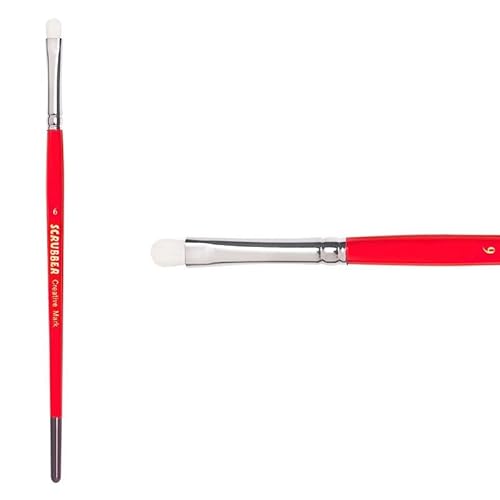
The Creative Mark #6 offers the same extra-stiff white nylon correction approach as the three-brush Creative Mark set, but as one size 6 brush. Its 7.8-inch length and short wooden handle with nickel-plated ferrule make it a distinct single-brush choice for artists who already know they want this size. The maker says it is intended for removing color from edges, areas or larger sections of watercolor paper.
Bottom line: Select this when you want one size 6 stiff correction brush.
How to choose a watercolor scrubber brush
Choose bristle stiffness according to the amount of pigment to lift and how fragile the paper surface is. A stiff brush loosens color more assertively, while a soft scrubber is a gentler option for broad or delicate lifting; either can roughen paper if used with excess pressure. Watercolor paper is commonly sold in 140-pound (300 gsm) and 300-pound (640 gsm) weights, and heavier sheets generally tolerate more water and surface work, though sizing and paper surface also affect durability. For a small correction, favor a smaller brush; for a larger area, a larger size reduces repeated passes. Test the technique on a scrap of the same paper when possible.
How to lift watercolor without damaging paper
Re-wet a correction area briefly, then lift loosened pigment with gentle strokes and blot rather than grinding the bristles into the sheet. Paper is made from fibers with a surface sizing that helps control water absorption; repeated abrasion can disrupt that surface and leave a fuzzy or shiny patch. Work from the edge of the unwanted color inward to avoid spreading pigment, and use a clean brush and blotting material so lifted color does not return to the paper. Stop when the paper begins to pill or lose texture. A scrubber can reduce a wash, but it cannot guarantee a perfectly invisible correction on every pigment or paper.
Soft versus stiff scrubber brushes
Soft and stiff scrubbers differ mainly in how forcefully they loosen pigment, so the right choice follows the correction rather than a universal ranking. Use a soft brush when you want a more gradual lift or need to cover a larger area with less concentrated pressure; choose stiff bristles for more focused removal, taking extra care with thin sheets. A chisel blender is a different tool: its tighter filament bundle is designed for precise blending and edges, not the same job as a dedicated scrubber. The comparison below links each brush type to its main use.
| Brush type | Useful for | Watch for |
|---|---|---|
| Soft scrubber | Gradual lifting over larger areas | May remove pigment less assertively |
| Stiff scrubber | Focused correction and color removal | Can abrade paper under pressure |
| Chisel blender | Controlled blending and sharp edges | Not a dedicated correction brush |
Paper weight and correction limits
Paper weight helps estimate how much wet work a sheet can tolerate, but it does not make aggressive scrubbing safe. Watercolor paper at 140 pounds is a common everyday weight, while 300-pound sheets are thicker and more resistant to buckling; cotton content, sizing and surface texture still change how lifting behaves. Rough paper holds pigment in its texture, while hot-pressed paper has a smoother surface that can show abrasion more clearly. For work on expensive cotton paper, test a corner or matching scrap first and keep the brush strokes light. Do not scrub a sheet that is already soft from repeated wetting.
Frequently Asked Questions
Can a scrubber brush remove dried watercolor paint?
A damp scrubber can often lift some dried watercolor because water reactivates many watercolor pigments, but staining colors may remain. Re-wet briefly and blot between gentle passes rather than scrubbing continuously.
What paper weight works best for watercolor lifting?
Watercolor paper around 140 pounds (300 gsm) is common, while 300-pound (640 gsm) paper is thicker and generally handles more water. Paper sizing, fiber content and surface texture also affect how safely pigment lifts.
How do you prevent watercolor paper from pilling?
Use light pressure, short passes and a damp rather than saturated brush, then stop as soon as the surface starts to roughen. Repeated abrasion and working paper that is already softened by water are common causes of pilling.
Is a stiff or soft scrubber better for lifting color?
A stiff scrubber removes color more assertively, while a soft scrubber is gentler for gradual lifting or wider areas. Choose the softer option on delicate paper, and reserve firm bristles for controlled corrections.
Can a chisel blender replace a watercolor scrubber?
A chisel blender is designed for controlled blending, sharp edges and tight spaces, while a scrubber is intended to loosen pigment from paper. Use a dedicated scrubber when correction is the main task.